A bread name built like a punchline
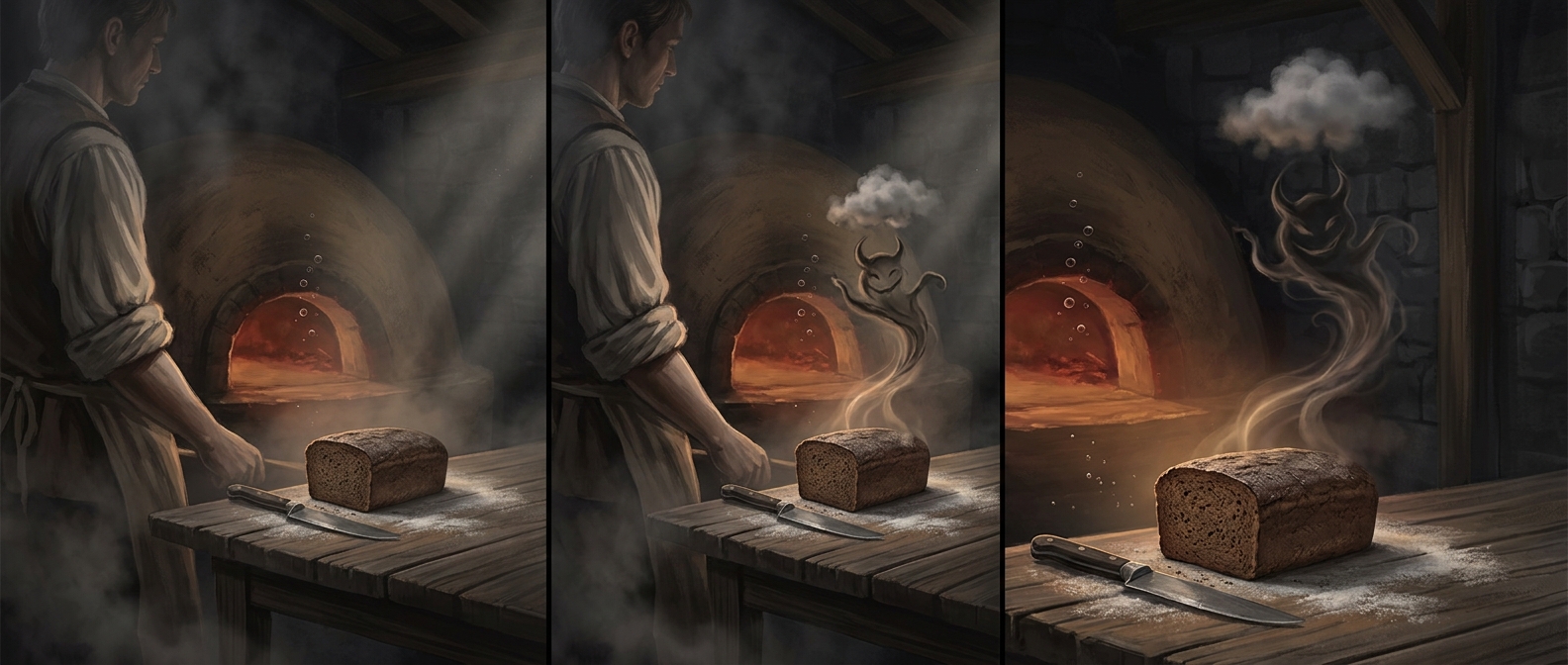
The “devil’s fart” explanation is best understood as a folk etymology: a memorable story that makes an unfamiliar word seem to have an obvious meaning. In this telling, pumpern evokes rumbling or breaking wind, while Nickel is treated as a devilish figure or nickname. The result turns a loaf’s alleged aftereffects into a joke about its name.
That explanation is traditional, not a certain account of how the word was formed. Its appeal lies in how neatly it links the bread’s reputation to a comic character, rather than in a proven record of the naming.
Why rye suited the joke
Pumpernickel is a dense rye bread, and rye contains substantial fiber. For some people, fiber and other carbohydrates that are fermented by gut bacteria can contribute to gas. That makes the old joke plausible as everyday observation—but it does not mean the bread causes trouble for everyone, or that the name records a specific historical incident.
The story also shows how food names can preserve a bit of social humor: a heavy, distinctive loaf becomes memorable not only for its texture, but for the bodily effects people associated with eating it. The devil gets the blame; the bread gets the lasting name.