A quick fix became a household shape
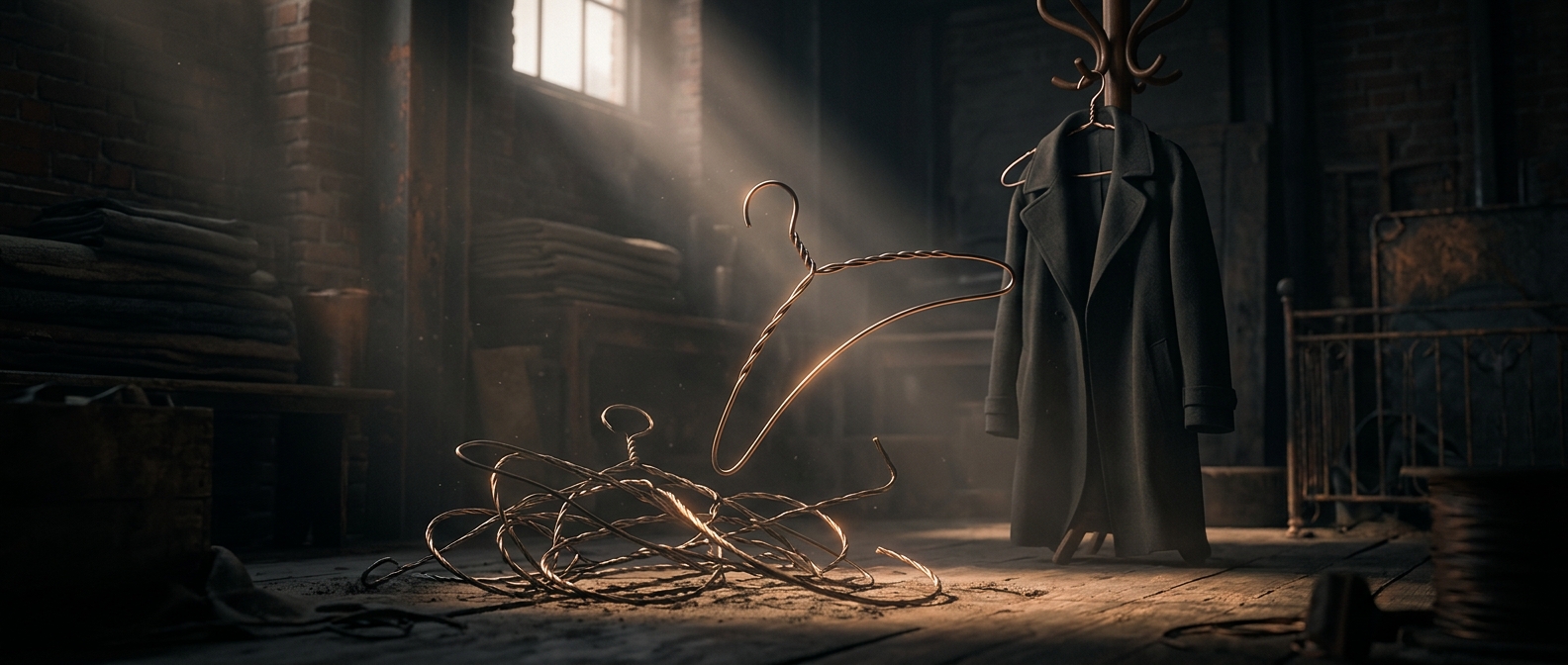
The hanger’s familiar form solves two problems with one continuous length of wire. Its sloping sides support a garment near the shoulders, while the bend at the top becomes a hook that can rest on a rail. The shape is simple to make: bend the wire into a broad triangle, then curve the remaining end into a hook.
The origin story is usually told as an improvised repair: a worker, short of a proper hanger, bent a piece of heavy wire into something that could hold a coat. That practical need helps explain the design’s appeal. A hanger had to be sturdy enough for clothing, yet light, compact, and cheap to produce.
Why the wire mattered
Wire could be shaped without assembling separate shoulders and a hook. That made the design economical and easy to reproduce, helping a useful workaround become a familiar object. Its enduring design is less about decoration than doing two jobs with one bend. The same hook that stores a coat also lets the hanger travel from a closet rod to a clothesline or shop rack.