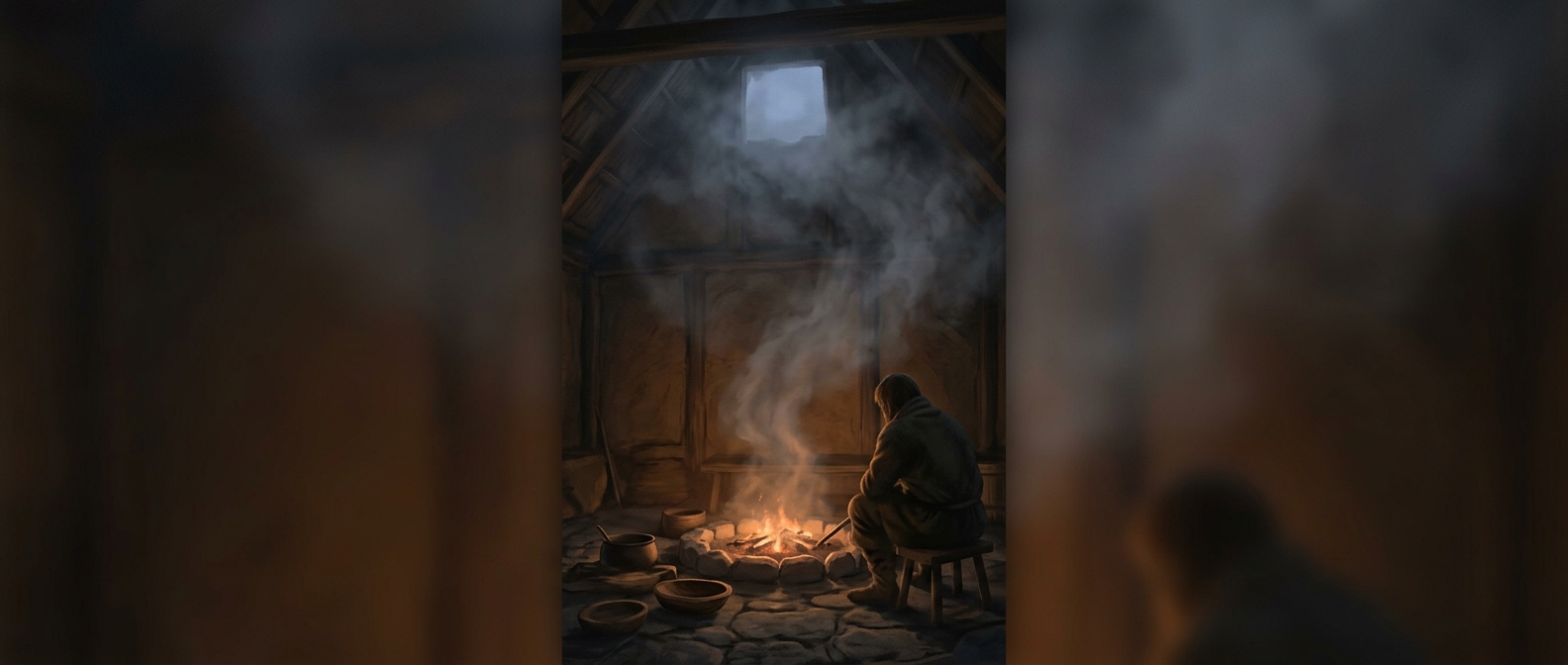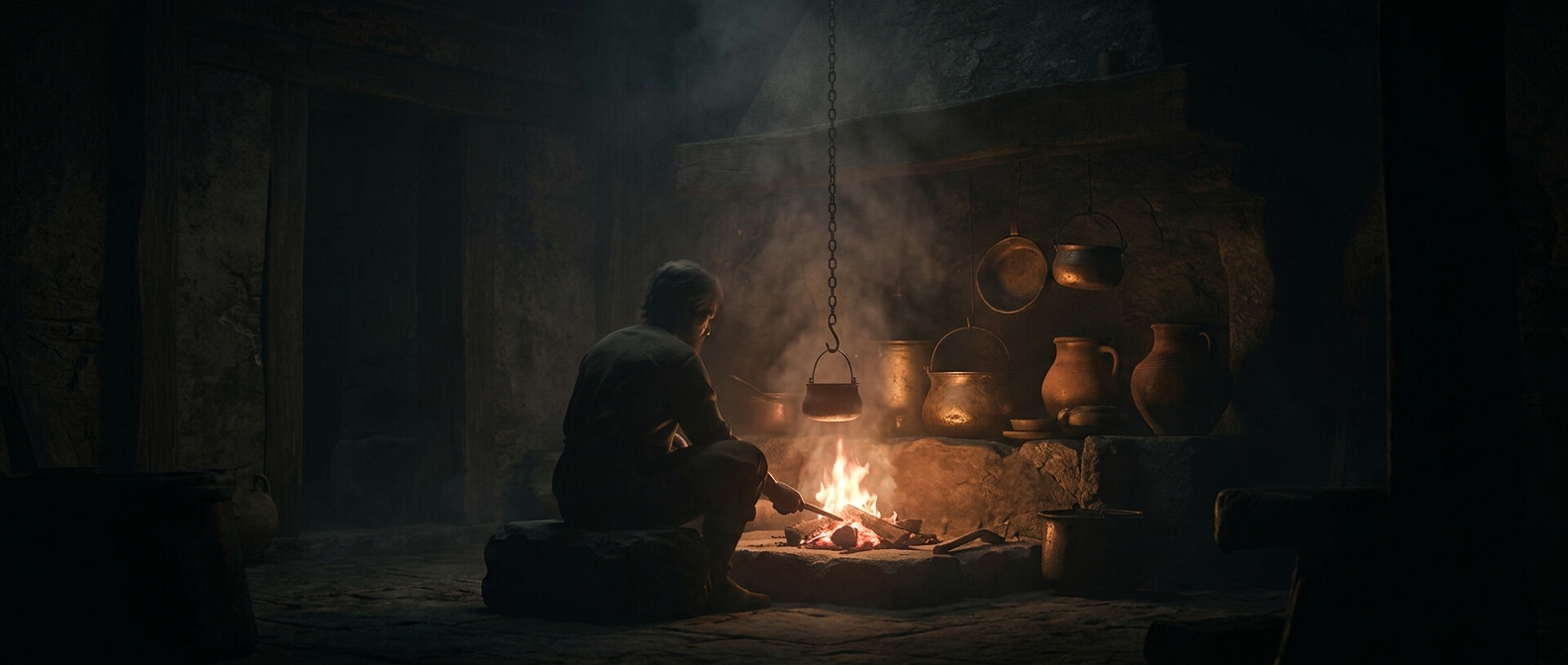
How a hearth could survive the night
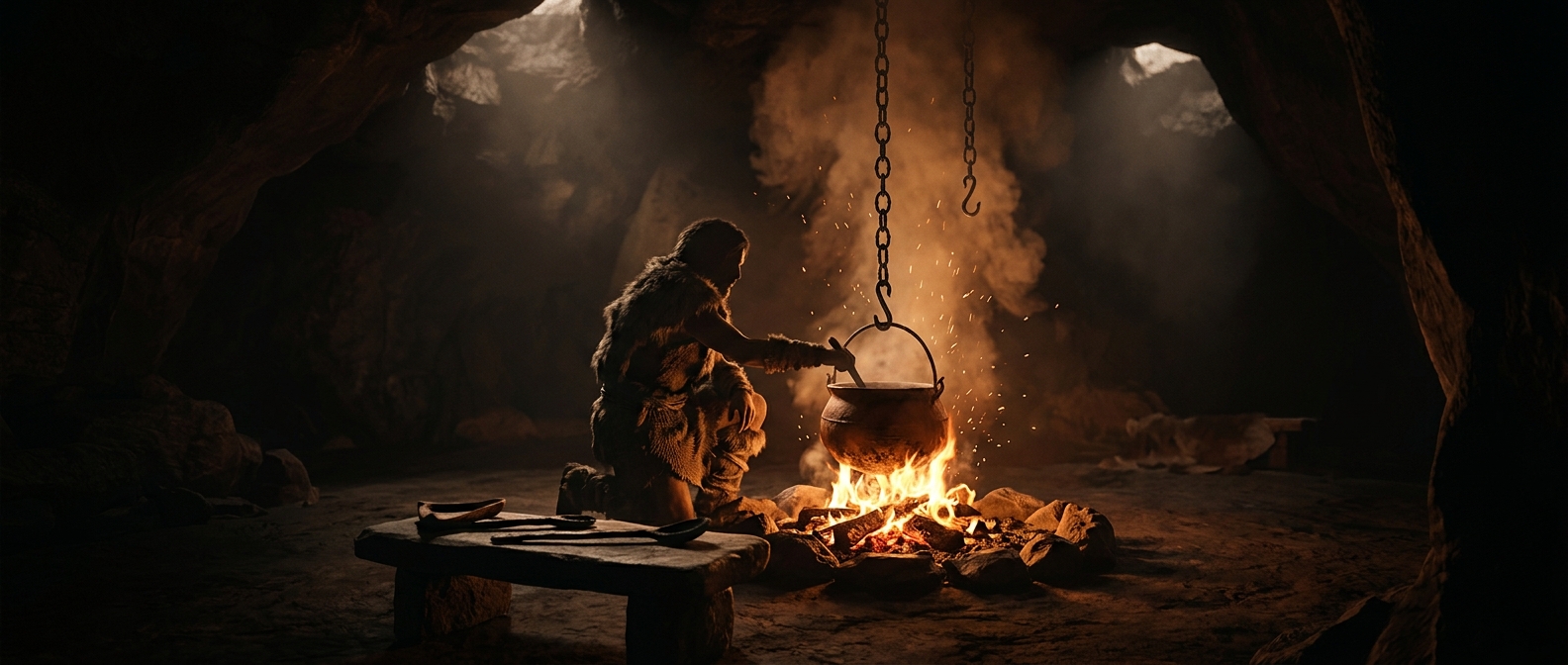
A fire did not have to blaze to remain useful. Beneath its visible flames, a thick log or a bed of embers could keep glowing slowly, especially when the fire was banked: covered with ash or arranged so that less air reached it. With limited oxygen, the fuel burned more slowly, preserving heat and a chance of rekindling by morning.
That mattered because making fire without matches took more than a spark. A household might use flint and steel, or friction methods, but either required dry tinder and patience. A small spark could fail to catch; damp kindling or a cold room made the task harder. Keeping embers alive sidestepped the most uncertain step.
A smoky bargain
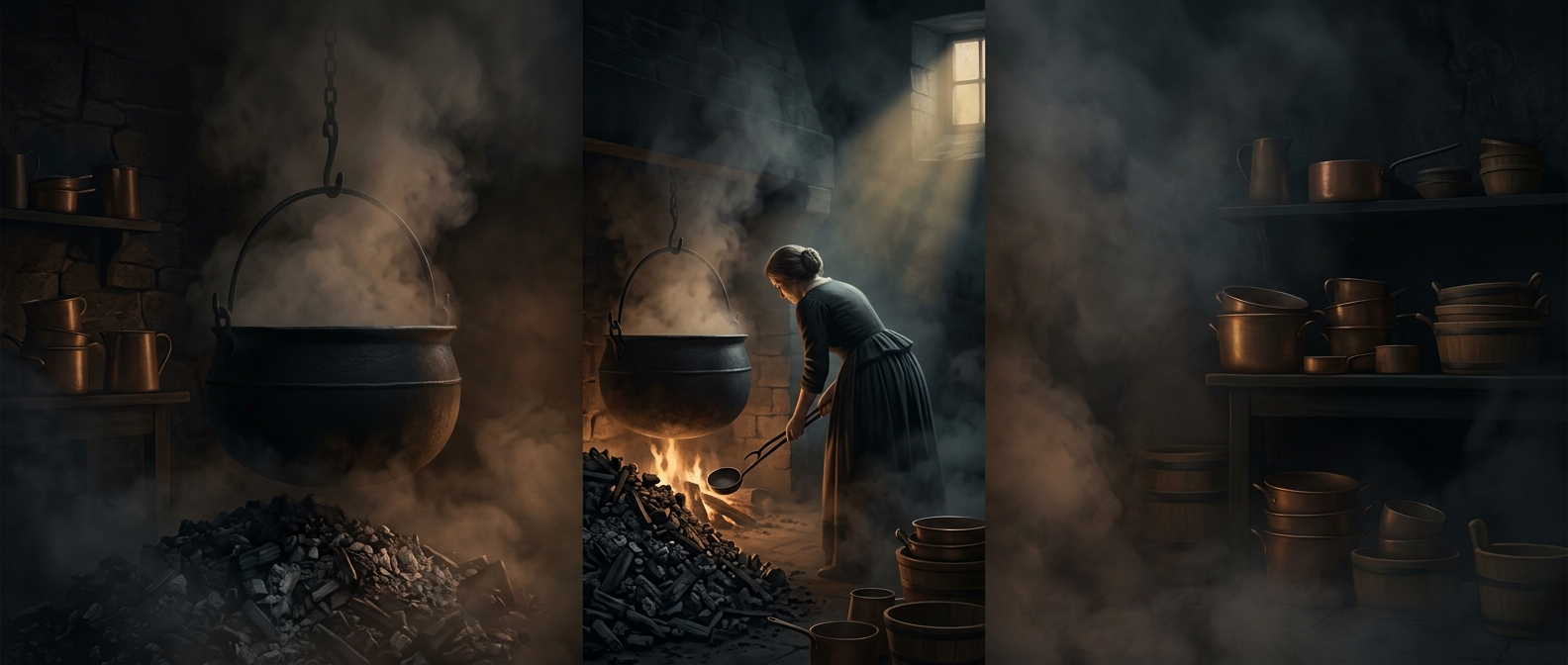
An overnight fire was not necessarily a comfortable one. A banked hearth could smolder and produce smoke, and smoke could linger if the chimney drew poorly or the room was not well ventilated. Households were balancing that nuisance against the work of rebuilding a fire from scratch—and against the need for warmth and cooking heat at the start of the day.
The practice also depended on the hearth and fuel. A substantial piece of wood or a protected bed of coals could last longer than a small, fast-burning fire. In the morning, people could uncover the glowing material, add dry tinder and kindling, and coax it back into flame. The overnight fire was less a flame kept burning than a reserve of heat kept ready.
That reserve changed the morning routine: instead of beginning with the difficult business of making fire, a household could begin by feeding one that had never quite gone out.