Why Early Iron Pots Stood on Legs
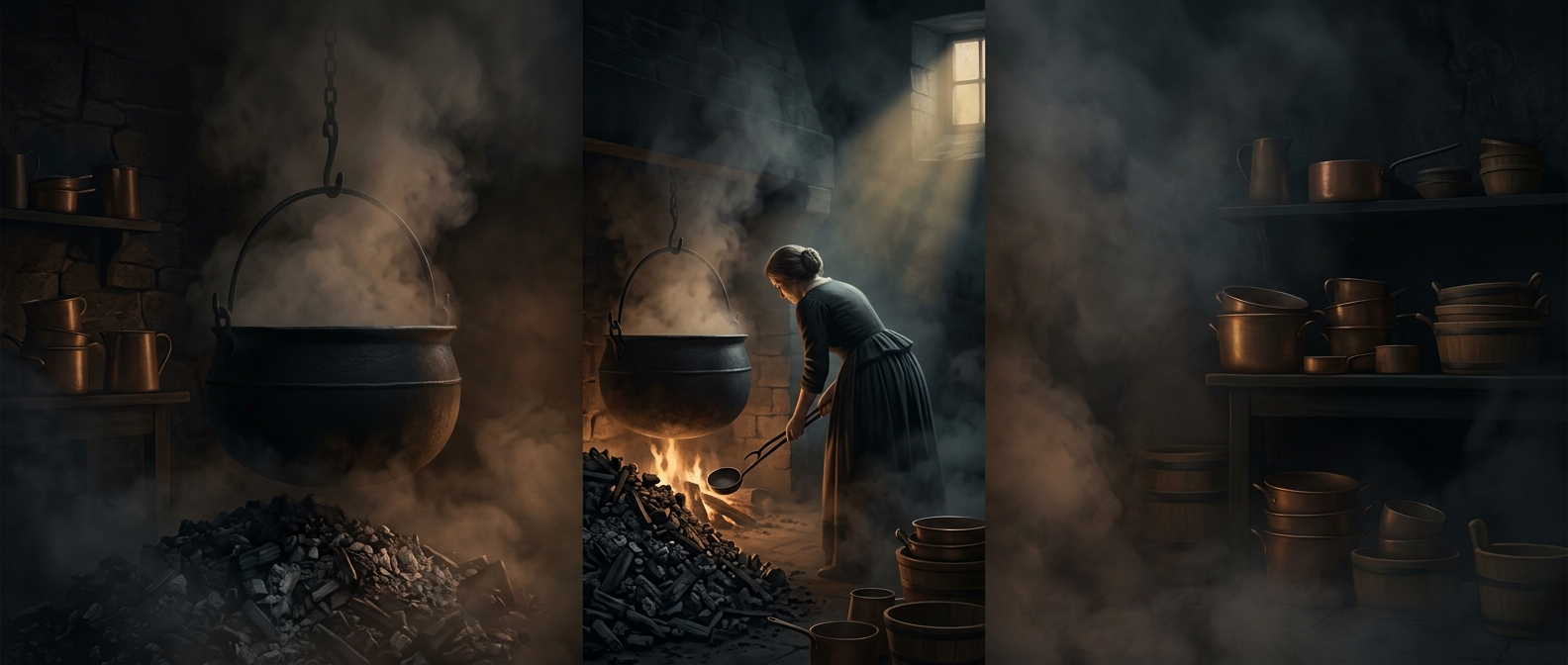
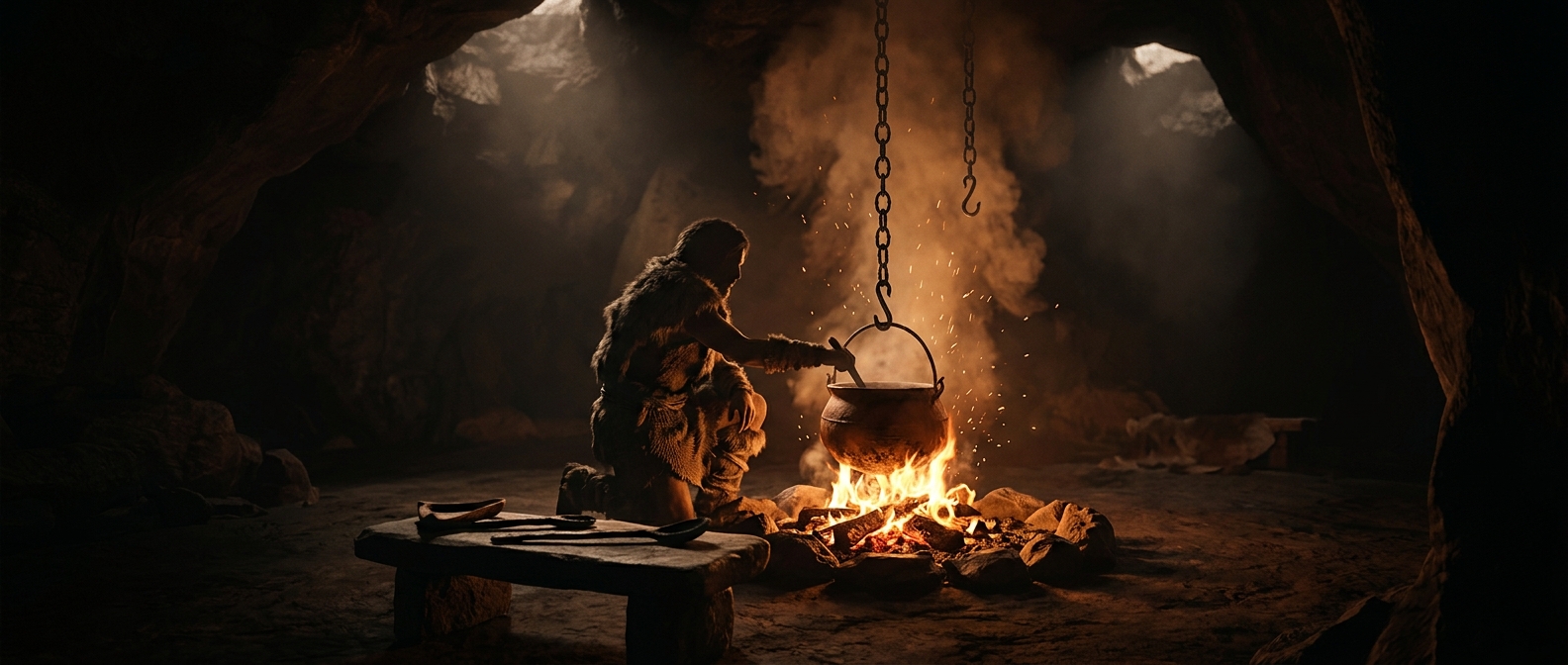
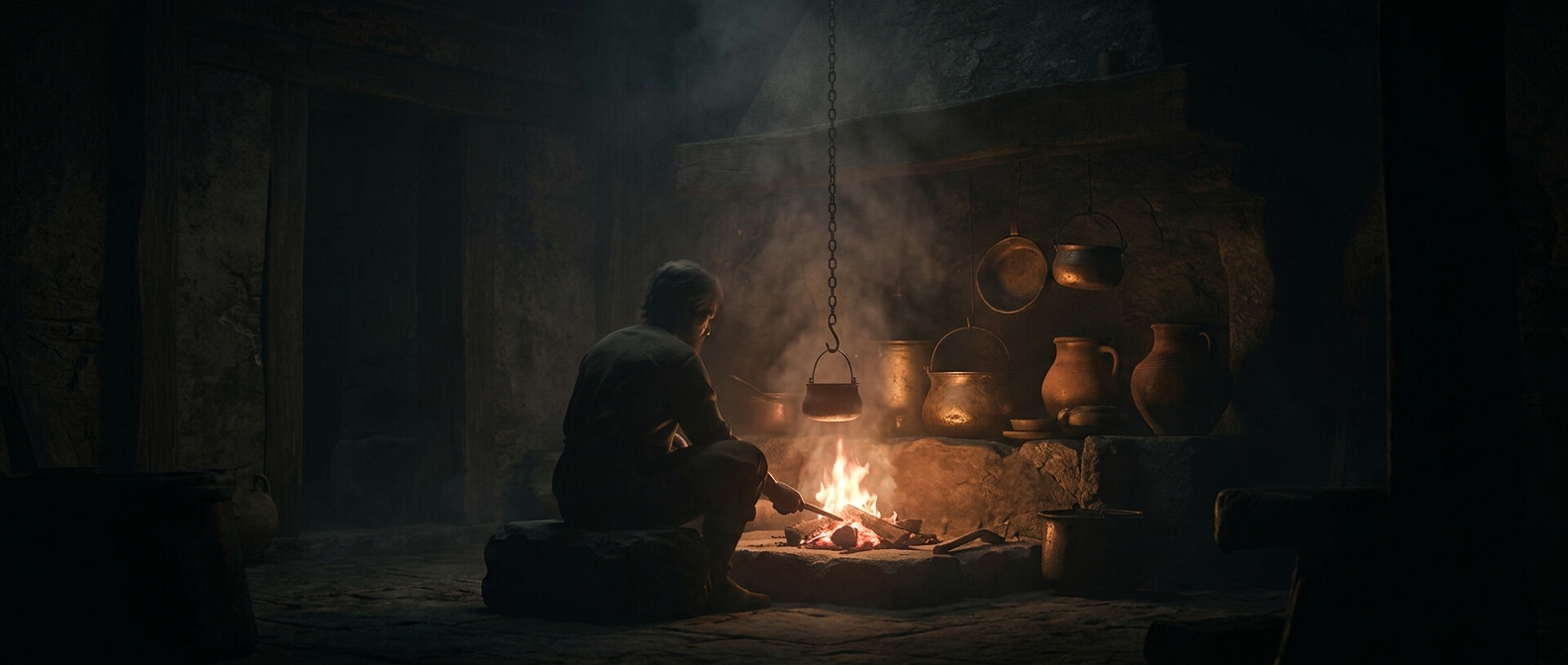
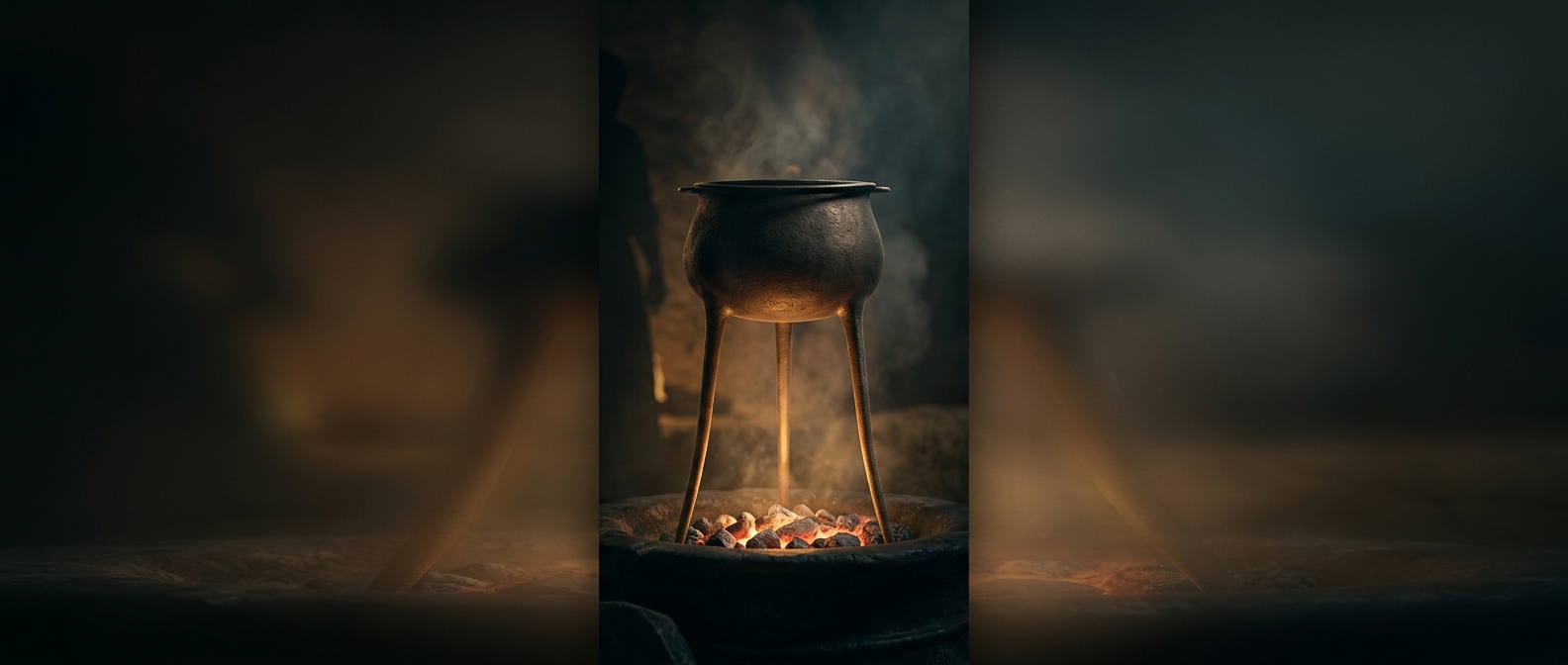
A hearth was not a level burner. A household fire left a shifting bed of coals on the floor or in a fireplace, so a pot needed a way to hover above it without tipping or smothering the heat. Long legs turned the vessel into its own stand: the feet could straddle the coals while the bowl held a stew, porridge, or other slow-cooking food.
The Shape Matched the Fire
The gap beneath the pot mattered. Air could reach the embers, helping them keep burning, while cooks could rake coals closer or pull them away to adjust the heat. Unlike a pot set directly on a flat surface, a legged pot did not need a separate trivet or a carefully arranged ring of stones to stay upright.
That design also made sense for heavy iron. Iron cookware could hold heat well, but a full vessel was cumbersome to lift and reposition. Once its legs were planted among the coals, the pot could remain in place while the fire was tended around it.
A Hearth Tool, Not a Stovetop Pot
The legs were not decorative additions; they answered the practical demands of cooking over an open fire. Their height determined how much heat reached the pot, and their spacing helped keep it stable on an uneven hearth. The result was cookware designed around a particular domestic landscape: a fire on the ground, fuel that could be shifted by hand, and a meal that might simmer for hours.
A pot with legs makes that vanished setup easy to picture: the cook adjusted the fire beneath the vessel, rather than turning a knob under it.