Why urine became a laundry aid
Fresh urine contains urea, a nitrogen-rich waste product. As it sits, naturally occurring bacteria can break urea down and produce ammonia. That change made aged urine more useful for washing: ammonia dissolves in water to form an alkaline solution, which can help loosen greasy dirt and other grime from cloth.
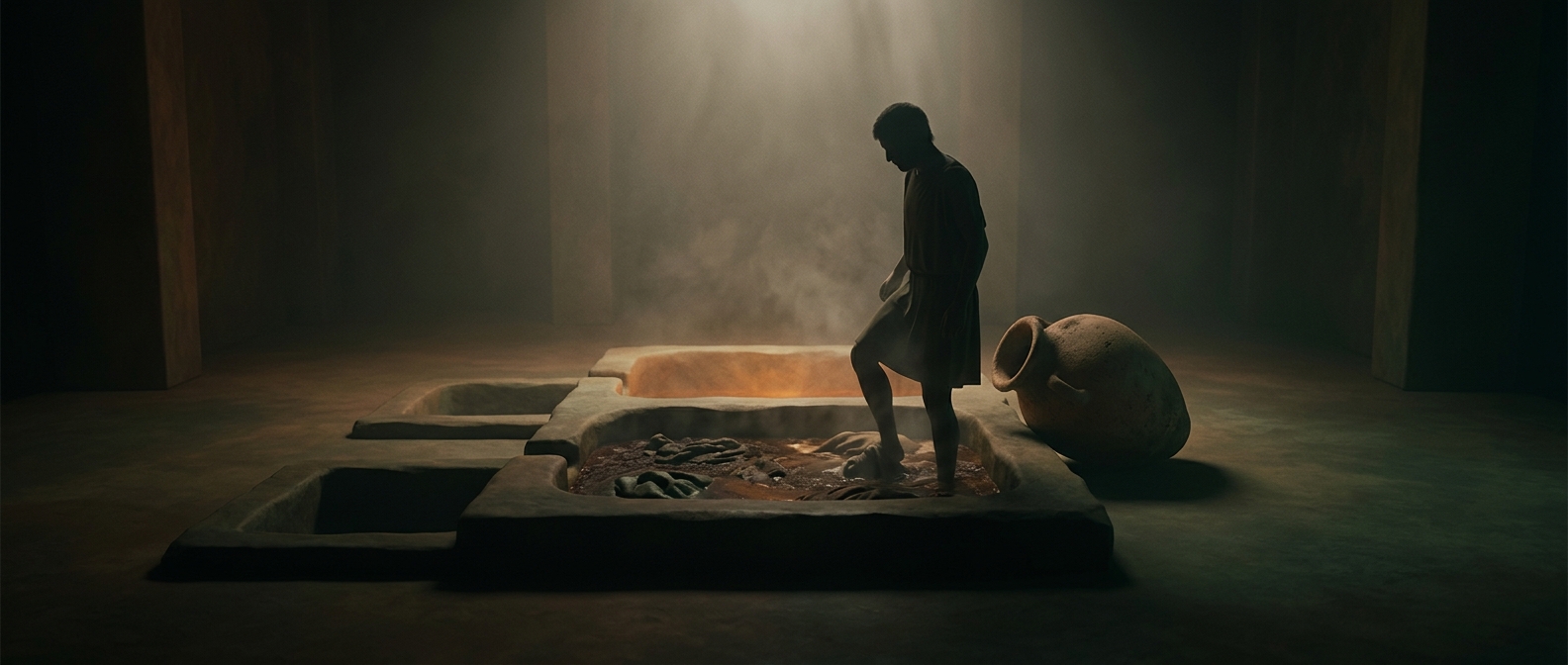
The effect was practical, not magical. A cleaner would soak and work the fabric in the liquid, then rinse it. The alkaline bath helped release soil, while scrubbing and rinsing carried it away. It was one of several ways people used available materials to clean clothing before modern detergents.
The cost of making it work
Aging the urine gave the breakdown process time to produce more ammonia, but it also made the liquid pungent. The smell was not evidence that the wash had failed; it was part of using a waste product as a cleaning chemical. Rinsing could remove much of the residue, though the work itself was hardly pleasant.
That tradeoff helps explain why the method persisted: it turned something readily available into a useful aid for treating dirty fabric. The laundry could come out cleaner, but first someone had to handle the source of the ammonia.