Why a Mattress Could Become a Habitat
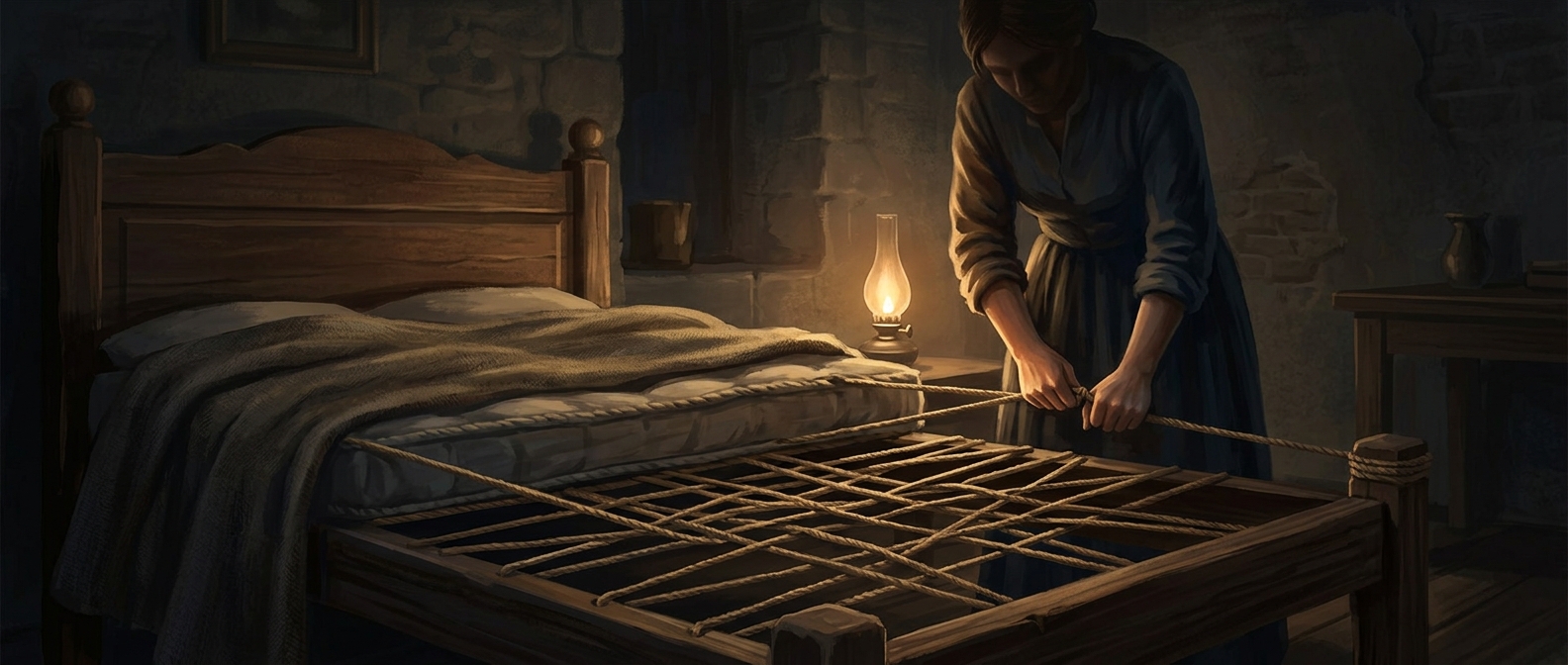
Many older mattresses were sacks of ticking—a sturdy fabric casing—filled with materials such as straw, wool, or feathers. The stuffing made a warm, sheltered interior, while seams, folds, and worn spots offered places for insects to hide. If the casing was damaged or the bed stood near a wall or floor where mice could reach it, small animals might also get into the bedding and nest there.
That construction made the mattress harder to inspect than a smooth, sealed surface. A neatly made bed could conceal what had settled inside overnight or over time.
Beating the Bedding Was Practical Maintenance
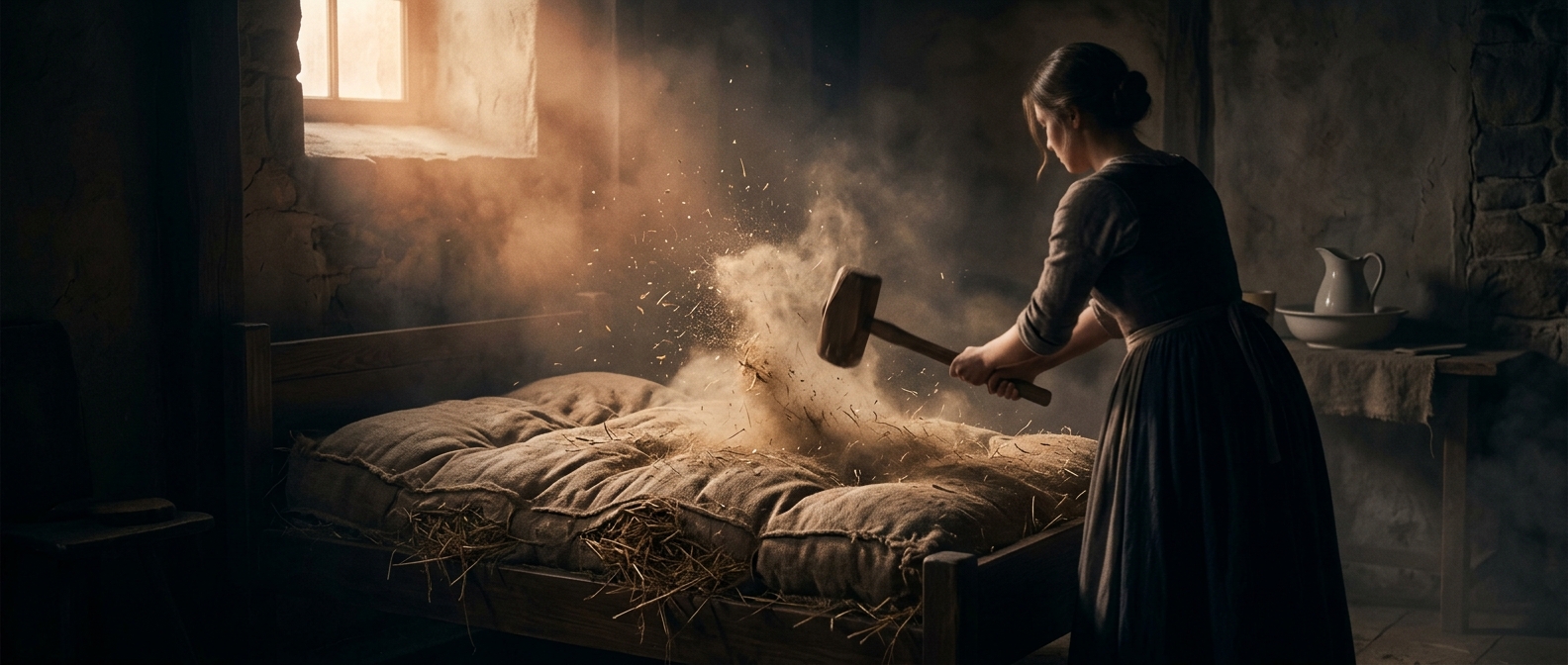
A stick struck against the mattress jolted loose straw and other stuffing, shook out dust, and could dislodge insects or drive out small tenants. It was a rough form of inspection as well as cleaning: the disturbance made hidden occupants visible—or at least less comfortable staying put. It did not guarantee that every pest was gone, especially if the mattress had cracks or the room offered another hiding place.
The chore reflects a larger difference in bed care. With a mattress built from loose natural materials inside a fabric cover, upkeep meant tending the mattress itself, not just smoothing sheets over it. The morning routine began by disturbing the place where people had slept, because that was also where unwanted occupants could have taken shelter.