A crust built to bear the weight
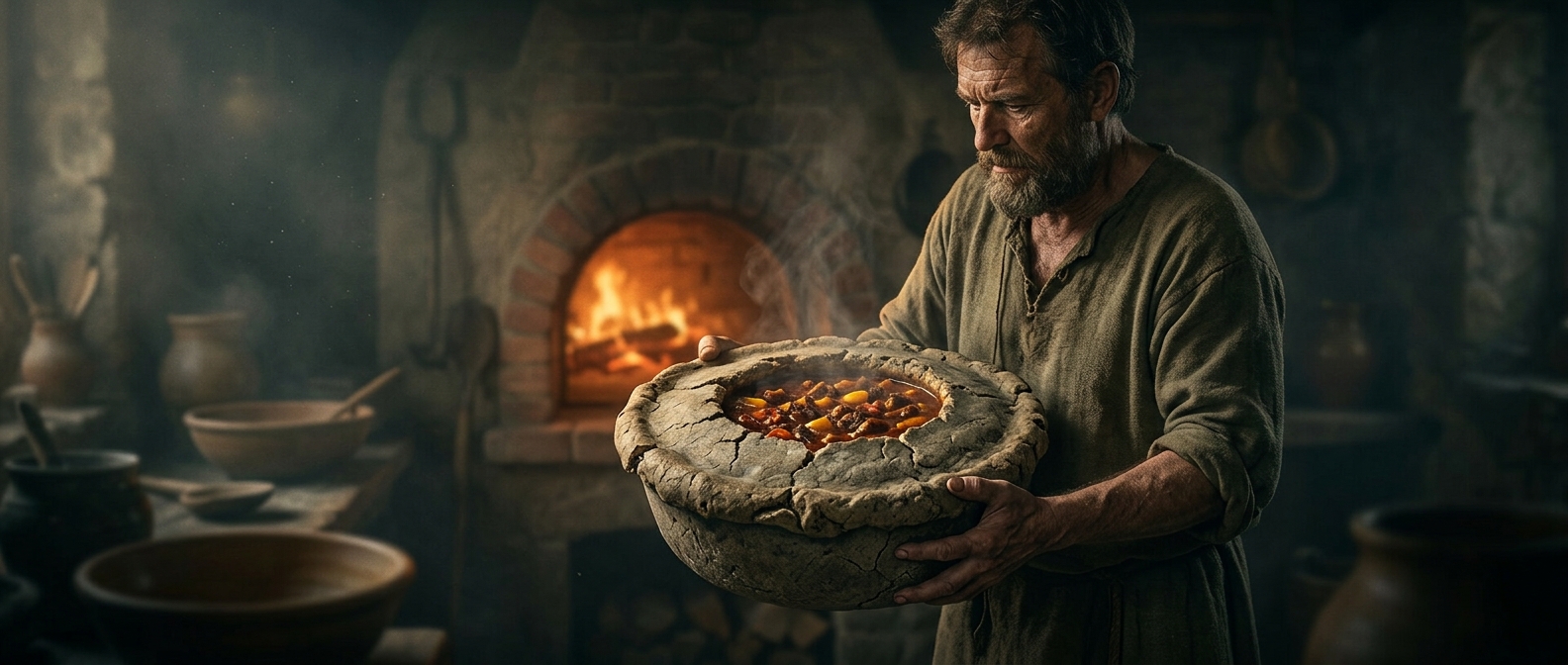
In medieval cooking, pastry could be less like the tender, buttery crust of a modern pie and more like a piece of kitchen equipment. Cooks shaped a stiff dough into a deep shell, sometimes called a “coffin,” and packed it with meat. The sturdy sides held the filling together while it baked, even when the mixture was heavy or full of juices.
That mattered in a kitchen without modern baking tins. A well-formed shell could be shaped by hand, filled, and placed in the oven as its own container. It also made a pie easier to carry and serve: the crust kept the filling gathered in one piece rather than spilling across a platter.
The vessel and the meal were not always the same
A thick shell could emerge hard and dry, so diners did not necessarily treat it as part of the meal. In some preparations, the pastry’s main job was to contain the filling; it might be discarded or left uneaten. But medieval pastry was not uniformly inedible. Recipes and methods varied, and pastry could also be made to be eaten.
The distinction was practical, not just a matter of taste. A shell expected to support a substantial filling had different demands from a delicate crust meant to flake apart. The familiar pie crust began, in many cases, as a baking vessel first and food second—a reminder that an old recipe’s “dish” could include both dinner and the container that got it to the table.