Why pasta dough needed bodyweight
Some pasta doughs begin as a stubborn mass: flour and water make a firm, dry mixture that resists the ordinary push-and-fold motion of hand kneading. To make it workable, bakers had to keep compressing and stretching it until the ingredients came together and the dough became more even.
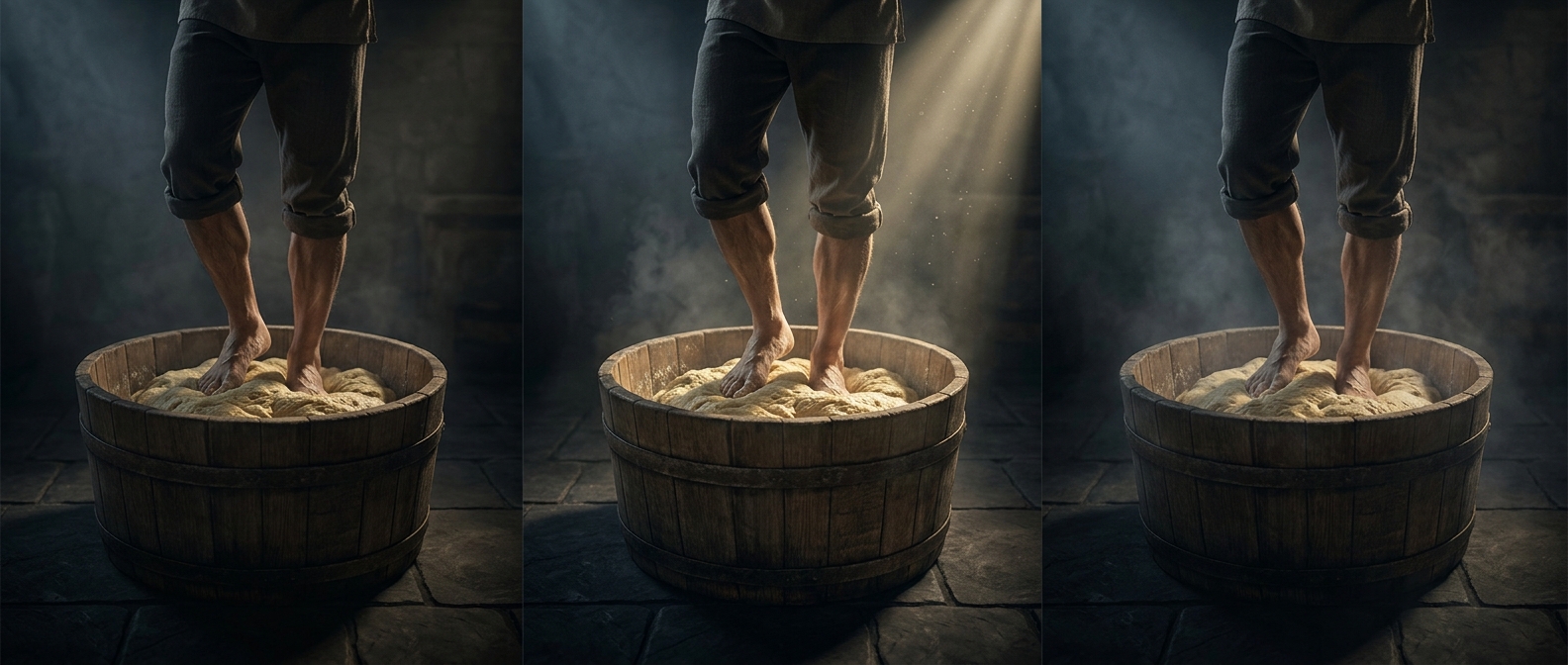
Stomping supplied pressure that hands alone could struggle to deliver. Each step squashed the mass; turning or folding it between steps exposed another part to the same force. The repeated working also helped develop gluten, the network of proteins in wheat flour that gives dough strength and stretch. The aim was not merely to flatten it, but to make a dense mixture cohesive enough to shape.
A kitchen task turned into labor
The method made dough preparation a physical job measured in sustained effort. A baker could spend hours on their feet, repeating the same cycle before the dough was ready for the next stage. That is why the work could resemble a shift more than a quick act of cooking: the dough’s toughness set the pace, and progress came from repetition.
The technique also shows how food traditions reflect the tools available. Where powered mixers were absent, the baker’s weight and endurance could do the work of a machine. The striking detail is practical, not theatrical: the pasta began with a dough too resistant for casual kneading, so making it meant putting the whole body into the job.