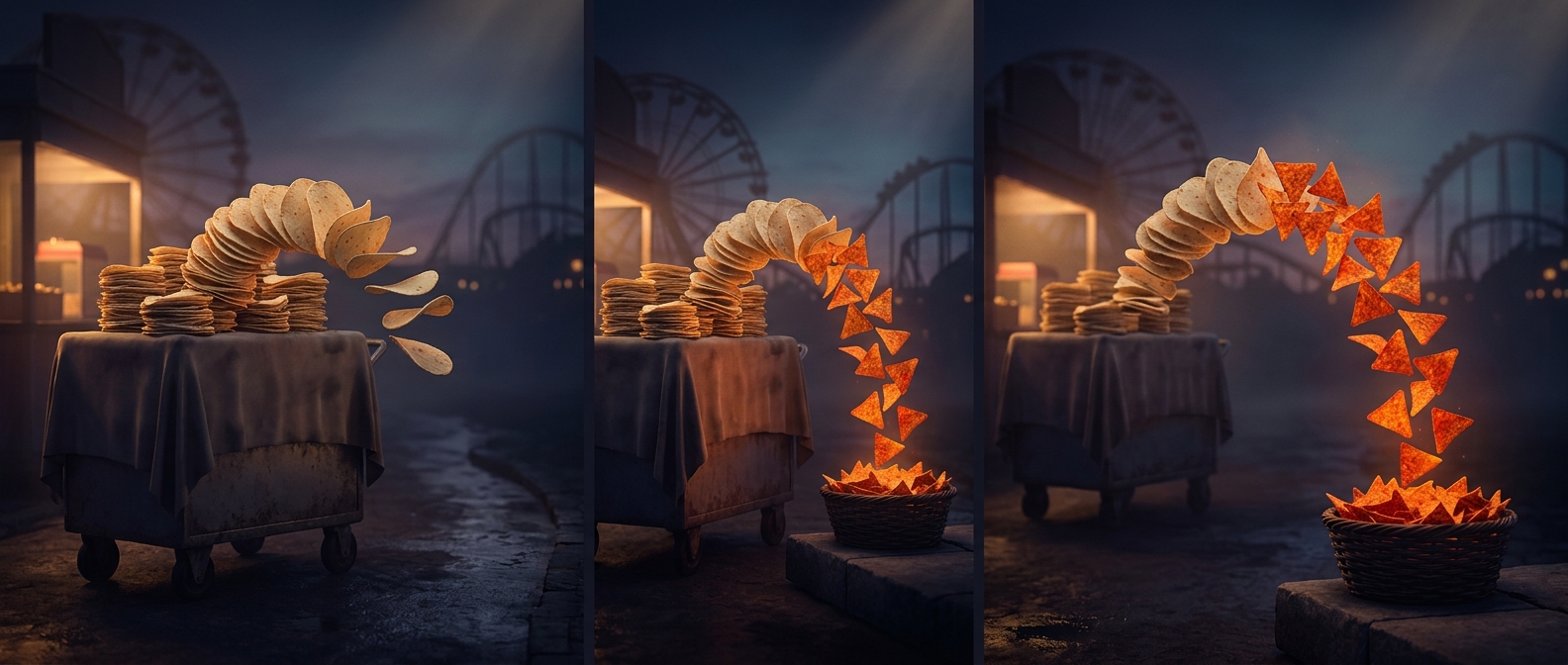
A kitchen shortcut became a packaged snack
The key change was not a new kind of tortilla. It was a new way to use one that had lost its place on the restaurant menu. At Disneyland’s Casa de Fritos, leftover tortillas could be cut into pieces, fried until crisp, and seasoned instead of discarded. Frying transformed a soft, perishable food into a crunchy snack, while seasoning made the plain scraps taste intentional rather than like leftovers.
From improvisation to a repeatable product
A restaurant can make a small batch by eye; a snack company has to make the same product reliably at much greater scale. To sell the idea beyond the park, the chips needed consistent thickness, crunch, and flavor from batch to batch. That meant treating the tortilla scraps not as an occasional kitchen fix but as the starting point for a snack designed to be produced and packaged on purpose.
That shift also changed the economics of the food. A low-value surplus ingredient became something customers would buy, and a solution to waste became a product with its own identity. Doritos grew out of a practical kitchen decision: turn an ingredient headed for the bin into something crisp, seasoned, and worth keeping. The memorable part is that the first step toward a national snack was not a grand invention—it was a cook finding a use for yesterday’s tortillas.