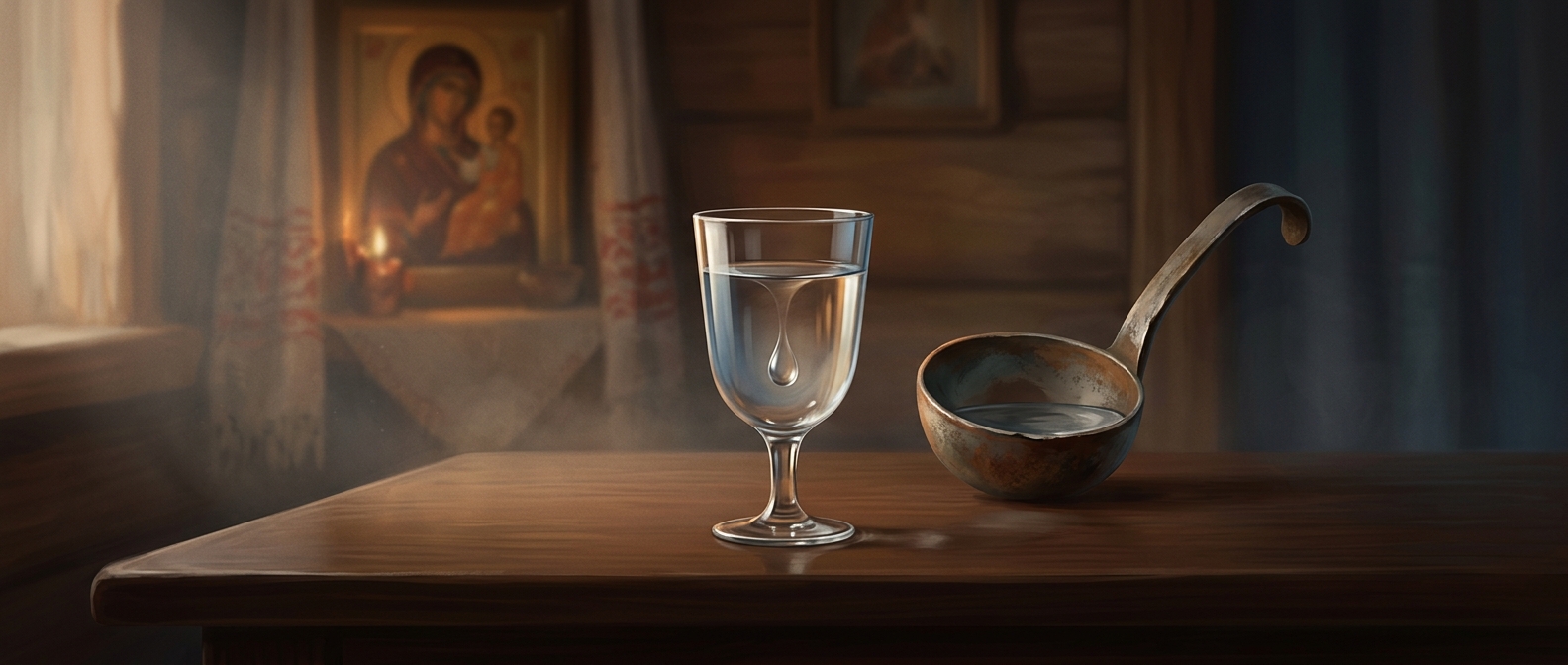
How “water” became “vodka”
In Russian, вода (voda) means “water.” Add the suffix -ka, commonly used to form diminutives—words suggesting something smaller or more familiar—and the result is vodka, literally “little water.” The ending is part of the word’s formation, not a separate word for a small measure.
A name that softens the drink
The name fits a long-standing habit of describing distilled spirits with water-related language: clear liquor can resemble water, even though it is made by distilling an alcoholic liquid. The diminutive makes the word sound less like a plain label for water and more like a distinct, familiar term.
That literal translation is a useful clue to the word’s shape, but it should not be mistaken for a recipe or a serving instruction. “Little water” names vodka through its linguistic roots; it does not mean the drink is diluted water.