A drink caught between trade and religious identity
Coffee reached Christian Europe through commercial routes linking the Mediterranean to the Ottoman world. To some Europeans, its association with Muslim societies made it seem more than an unfamiliar beverage: accepting it could feel like adopting something from a religious rival. The reported appeal to Pope Clement VIII reflects that anxiety, even if the story’s details are difficult to verify.
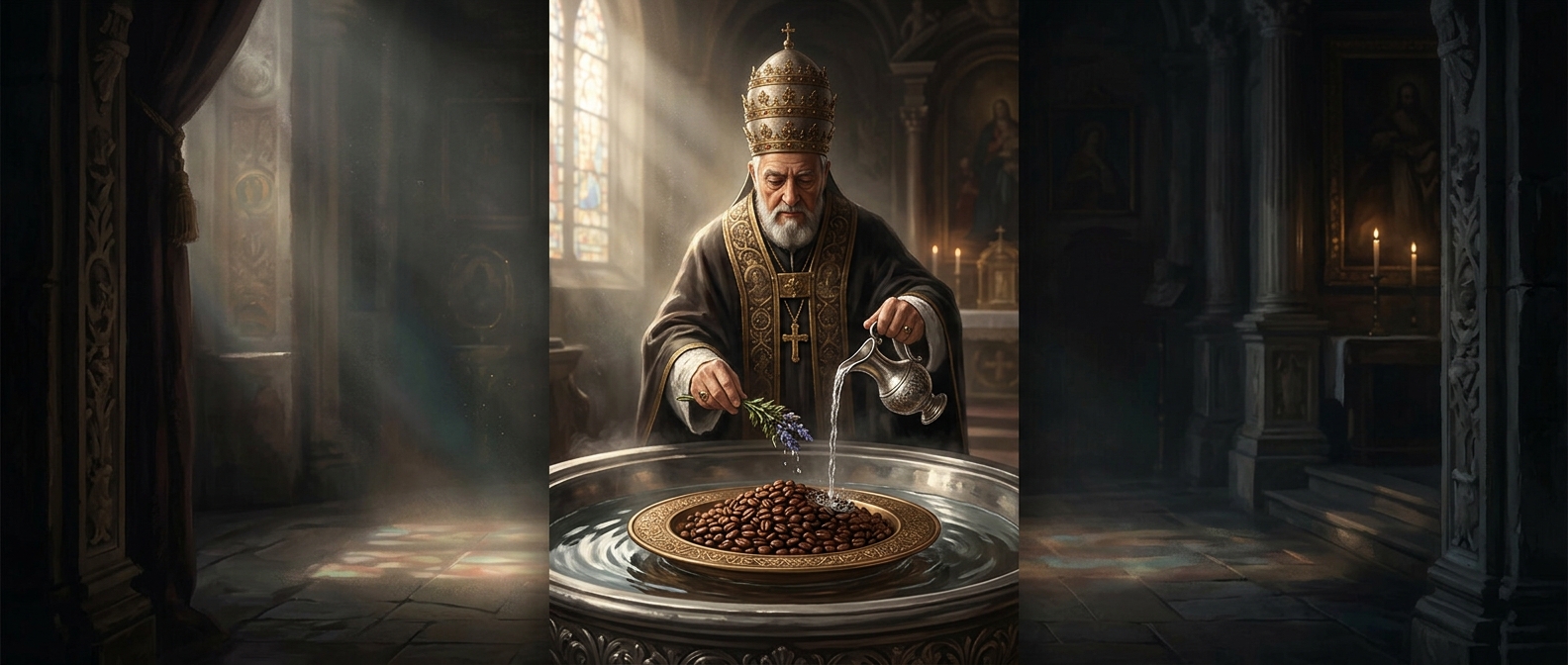
Clement, pope from 1592 to 1605, is said to have tasted coffee after clergy urged him to condemn it. In the familiar tale, he liked the drink and joked that it should be baptized so Christians could enjoy it. “Baptized” is the punch line, not a record of a religious ceremony: the story imagines papal approval turning a suspicious foreign custom into an acceptable one.
Approval could change a drink’s meaning
The anecdote captures a recurring problem for religious authorities: a useful or pleasurable practice may cross cultural boundaries faster than people’s attitudes do. A pope’s endorsement, whether or not this particular tasting happened as told, offered a way to separate coffee from the fear attached to its origins. Christians could drink it without treating the act as allegiance to Islam.
That distinction mattered as coffee spread through European cities and became a social drink, served in places where people met and talked. The tale survives because it compresses a cultural negotiation into one vivid scene: a potentially suspect bean reaches the pope’s table, and a taste converts a religious controversy into permission to pour another cup.