A critic became part of the Last Judgment
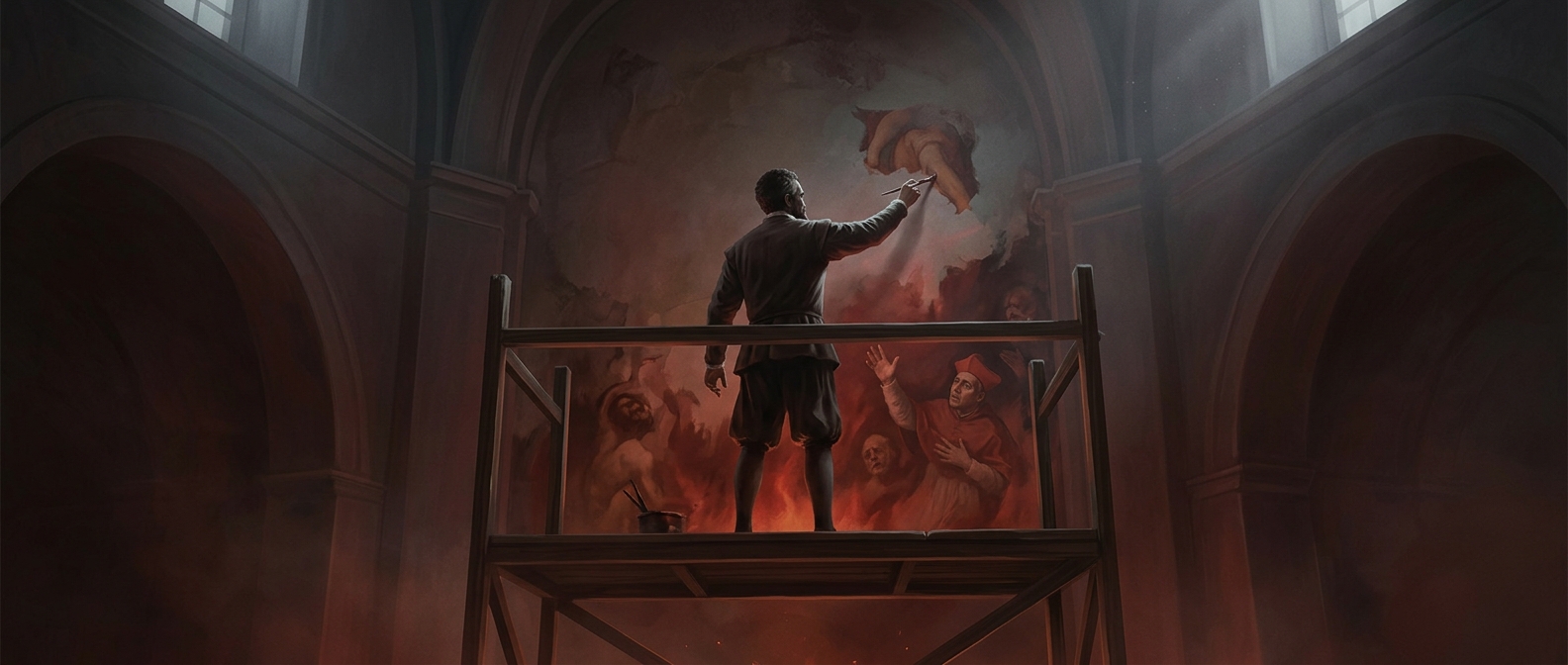
Michelangelo’s Last Judgment, painted on the altar wall of the Sistine Chapel, turns the Christian story of judgment into a crowded scene of rising and falling bodies. Near the bottom, among the damned, sits Minos—the judge of the underworld in classical mythology. Michelangelo gave him the face of Biagio da Cesena, a papal official who had objected to the painting’s exposed figures.
The placement made the insult legible: a critic of the chapel’s imagery was assigned a role among the people condemned in the image. Minos’s donkey ears added a familiar visual jab, suggesting foolishness. A serpent coils around his body and bites at his groin, making the punishment both grotesque and pointed.
Why the pope’s joke mattered
The story of Biagio’s appeal survives as an anecdote associated with the painting’s reception. When he asked Pope Paul III to have the likeness removed, the pope reportedly joked that his authority did not reach Hell. The quip made the scene’s logic part of the punchline: the figure could remain because it belonged to the underworld, beyond the pope’s jurisdiction.
The episode also shows how a monumental religious image could operate on more than one level. Chapel visitors saw a depiction of the Last Judgment; those who knew the dispute could also recognize a personal retaliation embedded in it. Michelangelo’s rebuke was not tucked away in a private sketch. It occupied a small but memorable place in one of the Vatican’s most prominent rooms.