Why a painter might destroy his own mythological art
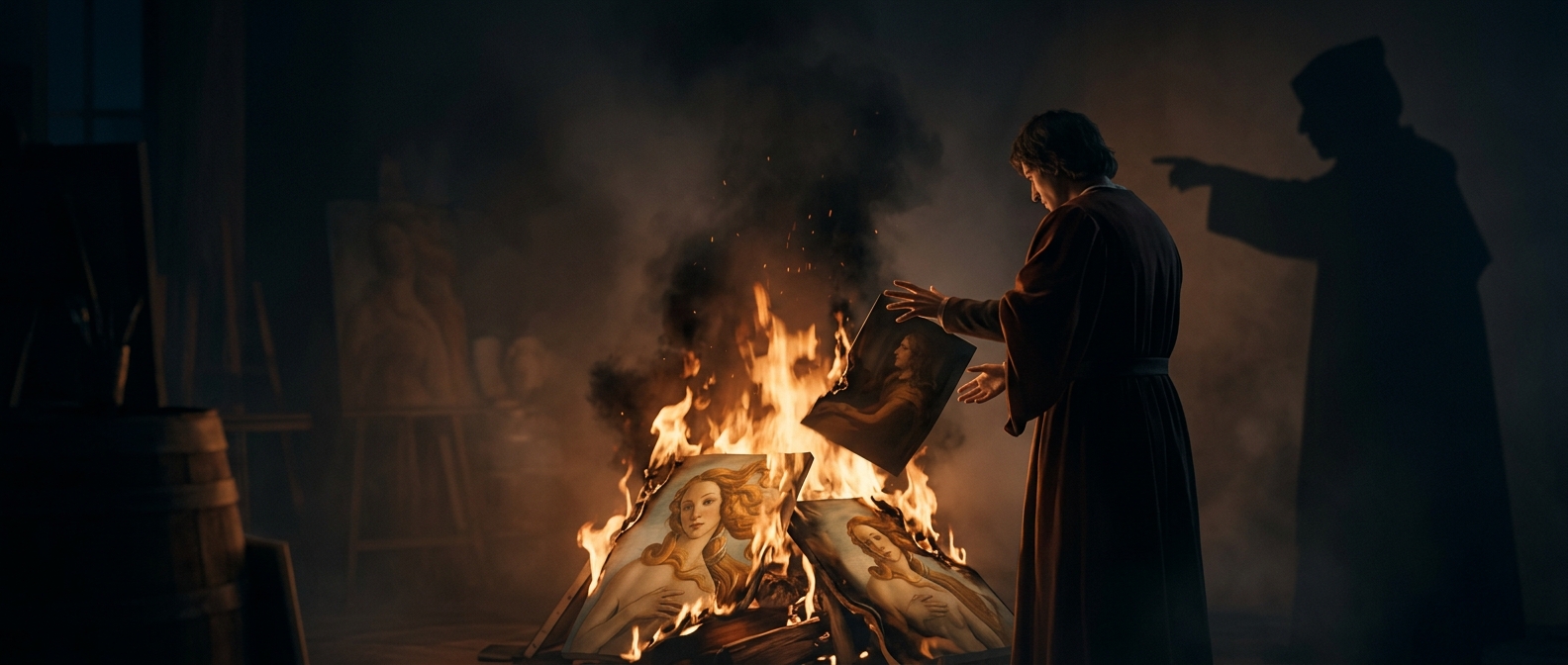
In late-15th-century Florence, the Dominican preacher Girolamo Savonarola urged people to turn away from what he considered sinful luxuries. His followers staged public bonfires of objects associated with vanity and worldly pleasure, including cosmetics, fine clothes, books, and artworks. These fires were not simply dramatic spectacles: they made private acts of repentance visible and gave the city a way to signal its commitment to religious reform.
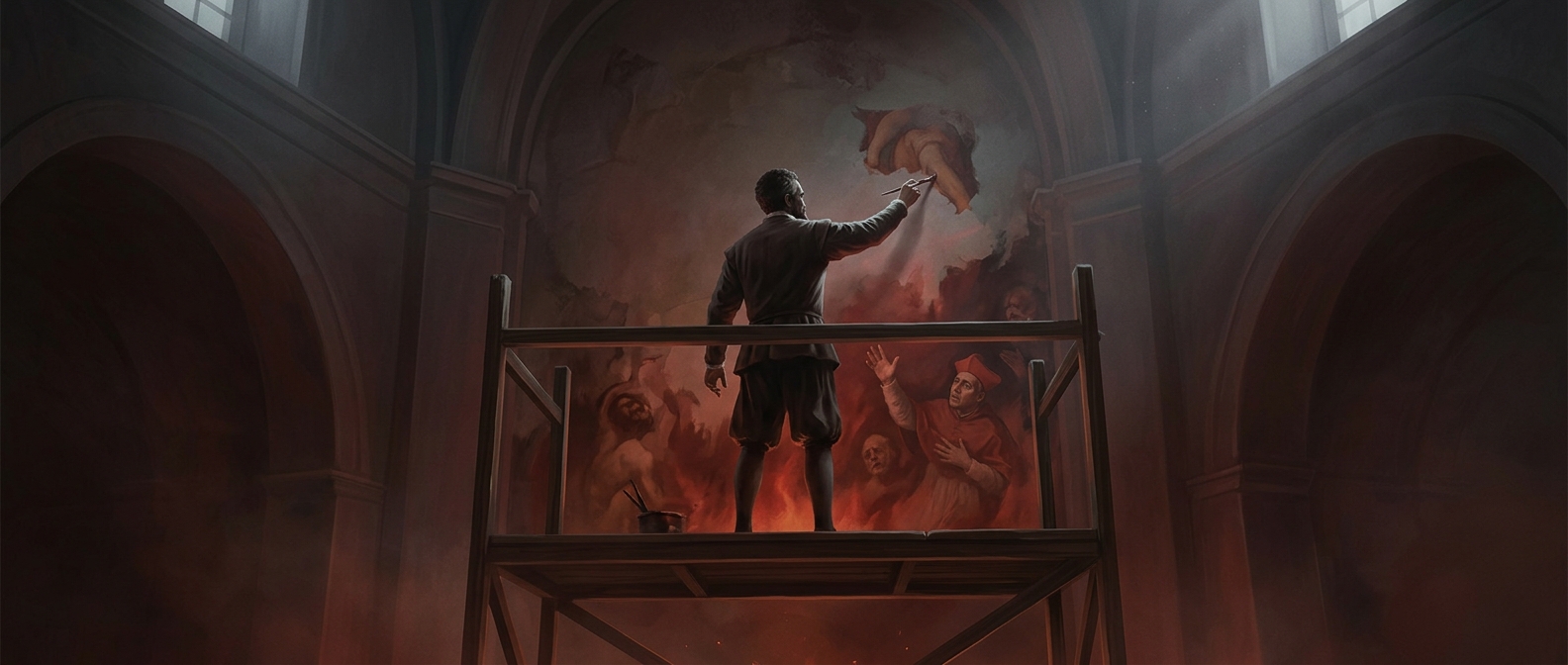
The painter Sandro Botticelli is often linked to this campaign. Later accounts say he surrendered paintings with mythological subjects—stories of pagan gods and heroes—and that religious guilt may have motivated him. The claim is plausible in a city where Savonarola’s preaching could make familiar artistic themes feel morally suspect, but the details are not firmly documented. No surviving record identifies exactly which Botticelli paintings, if any, went into the flames.
What the loss would have meant
Mythological paintings were not merely illustrations of old stories. They let artists explore the human body, beauty, desire, and the classical past—subjects that could sit uneasily beside a strict call to reject worldly indulgence. A painter who destroyed such work would be making a costly, public break with the values it represented, not just discarding objects he no longer wanted.
That uncertainty is part of the story. Botticelli’s surviving mythological works show how much can be lost when art becomes a target in a political and religious struggle. If the reports are true, some paintings vanished not through war or neglect, but because their maker may have come to see them as evidence against his own soul.