A name could become a tune
A musical cipher turns letters into notes according to a code. In the kind described here, vowels in a name supplied the clues: each vowel was matched to a pitch, and the resulting sequence could be woven into a melody. The score still looked like ordinary music. Unless a listener knew the mapping and the name being encoded, the notes gave no obvious sign that they carried a second message.
This was not a universal Renaissance system with one fixed set of vowel-to-note matches. The trick depended on a shared or discoverable key. That made the message less like a spoken insult and more like a private joke hidden in plain sight: the choir performed the notes, while only an informed listener could connect them to a person and read the jab.
The disguise depended on the music
A cipher had to fit the rules of the composition. Its notes needed to sit naturally in the melody, rather than stick out as a conspicuous code. A composer could use the sequence as a small musical figure—one that might recur or pass between voices—so the encoded reference traveled inside the larger piece.
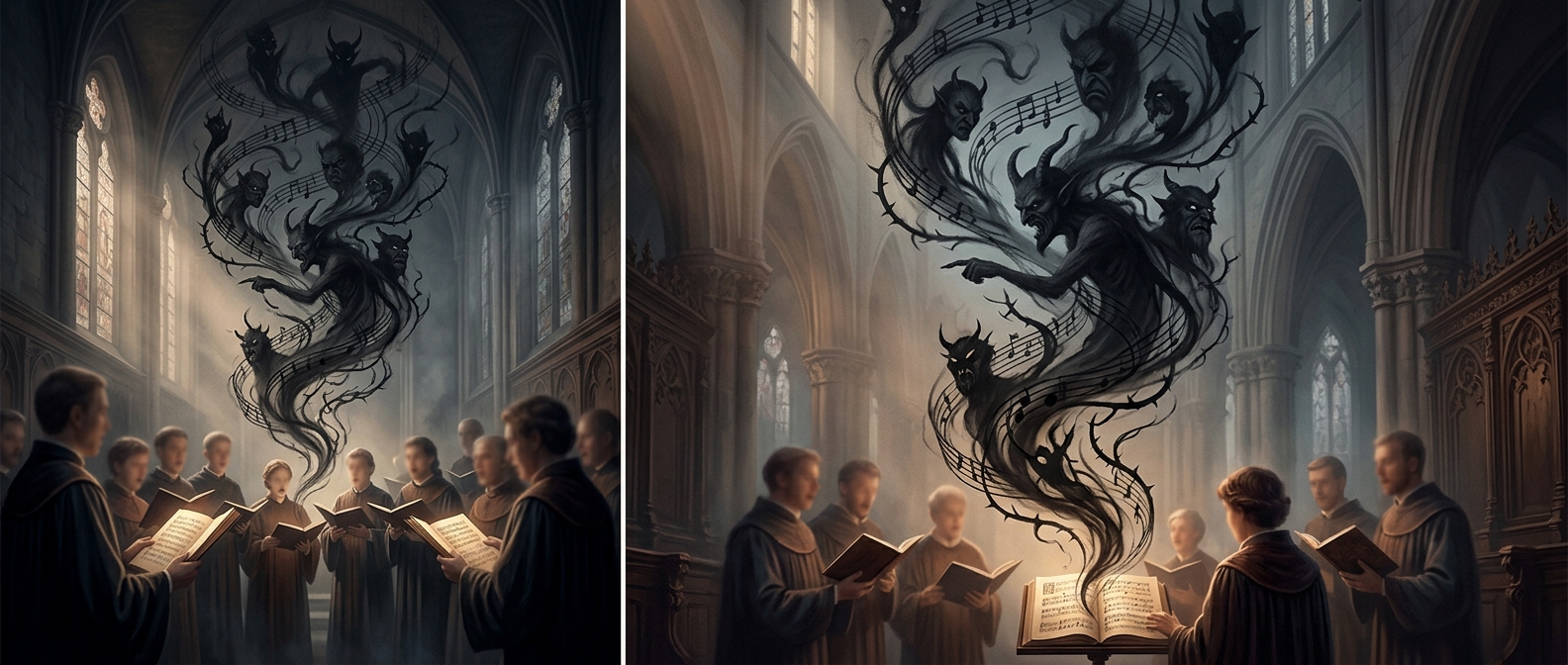
The church setting heightened the contrast. A choir could sing a solemn work from a page that revealed no written insult, while the coded pitches carried a pointed message for those who could decode them. The music made the message audible, but the code kept its meaning selective.