From stray notes to a musical subject
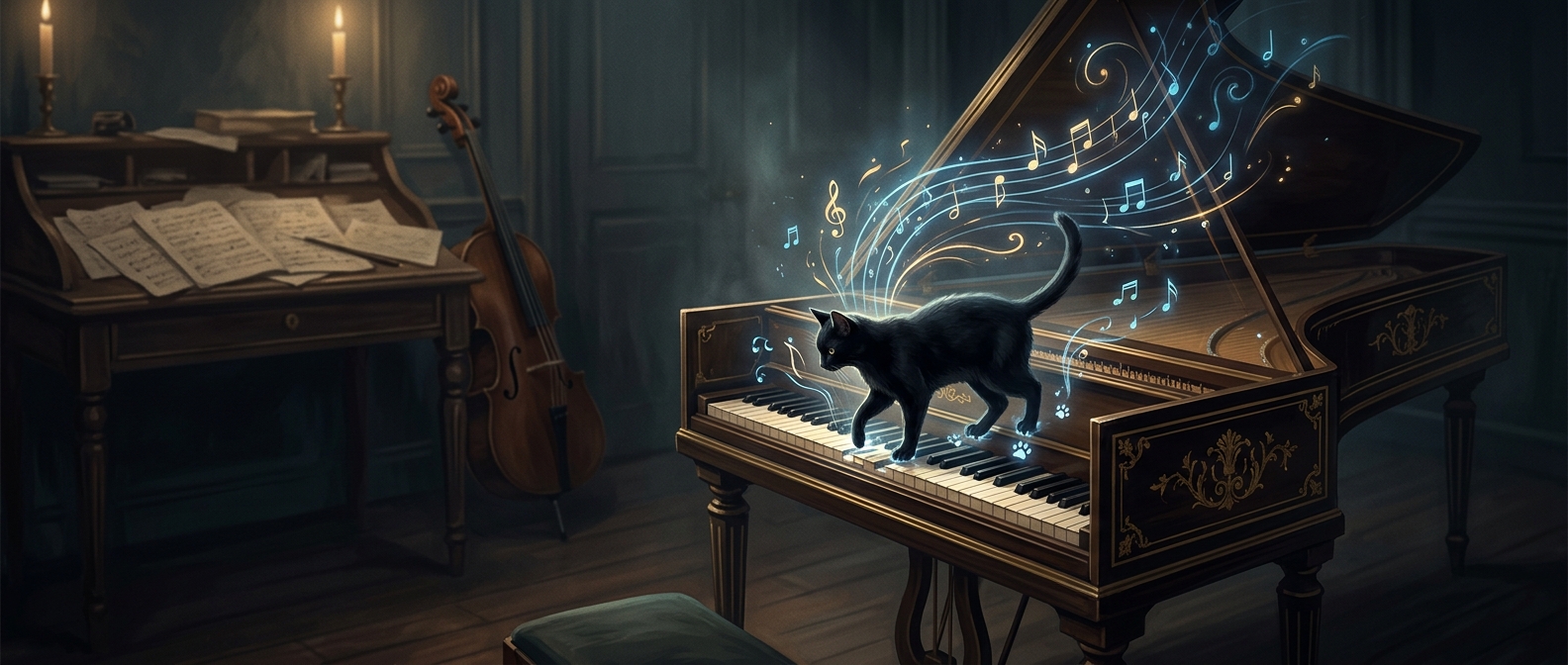
The piece associated with Pulcinella is Domenico Scarlatti’s Sonata in G minor, now popularly known as the “Cat’s Fugue.” A fugue is built around a short musical idea, called a subject, that returns in different voices, as if each part were taking up the same thought in turn.
Here, that subject begins with an angular sequence of notes that sounds less like a polished tune than an unexpected climb across the keyboard. The cat story gives that odd opening a vivid imagined source: a paw on the keys produces a jumble, and Scarlatti hears enough shape in it to make music.
Why the opening sticks
Once the subject is introduced, the other parts echo and answer it. The result turns a moment of apparent disorder into a piece with rules: the notes can be surprising, but their repetitions give the listener something to recognize and follow. That contrast is part of the work’s charm—the opening seems to stumble, then the composition makes its strangeness feel deliberate.
“Cat’s Fugue” is a nickname, not a title Scarlatti gave the sonata. The story’s staying power comes from how neatly it fits the music: the very notes that sound as though they might have come from a cat’s wandering paws become the pattern the whole piece follows.