The scandal was the embrace
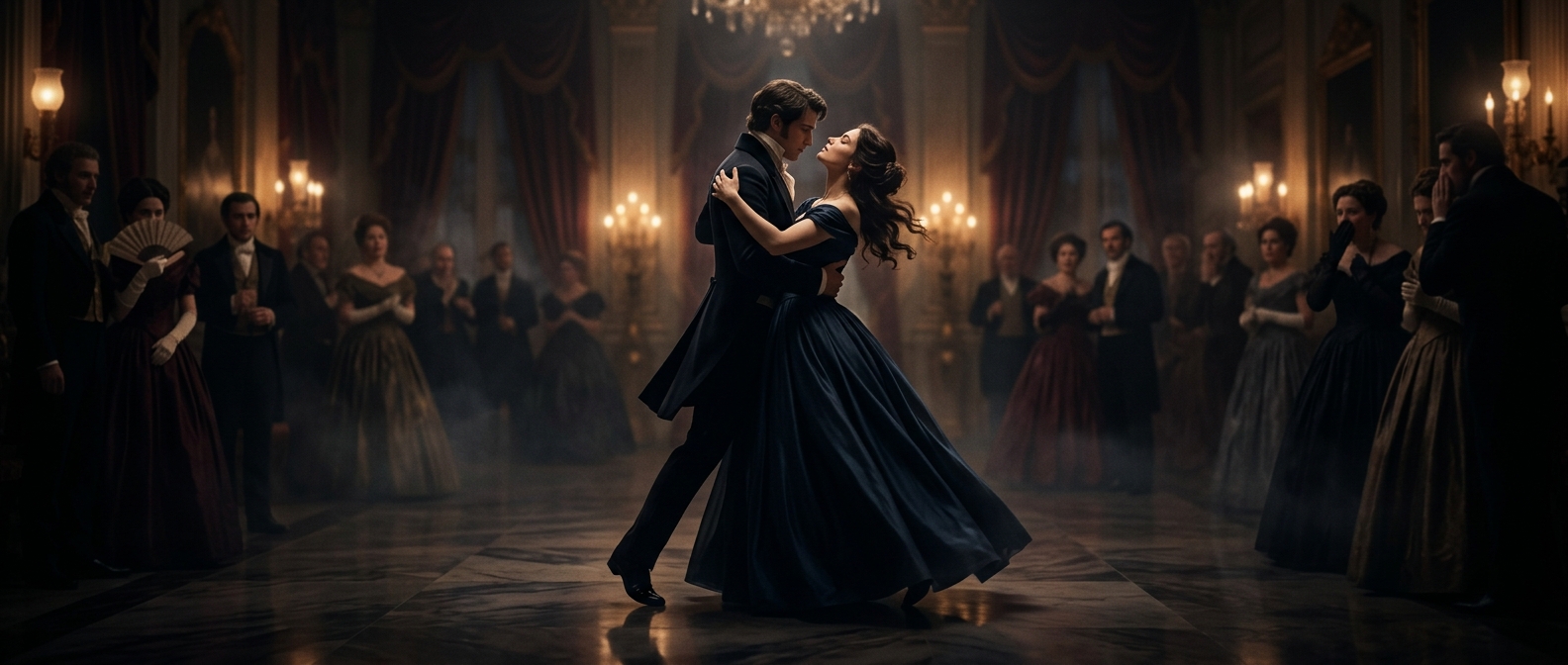
In older ballroom dances, partners often faced one another at a distance, joined hands, or moved through patterns that kept their contact brief and visible. The waltz changed that arrangement. Partners held each other close and turned continuously around the floor, maintaining contact rather than meeting only for a passing figure.
That difference made the dance feel intimate in a setting where courtship was expected to follow strict rules of public behavior. A couple could display physical closeness in front of everyone and have it recognized as a respectable social activity. The music and elegant steps did not erase the intimacy; they gave it a socially acceptable frame.
A new kind of public courtship
The waltz’s motion also made the pair seem less like participants in a formal group pattern and more like a unit moving on its own. As they spun, the partners’ attention stayed on each other, while the surrounding dancers became part of the backdrop. For observers concerned with decorum, that combination—close touch, sustained attention, and movement controlled by the couple—could look like private behavior brought into public life.
The controversy therefore concerned who could touch whom, and under what circumstances, as much as it concerned dance technique. Once the waltz became familiar, the ballroom’s rules had made room for a form of courtship that earlier standards had treated as too intimate. Its boldest innovation was not simply turning in circles; it was making an embrace an ordinary part of a public evening.