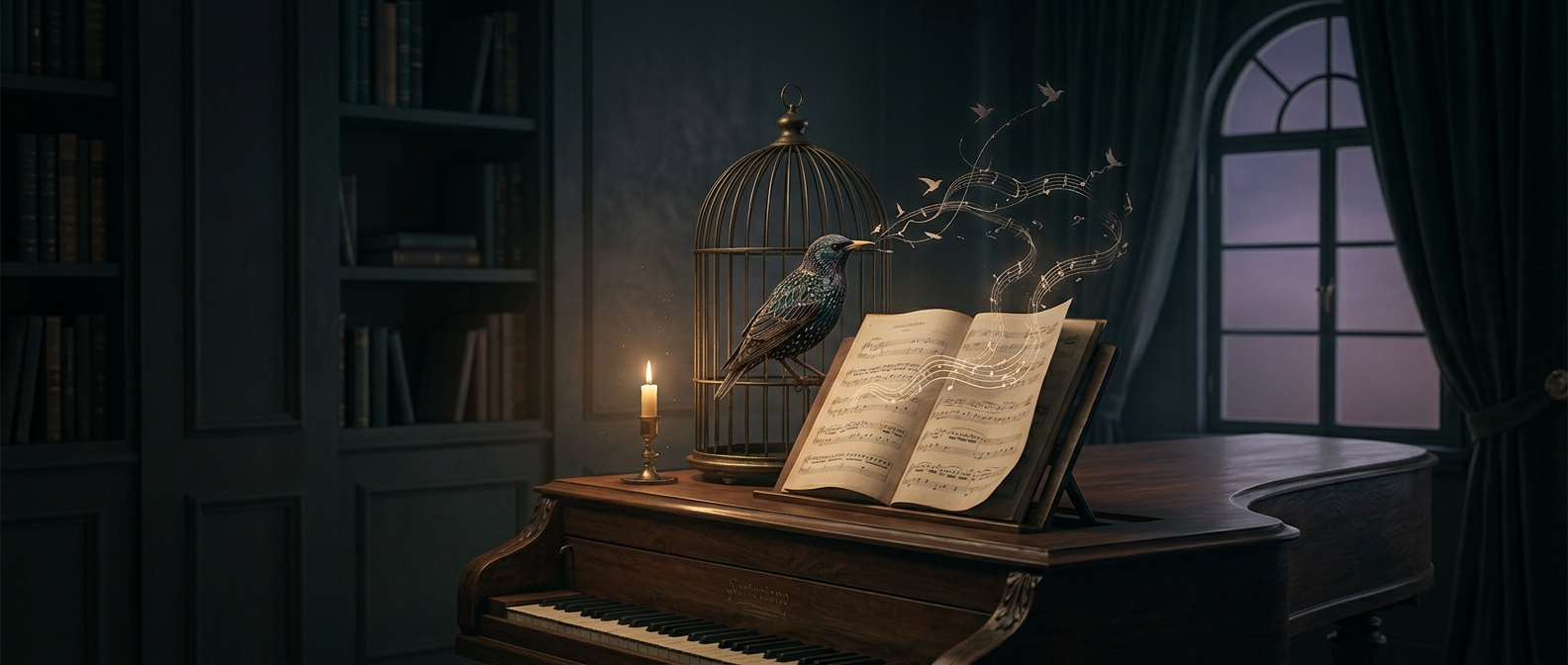
A Bird Became Part of Mozart’s Musical Household
Mozart’s interest in the starling was more than affection for a pet. He noticed that it could reproduce a phrase from his music, turning an ordinary household bird into an unexpected musical companion. Starlings are natural mimics: they can copy sounds they hear, including patterns that resemble human speech or music. The bird did not understand the concerto as a musician would, but it could reproduce a recognizable fragment closely enough to catch its composer’s attention.
Mozart preserved the episode in his own hand. Beside the bird’s rendition, he noted how its version differed from the written melody. That small comparison is revealing: he listened not just for a general resemblance, but for the particular shape of the phrase. A musical idea had left the concert hall and returned to him in a bird’s altered voice.
The Farewell Was Personal—and Playful
When the starling died, Mozart marked its passing with a burial and a poem. The surviving verse gives the loss a comic, affectionate tone, rather than the formality of a public memorial. Its playfulness does not make the attachment less real; it shows how Mozart could turn a private household moment into another kind of performance, this time in words.
The story is memorable because it joins two sides of his life that are often kept separate: the celebrated composer and the person attentive to a small, peculiar presence at home. The bird’s brief musical echo was enough to become part of Mozart’s record—and, after its death, part of his mourning.