Making one percussionist do the work of four
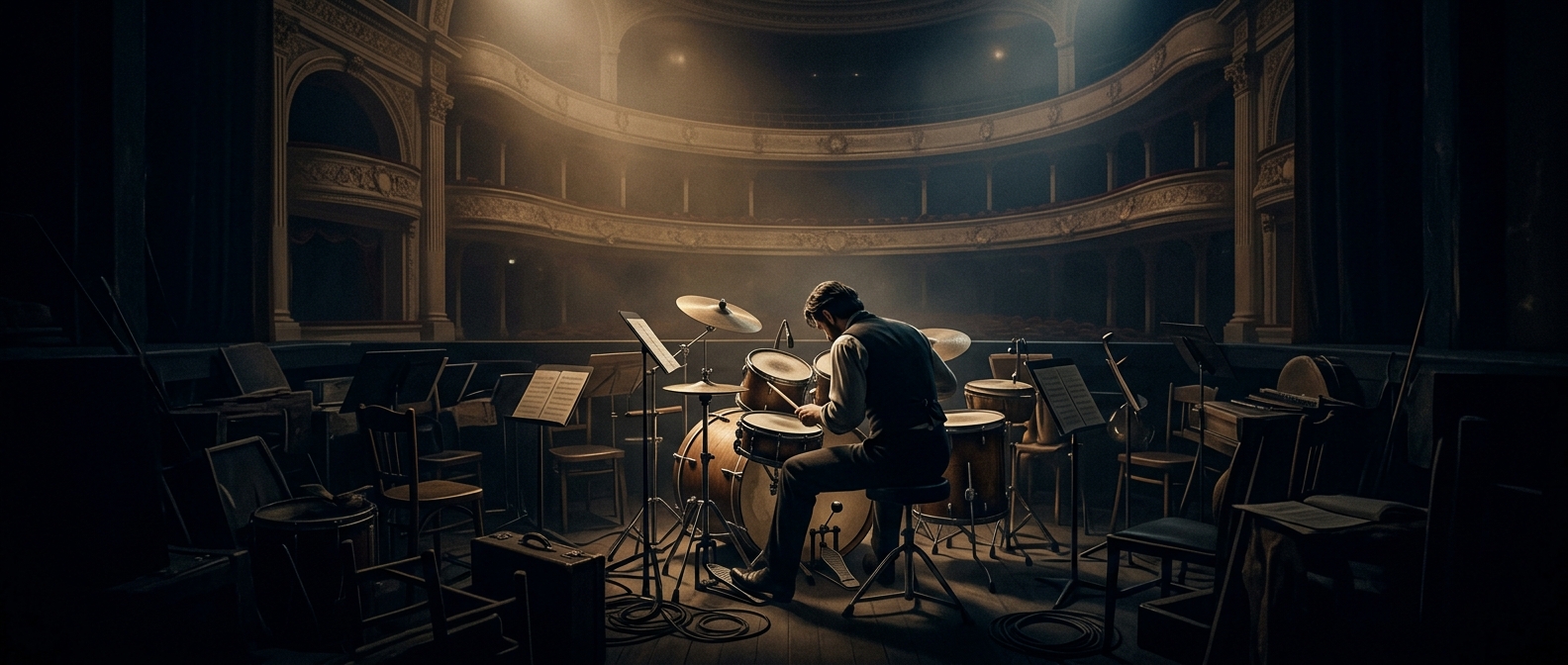
A theater pit had to fit beneath or beside the stage while leaving room for the musicians needed to accompany a performance. Four separate percussionists—and their instruments, stands, and movement between them—could take up space a small pit did not have. Grouping drums within one player’s reach turned that space problem into an equipment problem: mount the instruments together, and one person could move among them quickly.
The setup changed the job
The arrangement mattered because theater percussion is often about timing and contrast. A player might need a low thump, a sharp accent, or a roll at different moments in the same passage. With several drums gathered around a central seat, the percussionist could switch by changing hand position rather than crossing the pit. A foot-operated pedal could also let the player strike a bass drum while keeping both hands available for other instruments.
This did not mean one drummer simply played four parts at once. It meant that a single musician could cover more of the percussion cues that otherwise might have been divided among several people. The setup demanded coordination, but it also made transitions faster and kept the ensemble compact.
A practical solution with a lasting effect
Combining instruments around one player helped establish the basic idea of a drum set: several percussion sounds controlled from one station. The theater pit supplied a practical reason to bring them together. A crowded space could turn a limitation into a new instrument—one performer, surrounded by the sounds the show needed, ready to move from one cue to the next without leaving the seat.