A name that described a new kind of control
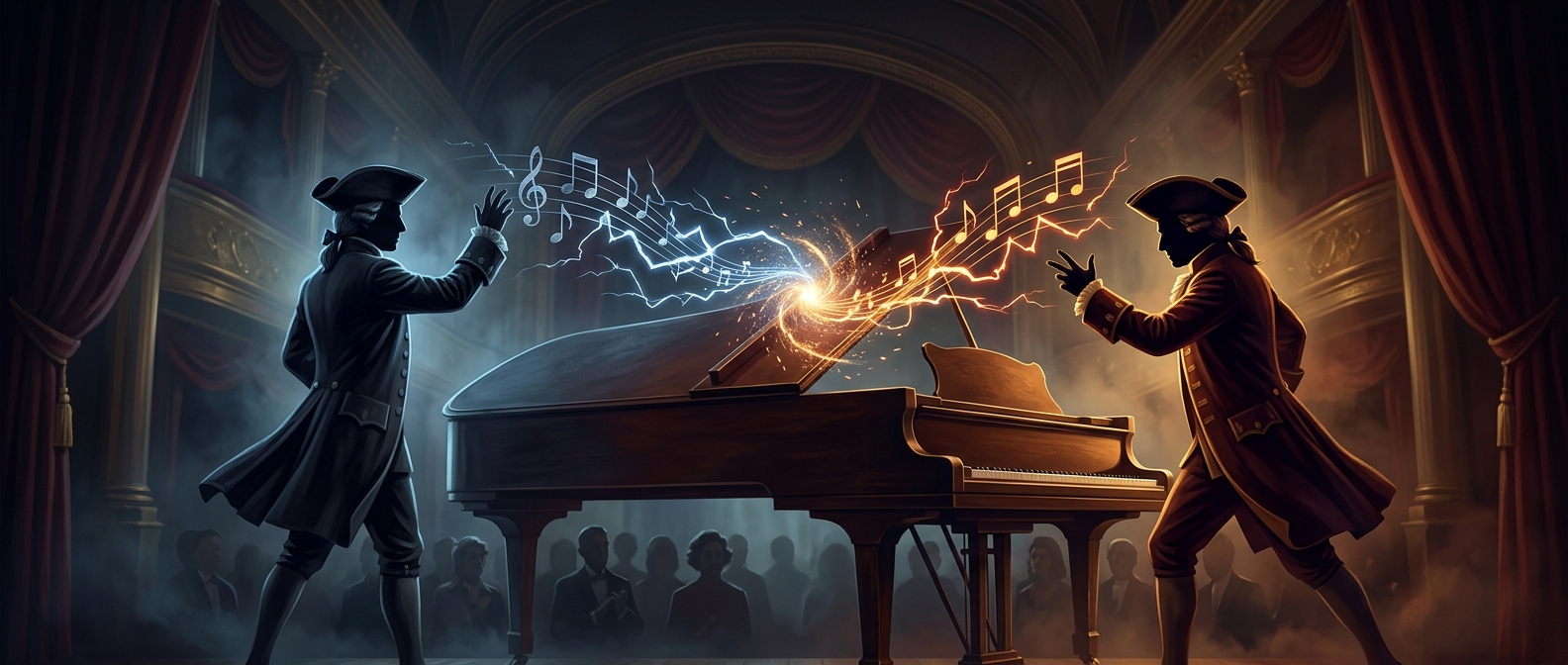
The piano’s original Italian name was gravicembalo col piano e forte—roughly, “harpsichord with soft and loud.” The name pointed to a practical difference, not merely a change in sound: a player could shape the volume of individual notes through touch.
On a harpsichord, pressing a key made a small quill pluck a string. The pluck was largely the same whether the player pressed gently or forcefully, so the instrument could not easily make one note rise above its neighbors through touch alone. Players could alter the overall sound with stops or by using different sets of strings, but those controls changed more than a single note at a time.
How the piano made touch matter
In the instrument developed by Italian maker Bartolomeo Cristofori around the turn of the 18th century, each key operated a mechanism that sent a small hammer toward a string. Pressing harder made the hammer strike with greater force; pressing more lightly produced a gentler sound. The key did not simply push the hammer against the string and hold it there: the hammer was designed to rebound, leaving the string free to vibrate.
That gave performers a new expressive tool. A melody could swell above its accompaniment, or a phrase could recede without changing instruments or stopping to adjust a control. The piano’s name preserved the contrast that made this possible. Over time, the long phrase shortened to “pianoforte,” and then to “piano”—a compact name for an instrument whose defining trick was letting the player make the same key speak in more than one voice.