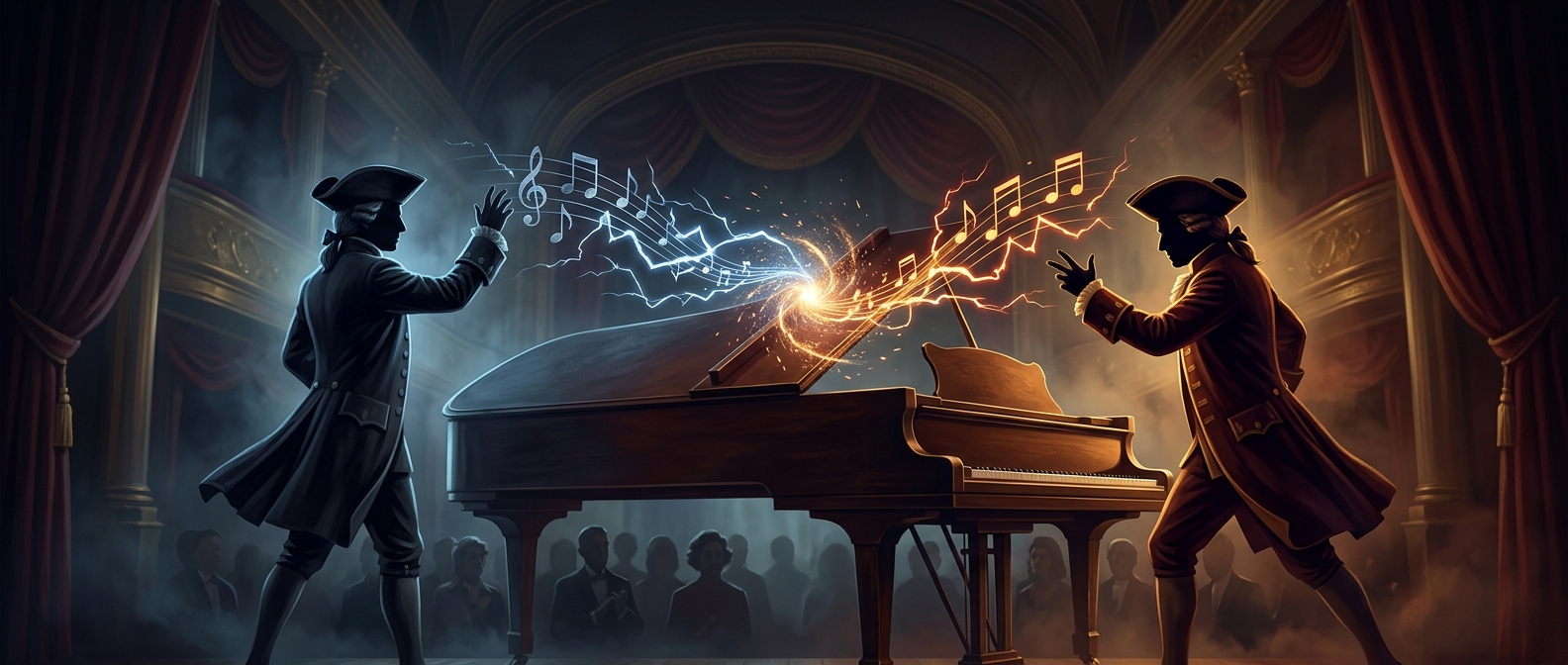
How musical disagreements became public campaigns
A dispute over music could reach far beyond the concert hall once newspapers made criticism part of everyday cultural life. Reviews did more than judge whether a performance pleased an audience: they argued over what music ought to become. Was a composer extending familiar forms, or breaking with them? Those questions could turn taste into a contest over artistic principle.
Composers rarely fought alone. Critics, performers, patrons, and listeners had their own stakes in the argument. A critic’s defense of one composer could be read as an attack on another, while readers used the same essays to signal which side they favored. The press gave scattered opinions a shared vocabulary—and made each new review feel like another move in an ongoing contest.
Why the rivalry mattered
These battles were about more than personal dislike. Public allegiance could influence which works received attention, which performers championed them, and what audiences expected to hear. Supporters helped make difficult or unfamiliar music legible by explaining why it mattered; opponents could sharpen the same debate by insisting it violated accepted standards.
The result was a kind of cultural feedback loop: controversy drew attention to the music, and attention gave the controversy a larger audience. A quarrel that might once have remained among musicians and patrons could become a public choice between competing ideas of the future of music.