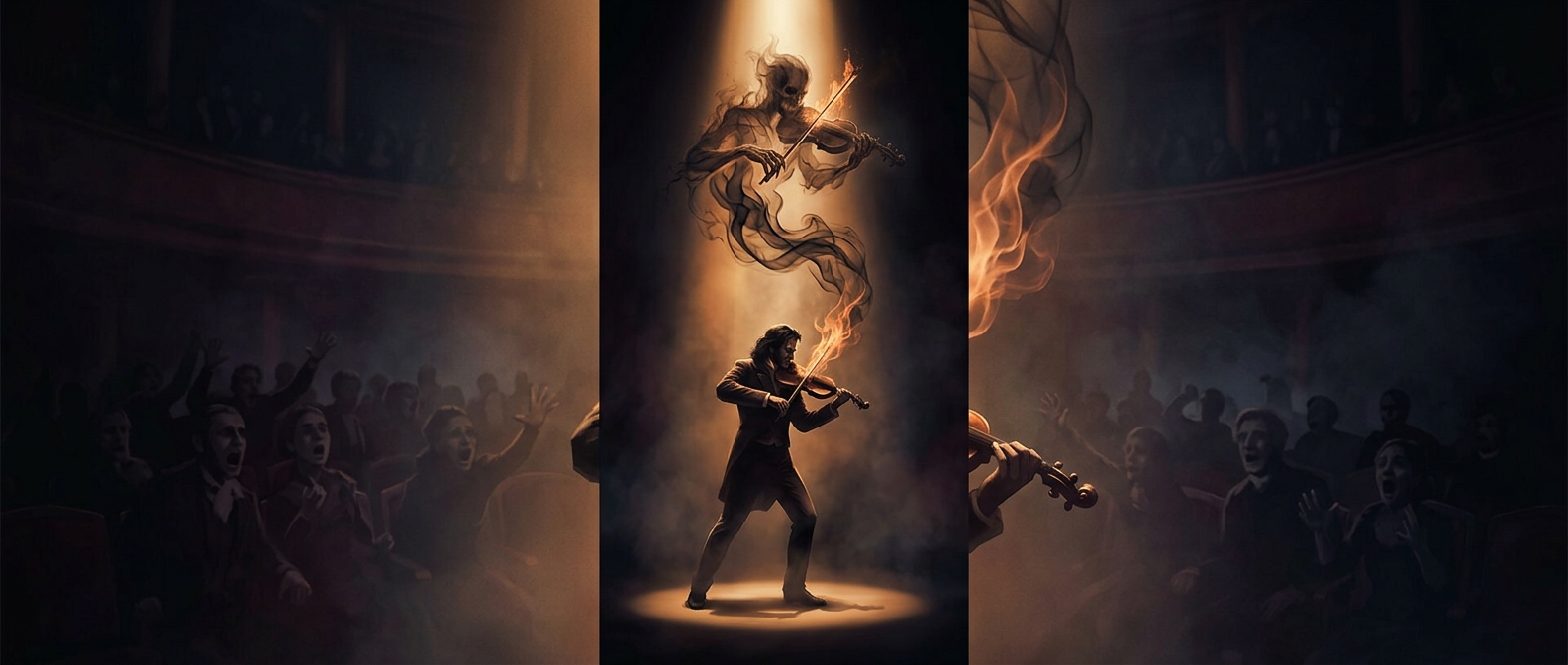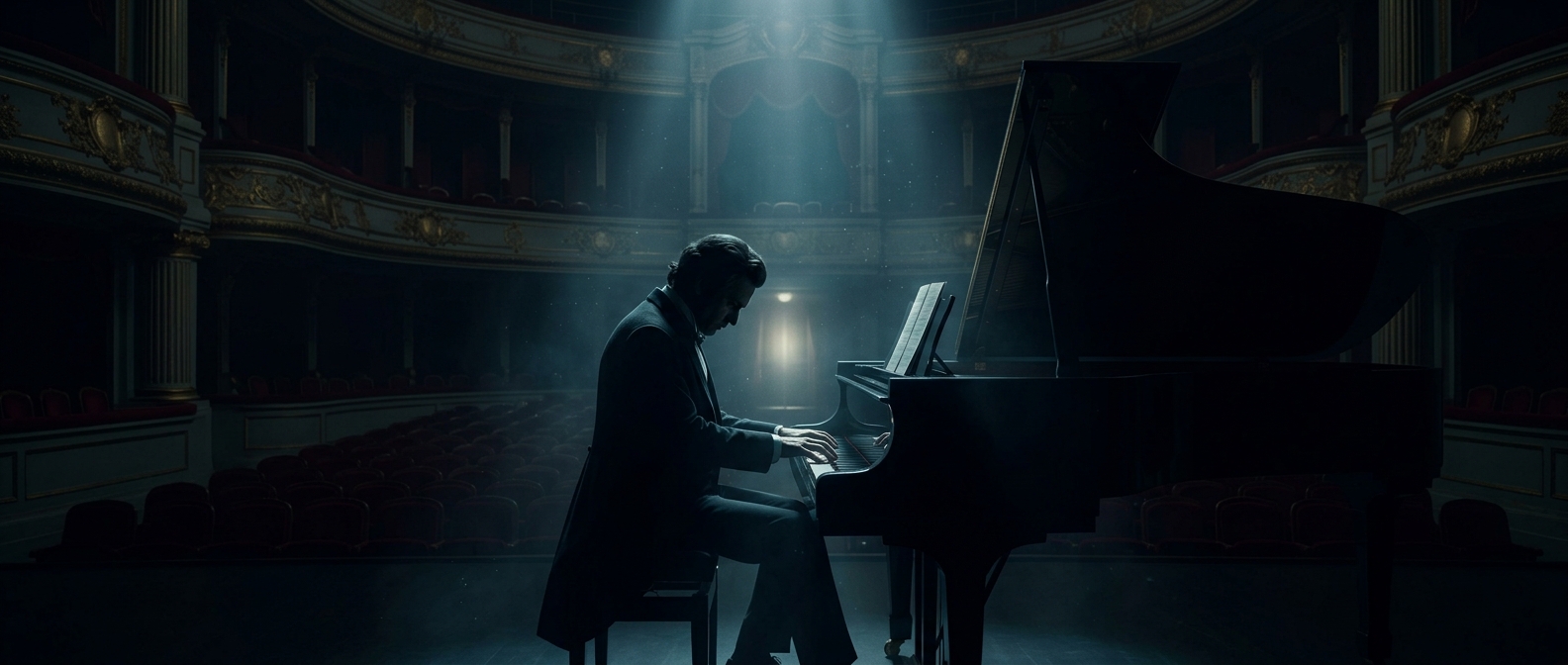
Wagner’s theater made the audience disappear
In many 19th-century opera houses, the auditorium remained bright enough for spectators to see one another. An evening at the opera was also a social occasion: people could talk, watch the crowd, and display their clothing while the performance unfolded. The stage competed with the room around it.
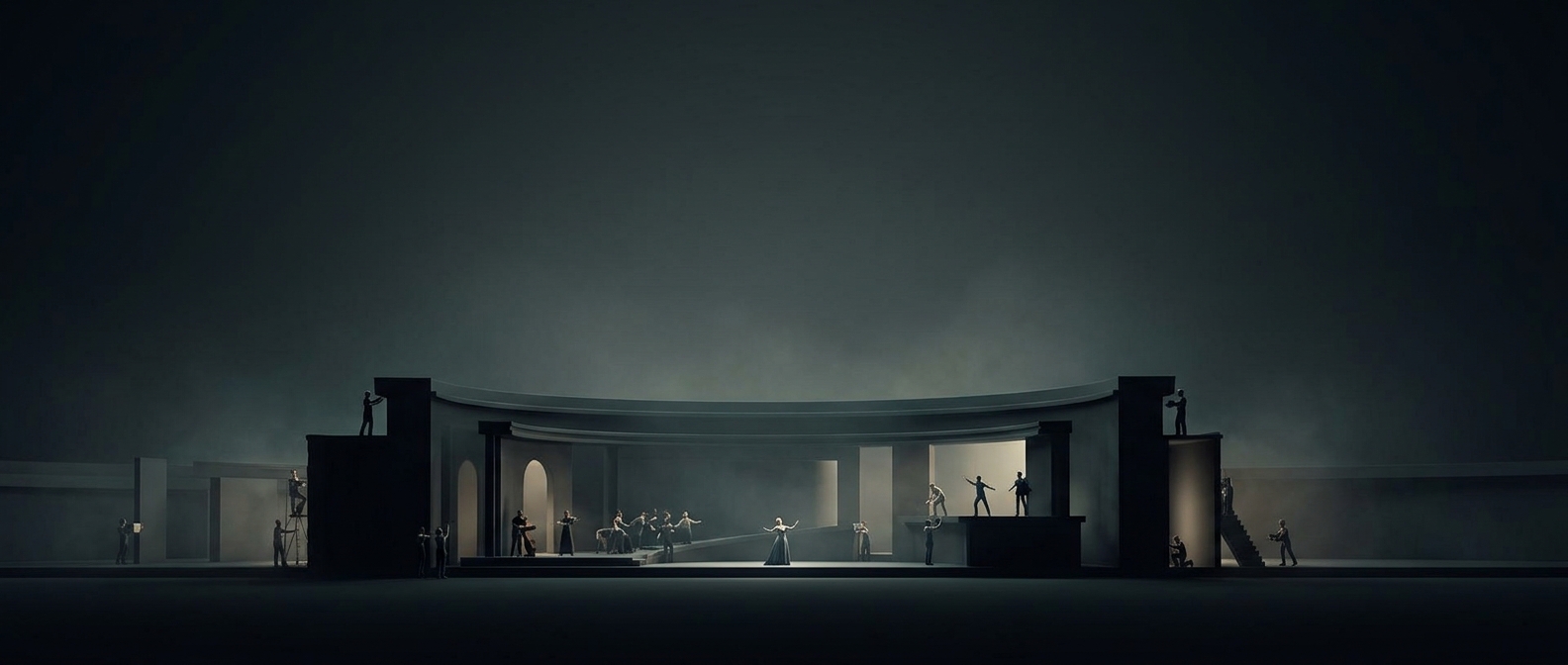
Richard Wagner wanted to reverse that relationship. At the Bayreuth Festspielhaus, the theater built for his works, the house lights were lowered during performances. The audience could still hear and watch, but its faces and movements receded from view. Attention was redirected toward the illuminated stage.
Darkness served the drama
The change supported Wagner’s ideal of opera as a unified work of music, poetry, and visual theater—not a backdrop for an evening’s socializing. In a darkened auditorium, a spectator was less likely to be distracted by neighboring conversations or by the sight of other patrons. The stage could feel like a separate world, with fewer reminders of the people watching it.
Bayreuth reinforced that focus in another way: its orchestra was placed in a covered pit, largely hidden from the audience. The musicians remained essential to the performance, but they did not compete visually with the action onstage.
A lasting change in how audiences watch
The darkened house helped establish a modern expectation: when a performance begins, the room grows dim and the stage becomes the center of attention. That convention can feel inevitable now, but it changed the audience’s role. Instead of treating the theater as a place to be seen, spectators were asked to sit quietly and look outward.
The practical result was a striking theatrical illusion: once the lights fell, the audience could nearly vanish, leaving the performers to command the room.