Why an orchestra could manage without a conductor
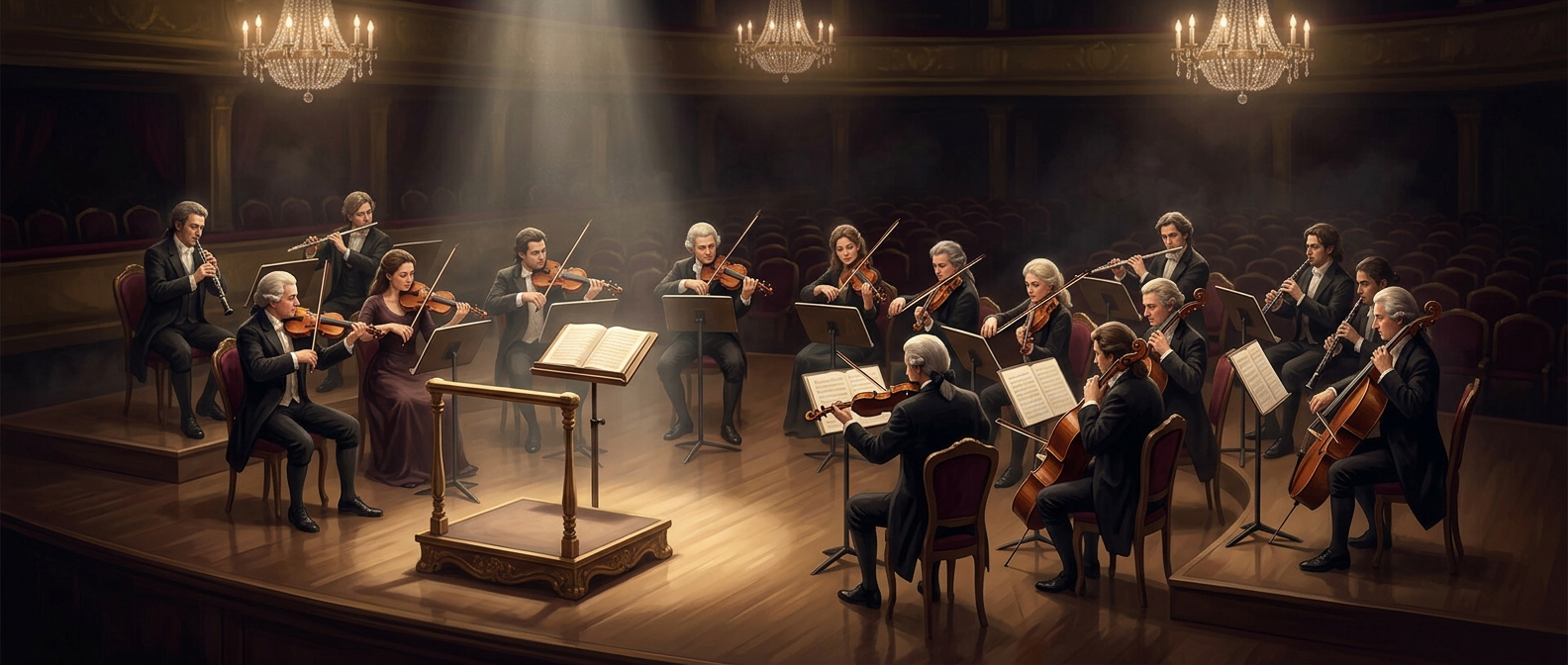
In smaller ensembles, musicians could coordinate by listening and watching one another. The first violinist’s bow and body movements gave visible cues, while a keyboard player could help anchor the beat and harmonies. In many Baroque ensembles, that keyboard part belonged to the continuo: a flexible accompaniment that supported the music’s bass line.
This arrangement worked best when the group was compact and its players could easily hear and see the leader. The person guiding the performance also shaped it from within, responding to the other musicians while playing.
What changed when orchestras grew
As orchestras expanded and music became harder to coordinate, a leader inside the ensemble had more to do. Players were spread farther apart, passages could involve intricate entrances, and the first violinist could not always provide a clear cue while concentrating on a demanding part. A player’s beat might also be difficult for everyone to see.
A separate conductor solved that practical problem by standing where the whole ensemble could watch. Free from an instrumental part, the conductor could give clearer signals for starts, stops, tempo changes, and transitions—and help shape how the music fit together. The shift was gradual, not a single handoff: violinists and keyboard players continued to lead in some settings even as the independent conductor became more prominent.
The change made leadership more visible, but it also changed the job. Instead of coordinating music from inside the group, one person could now guide the ensemble from a position designed to be seen by all.