A strange shape in a familiar sacred scene
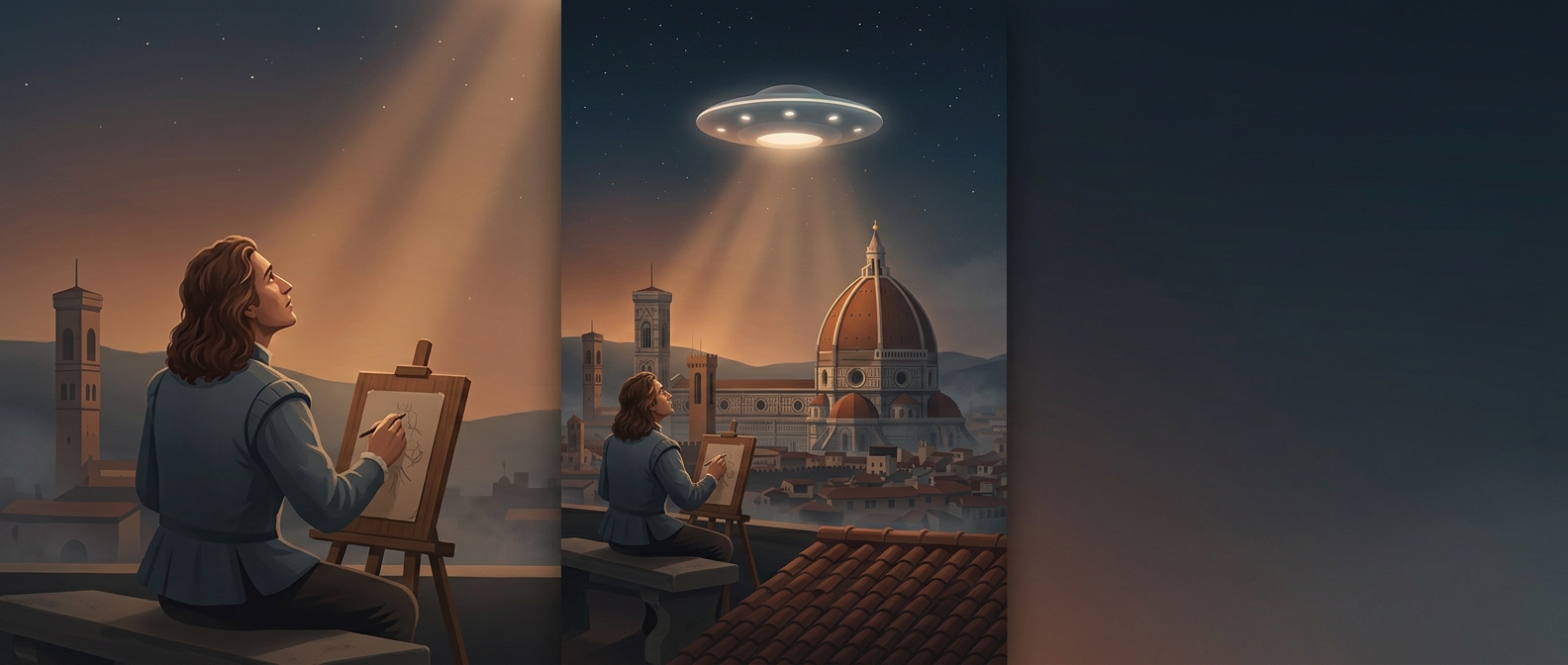
In The Madonna with Saint Giovannino, the Virgin and child occupy the foreground, while a small figure in the distance points toward a disc-shaped object in the sky. That arrangement gives the shape unusual force: it is not just a mark in the landscape but something another person in the painting appears to notice. To modern eyes, the scene can resemble a report of an unidentified flying object.
Renaissance images used more than one visual language
Religious painters often placed sacred figures in recognizable earthly settings. A landscape made the holy story feel present in the viewer’s world, while gestures and unusual objects could direct attention to a spiritual event. A figure pointing skyward therefore works as a visual cue: look where he is looking, and consider that the object may matter to the scene.
But the painting does not label the object. Its rounded shape invites a modern comparison with a flying saucer, while its role in a devotional image invites other readings. It has been interpreted as an angel or a cloud—possibilities that place it within religious imagery or ordinary nature rather than treating it as a vehicle.
Why the ambiguity endures
The painting gives viewers a striking shape and a human witness, but not enough information to settle what the shape represents. That gap lets different eras bring different expectations to the same image. The UFO reading is compelling as a modern association; it is not, by itself, proof that the artist meant to depict an extraterrestrial craft. The detail worth remembering is how a simple gesture—one distant figure pointing—turns an ambiguous patch of sky into the painting’s enduring mystery.