One image, four original works
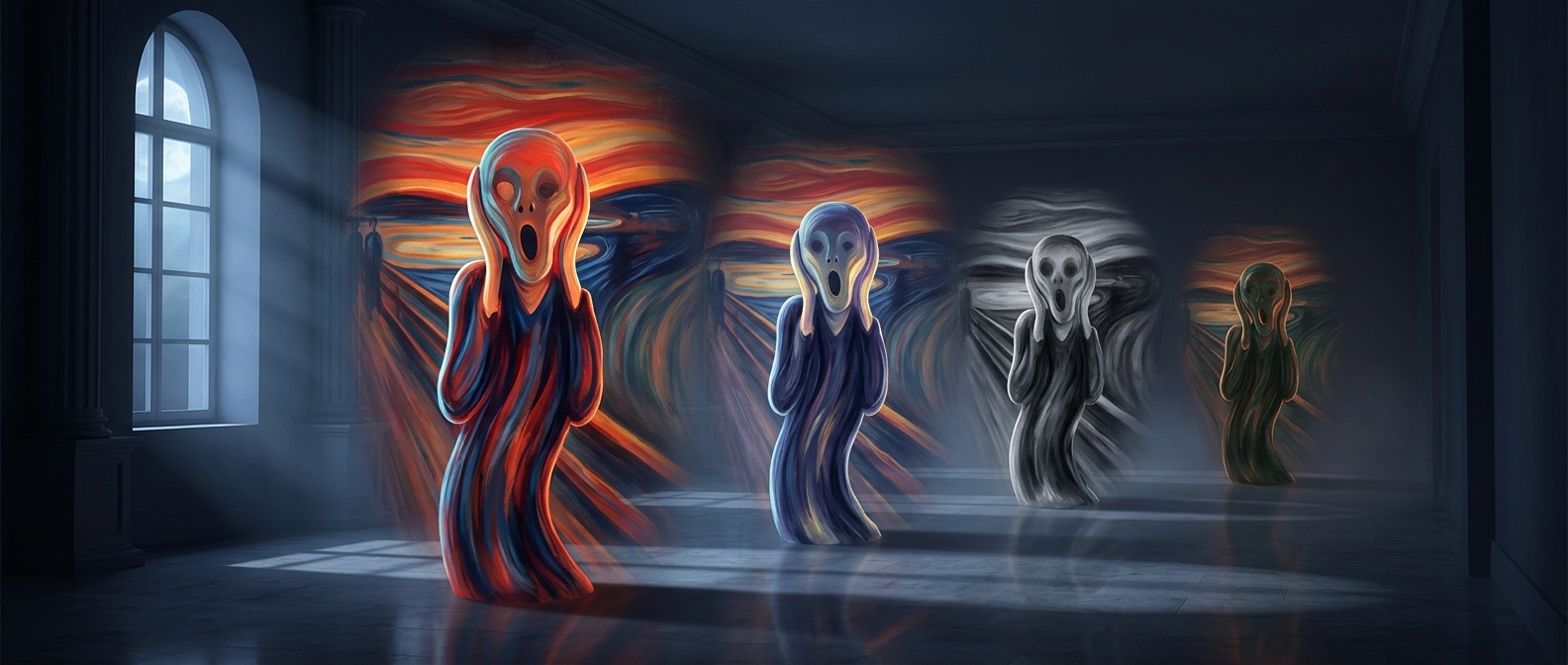
Edvard Munch did not make just one The Scream. He returned to the composition in four original versions: two paintings and two pastels, made between 1893 and 1910. Pastel is a soft drawing material that leaves visible strokes of color on the surface. The versions are now held in different collections, so the familiar image is spread across several objects rather than preserved in a single definitive canvas.
Reworking the image in different materials
The versions keep the same striking arrangement: a lone figure on a bridge, two people receding behind it, and a turbulent sky sweeping across the scene. But changing from paint to pastel altered how Munch could build the image. Paint could be layered into broader areas; pastel let him draw directly with colored strokes, giving the surface a more exposed, immediate quality.
That matters because The Scream is not built around fine detail. Its force comes from the contrast between the small, isolated figure and the flowing lines that seem to carry distress across the whole landscape. Repeating the composition let Munch revisit that effect without making a mechanically identical copy.
More than a single iconic canvas
Munch also made a lithographic version, a print made from a prepared stone. It helped the image circulate in multiple impressions, but it is distinct from the four unique painted and pastel versions. The familiar picture is therefore both a specific composition Munch repeatedly reworked and an image that could reach viewers through reproduction. Seeing the four originals side by side would mean encountering not four unrelated scenes, but four material attempts to make the same anxious vision feel present.