A model who never had to be paid
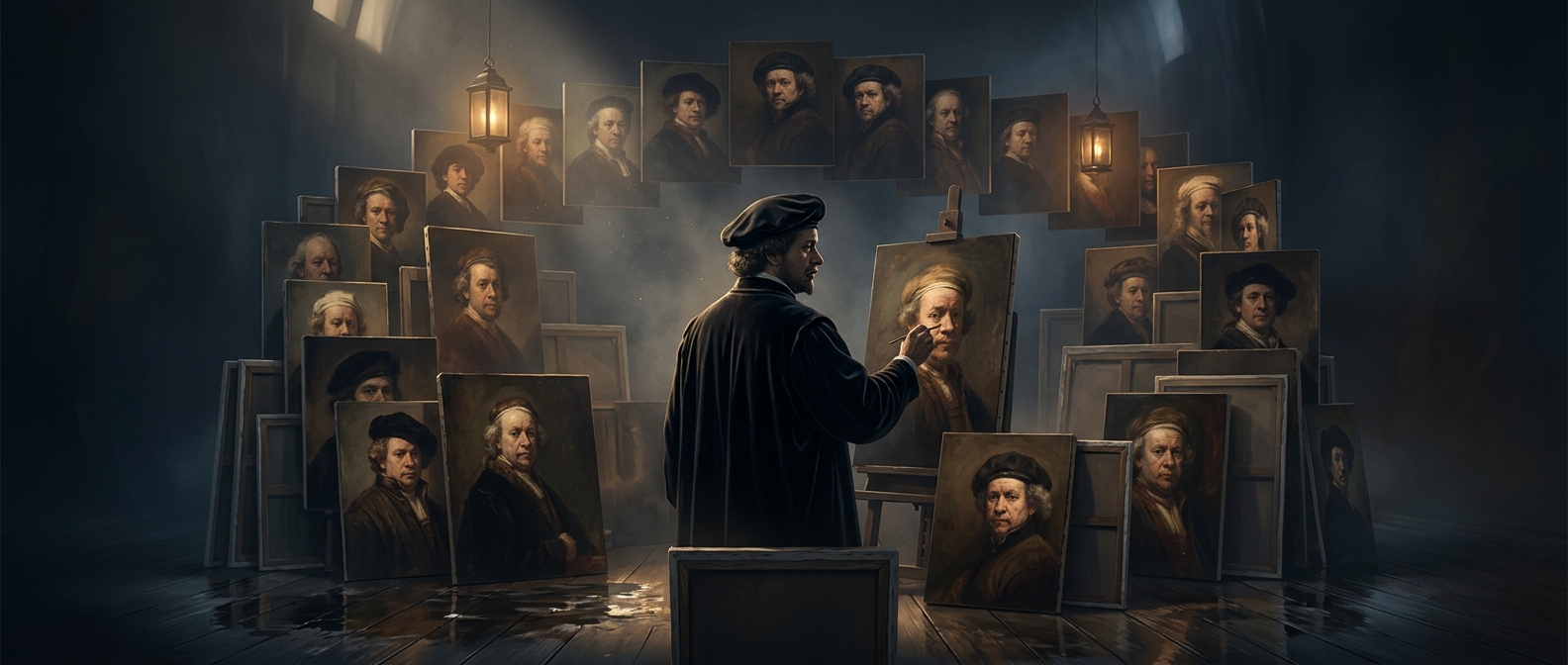
A portrait painter usually needed another person to sit still, often for repeated sessions. Rembrandt could instead place a mirror in his studio and use his own reflection. That made a living face available whenever he wanted to test a pose, expression, shadow, or brushstroke—without arranging a sitter or paying one.
The mirror did more than save money. It turned portrait practice into a series of small experiments. Rembrandt could adjust the light, tilt his head, or change his expression, then study how those choices altered the face on canvas. He could return to the same subject again and again, making the process useful even when he was not producing a commissioned portrait.
Practice that became a record
Each self-portrait also captured him at a particular age and in a particular mood or presentation. Over time, the repeated image-making created an unusually extended record of one artist’s changing appearance and technique. But a reflection is not a neutral record: it shows a reversed view, and the painter still chooses the pose, lighting, clothes, and expression that reach the canvas.
Financial strain made a self-model especially practical, but the arrangement had an artistic payoff too. Rembrandt could turn an everyday mirror into both a cost-saving tool and a portrait studio with only one person in it.