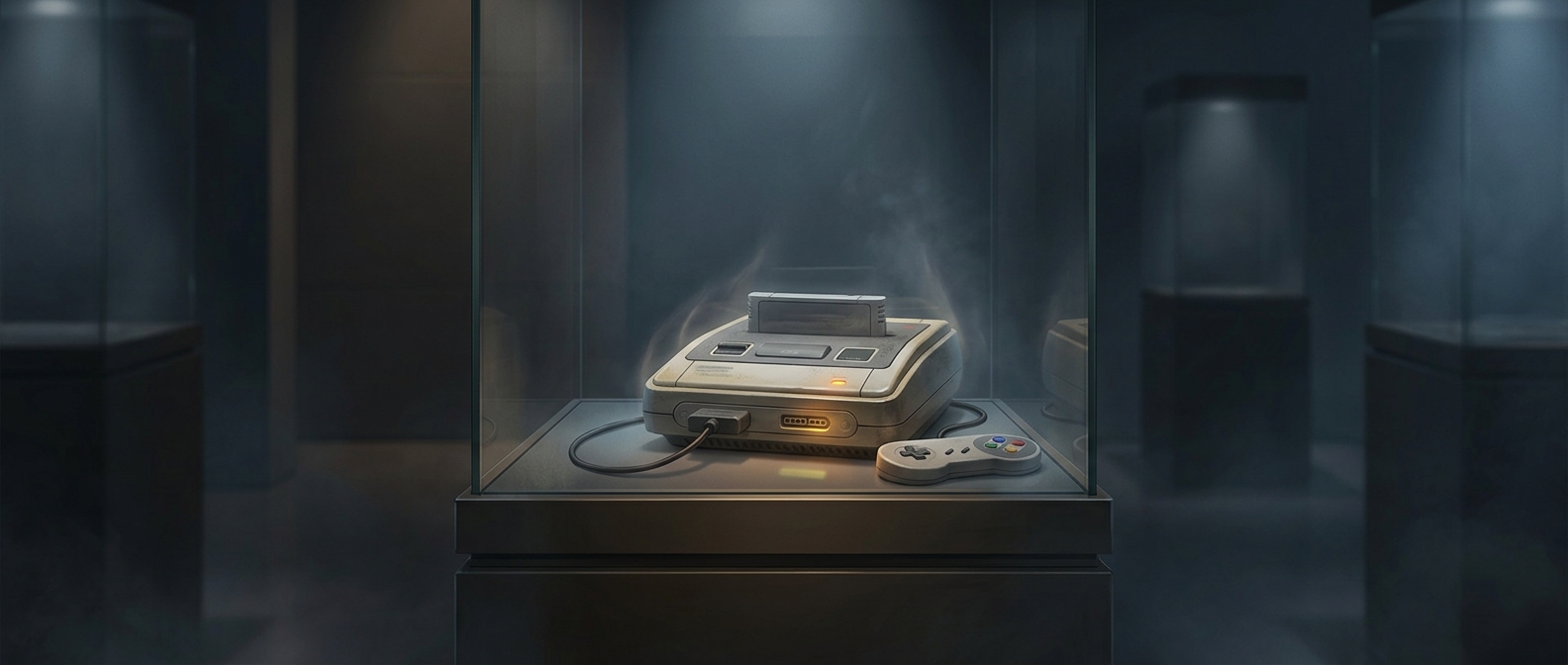
A console caught between cartridges and CDs
The prototype joined two different ways of delivering a game. A Super Famicom cartridge slot let it play games stored on Nintendo’s familiar plug-in cartridges; the Sony CD drive was intended to add a much larger, cheaper-to-duplicate format. A disc could hold far more data than a cartridge, making room for richer sound, video, and other content—though it also brought longer loading times and a different licensing model.
This was not simply a Sony PlayStation placed beside a Nintendo console. It was a proposed collaboration to bring CD-based gaming to Nintendo’s existing system, with Sony supplying the disc technology.
Why the partnership fell apart
The companies’ plans collided over who would control the business built around the new format, including rights and revenue from CD games. Nintendo broke with Sony and pursued a separate arrangement with Philips. The reversal left Sony with technology and experience developed for the project, but no Nintendo console to attach it to. Sony eventually turned toward making its own gaming system.
That later PlayStation was a standalone console, not a continuation of this hybrid machine. The prototype therefore marks a fork in the road: a version of gaming history in which Sony’s entry into consoles began as an extension of Nintendo hardware rather than a direct competitor.
A rare survivor of a canceled plan
The surviving working unit makes that abandoned arrangement unusually tangible. Its cartridge slot and CD drive are not just an odd combination of old and new media; they embody a business partnership that failed before the public could buy the system. The machine that never became a commercial console sits at the point where two future rivals were briefly building together.