An exam built around a question
In many medieval European universities, advanced learning was tested through disputation: a formal argument about a question drawn from subjects such as theology, law, or philosophy. The point was not simply to recite a text. A student had to show that they could reason from it, handle competing arguments, and defend a conclusion under pressure.
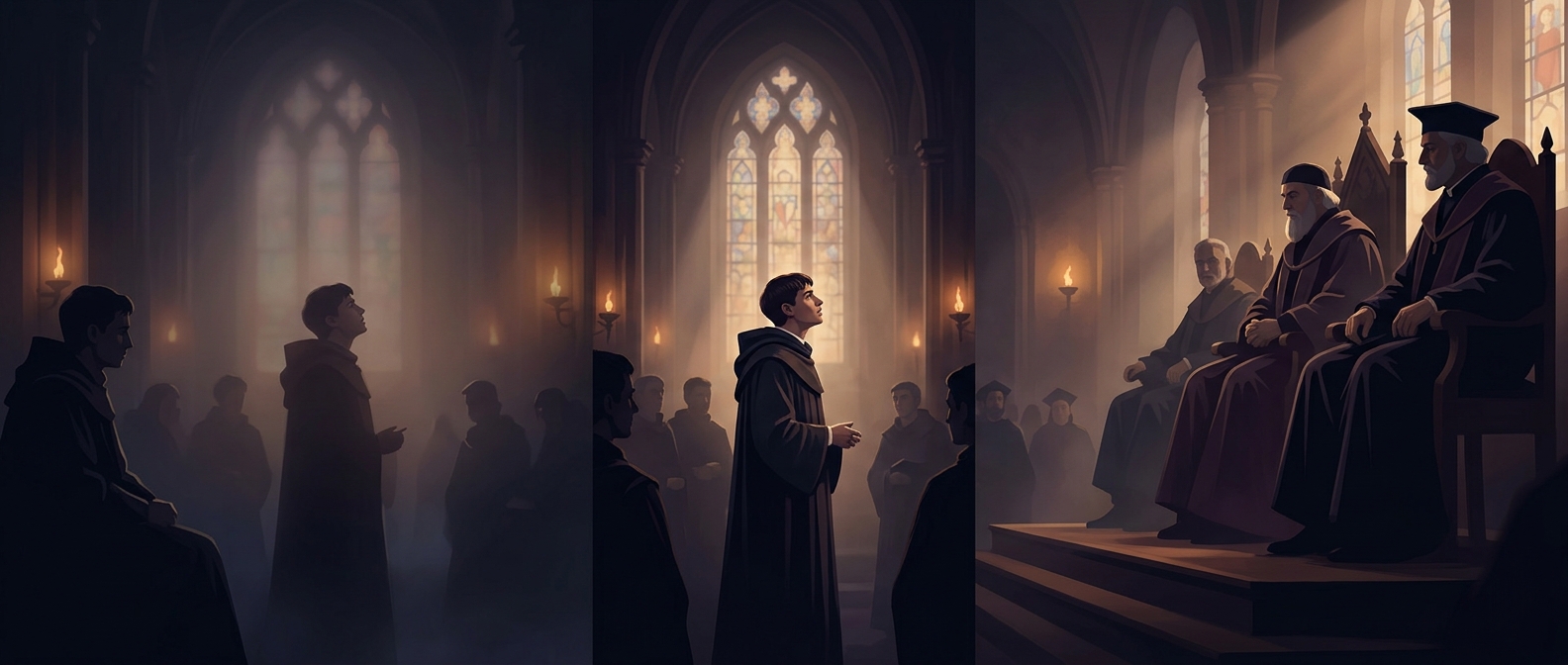
A disputation followed a structure. A question was put forward, arguments for different answers were considered, and a student might be assigned to respond to objections. A faculty member then guided the proceedings and offered a resolution. The exchange could be vigorous, but it was not an anything-goes quarrel: participants were expected to use accepted rules of reasoning and address the argument rather than merely assert an opinion.
Why make the test public?
Learning in these institutions centered heavily on reading and interpreting authoritative works. But knowing what a text said was different from explaining how its claims fit together—or what to do when they seemed to conflict. A live argument made that difference visible. Examiners could press a student to clarify a premise, answer an objection, or follow a line of reasoning to its consequences.
The audience mattered, too. Other students could hear how arguments were constructed and challenged, making the examination part of the university’s teaching culture as well as a judgment of one candidate. It also made performance public: a student’s command of the material was demonstrated in front of the people qualified to assess it.
The result was an exam in which a blank page could not conceal uncertainty. The student had to make their reasoning hold up in real time, with the next objection often shaping what they needed to explain.