A Roman taste for the ancient
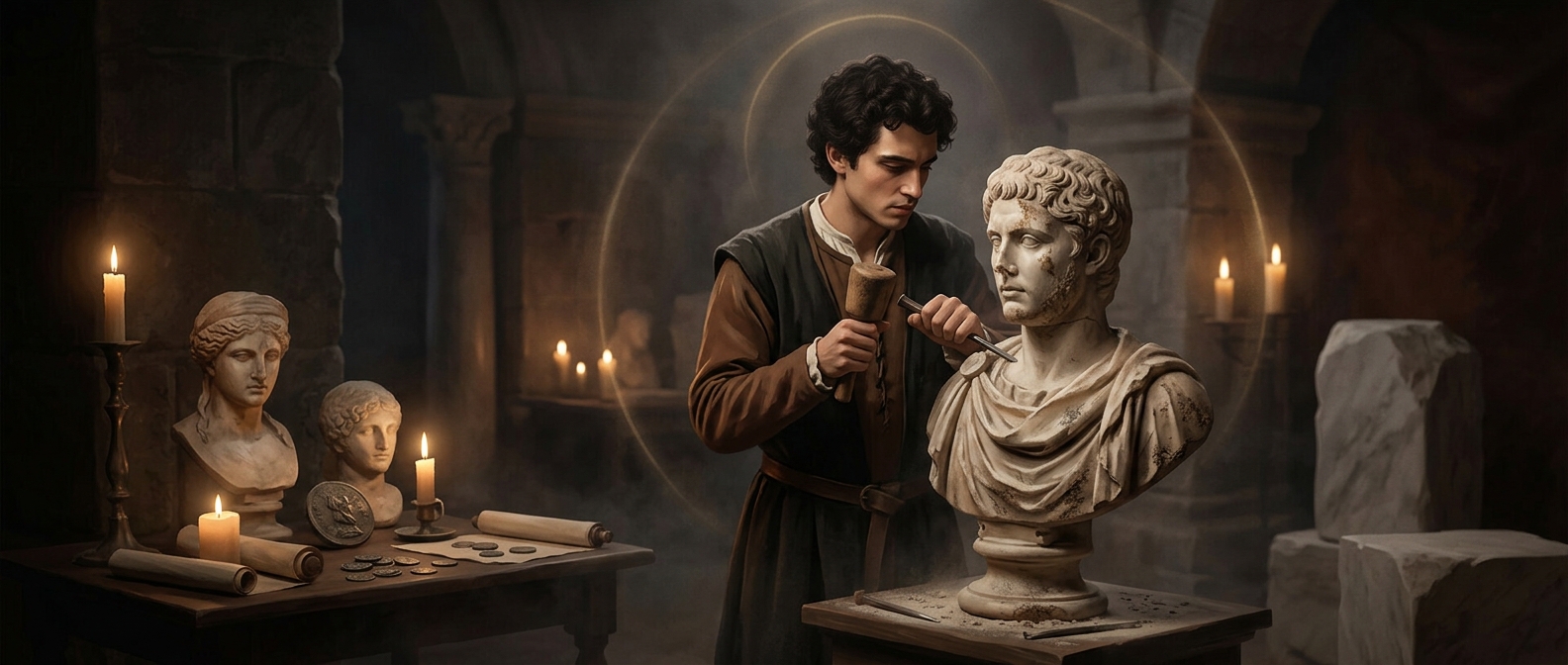
In Renaissance Italy, a sculpture that looked Roman could command more attention—and money—than one presented as newly made. Collectors prized antiquities as links to the classical past, and Rome’s elite competed to acquire them. That market gave a young sculptor a tempting opportunity: Michelangelo could make a modern work and pass it off as an ancient one.
The object was a sleeping Cupid, a subject drawn from classical mythology. Burying the sculpture in acidic soil was meant to make its surface look aged, helping disguise the fresh carving. The trick depended not just on appearance but on a buyer’s expectations: if the work seemed to fit the look of an excavated antiquity, its supposed age could become part of its value.
When the forgery became a calling card
The deception was uncovered after the Cupid was sold to a cardinal. Yet the episode did not end simply with the sculpture rejected and its maker disgraced. The cardinal was impressed by the work itself, allowed Michelangelo to keep the payment, and invited him to Rome.
That reaction reveals the unusual stakes of the story. Michelangelo’s success at imitation was evidence of a deeper ability: he could make a new sculpture convincing enough to compete with objects people believed had survived from antiquity. The forgery therefore worked as a demonstration of skill, even after its claim to age failed.
The episode helped bring the young artist into the orbit of Rome’s powerful patrons. Its lasting irony is that a sculpture designed to pass as ancient became an early advertisement for Michelangelo’s own talent.