Why an armed noble could threaten a political meeting
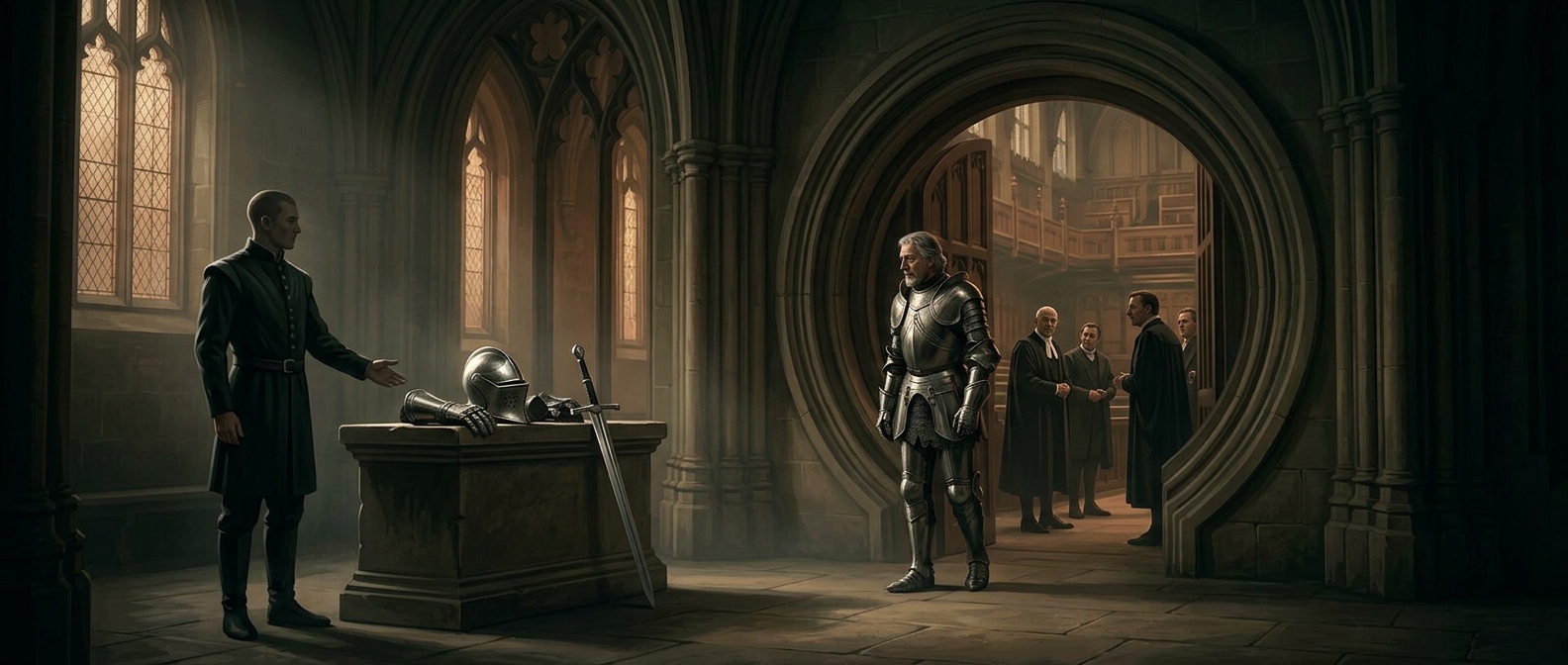
In 1313, Parliament was an assembly of powerful people in a kingdom where political authority and military force were closely connected. A noble might arrive with armed retainers—men equipped to protect him, but also capable of intimidating opponents or escalating a dispute. In that setting, armor was more than clothing: it signaled that a political argument might be backed by force.
The statute called the “Statute Forbidding Bearing of Armour” addressed that danger. Its point was not that armor was inherently unlawful, but that carrying it into politically sensitive settings could make conflict more likely. The rule treated visible arms as a public-order problem, not merely a fashion choice.
A medieval restriction, not a modern Commons dress code
The word “Parliament” can make the statute sound like an early version of today’s rules for the House of Commons. But the medieval institution was very different: it brought together rulers, nobles, and other political actors in a society where armed followings were part of how power was exercised. Restricting armor in that setting was a way to limit the threat of force around political business.
That history does not mean plate armor is literally banned in the Commons today. The 1313 measure belongs to a different political world and should not be mistaken for a current rule about what members may wear. Its lasting significance is the problem it recognized: deliberation is difficult when participants can use armed presence to make their case feel compulsory.