In Rome, political insults traveled by word of mouth—and wall
Roman campaigning was not confined to formal speeches. Candidates and their supporters could use public writing, verse, and conversation to shape a rival’s reputation. Graffiti made a message visible in shared spaces; poems and speeches gave an attack a life beyond the moment it was delivered. In a city where political standing depended heavily on public esteem, ridicule was more than entertainment: it could make an opponent seem unfit to lead.
Cicero’s attack mixed serious charges with a petty one
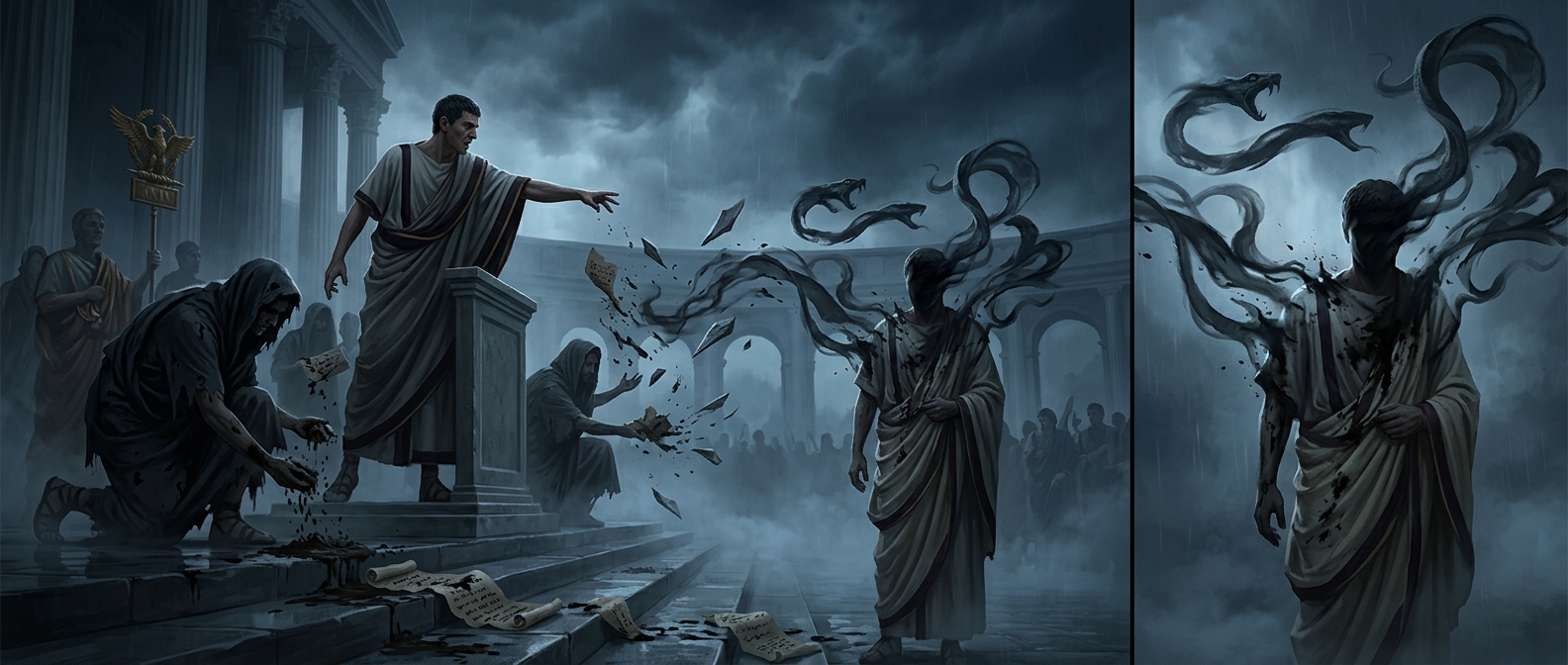
During a campaign against a rival, Cicero reportedly accused him of incest and financial wrongdoing, then mocked his dinner parties. The charges differed in gravity, but the combination served a political purpose. Allegations of sexual misconduct or financial abuse could cast doubt on a candidate’s character, while a joke about bad hospitality made the target seem ridiculous and socially inept.
That range also made an attack easier to repeat. A listener might remember a grave accusation; another might pass along the dinner-party jab. The insult did not need to persuade every audience member in the same way to keep the rival’s name attached to suspicion or laughter.
Reputation was part of the contest
Roman political life offered no modern campaign apparatus separating official messaging from everyday talk. Public speech, written words, and personal networks all helped circulate claims about candidates. The same channels that carried news could carry mockery, and a sharp line could outlast the speech that introduced it.
The dinner-party insult shows how personal these contests could become: in Rome, even a candidate’s table manners could be turned into political ammunition.