A small animal, suddenly in charge
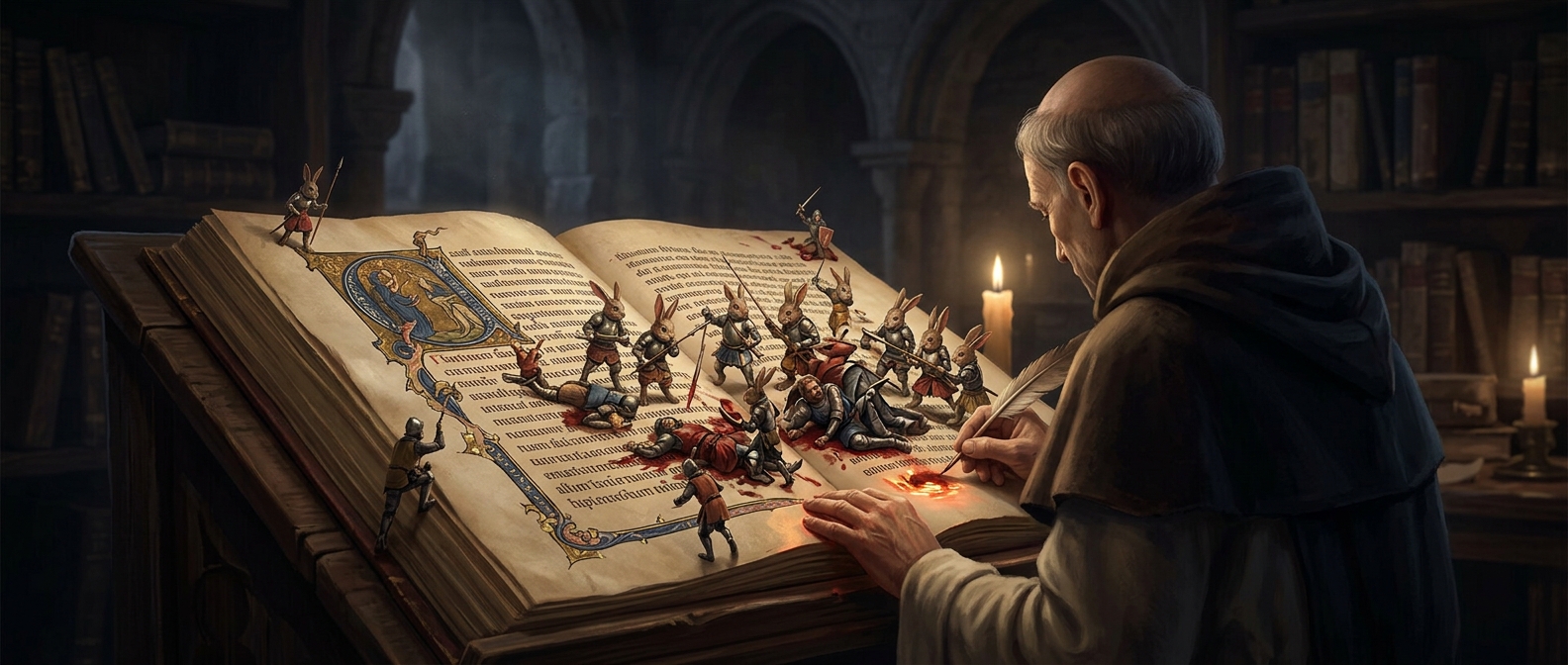
In medieval illuminated books, the space around the main text could hold painted figures as well as decoration. Artists used it for scenes that had little to do with the words on the page—including rabbits attacking people and animals normally far more dangerous than they were.
The humor depended on recognition. A rabbit was familiar as a timid creature hunted by people and hounds. Give it a weapon, armor, or the upper hand in a fight, and the expected order of things flips. A knight who ought to dominate the scene becomes vulnerable to an animal usually treated as prey.
Why put the joke in the margin?
A manuscript was a working object, copied and decorated by hand. Its margins offered room for visual invention alongside the serious business of reading. An absurd scene could reward a reader’s wandering eye without interrupting the main text; its contrast with the solemn page made the joke sharper.
These images are often called marginalia—pictures or ornaments placed beside the text. Their meaning was not always fixed. A rabbit’s victory might invite laughter at role reversal, but it does not automatically prove that the artist intended a specific political or religious criticism. The durable joke is simpler: on the page, even the creature built to flee can take the field.