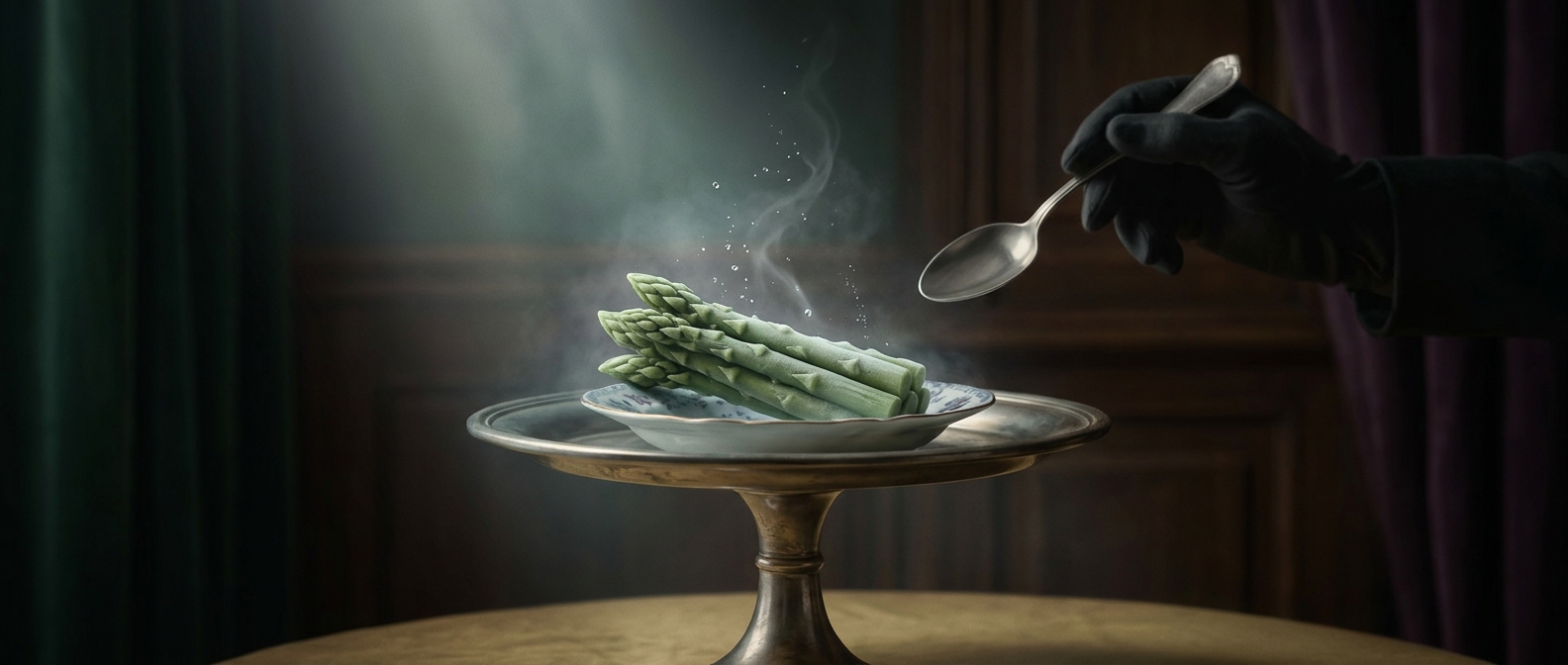
The table trick behind vegetable-shaped ice cream
A molded dessert depended on a simple kitchen illusion: freeze a soft mixture inside a shaped container, then turn it out so it held the container’s form. Metal molds could produce convincing outlines—from a potato’s uneven bulk to the pointed tips of asparagus. The dessert looked solid and savory, even though its texture and sweetness told a different story at the first bite.
That contrast made the shape part of the entertainment. A host could bring a familiar-looking food to the table and let guests revise their expectations only after tasting it. The surprise worked because the mold communicated one thing while the cold, sweet center delivered another. It was a small performance built into the meal, not merely decoration on top of it.
Why the display signaled abundance
Ice cream was once difficult to make and keep cold. Before dependable household refrigeration, preparing it required access to ice and the means to preserve it, as well as time and specialized equipment. A shaped dessert added another step: the mixture had to freeze firmly enough to come out intact, and the mold had to create a recognizable form.
Serving ice cream disguised as a vegetable therefore displayed both resources and effort. The point was not that diners mistook dessert for dinner for long; it was that a host could stage the confusion and then reveal it. The first bite completed the presentation: what appeared to be an ordinary item from the meal turned out to be a costly, carefully prepared sweet.