A weapon condemned—but only in a narrow sphere
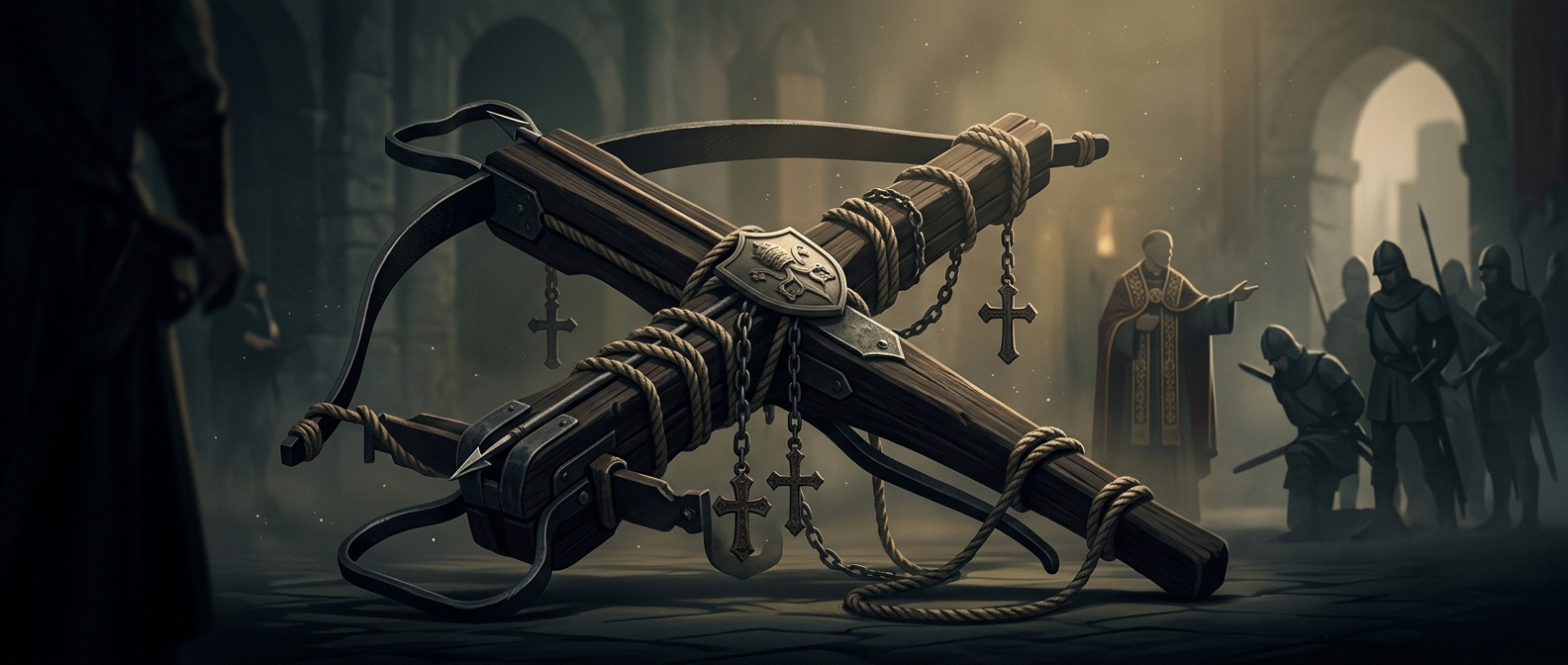
In 1139, the Second Lateran Council issued a church rule against using crossbows and bows against Christians. The wording mattered: it condemned their use within the Christian world, rather than declaring the weapons forbidden in every war. Against enemies beyond that boundary, the rule offered no comparable protection.
That was the surprising exception. It reflected a medieval effort to regulate violence among Christians without giving up the means of fighting outsiders. The council could define what it considered acceptable conduct; it could not make every battlefield subject to the same standard.
Why crossbows drew special alarm
A crossbow stored energy in a drawn bow and released it with a trigger, allowing a shooter to aim without holding the string under full tension. That made it a formidable weapon, including for people who lacked the years of practice needed to use a powerful longbow. Its capacity to kill at a distance made it seem especially threatening in conflicts among Christian rulers and nobles.
The ban expressed a moral judgment about that kind of killing, not a practical plan for removing crossbows from European warfare. Church leaders could condemn a weapon, but kings and commanders still faced military pressures—and had little reason to surrender a useful advantage because of a rule they could not reliably enforce.
The limit was built into the rule
The council’s restriction therefore reveals both the reach and the weakness of religious authority. It set a boundary around violence considered unacceptable among Christians, while leaving warfare against outsiders largely untouched. Since rulers continued to use crossbows, the decree did not transform the battlefield; its narrow wording instead showed how difficult it was to turn a church condemnation into a rule that governed war.