How a statue could seem to produce tears
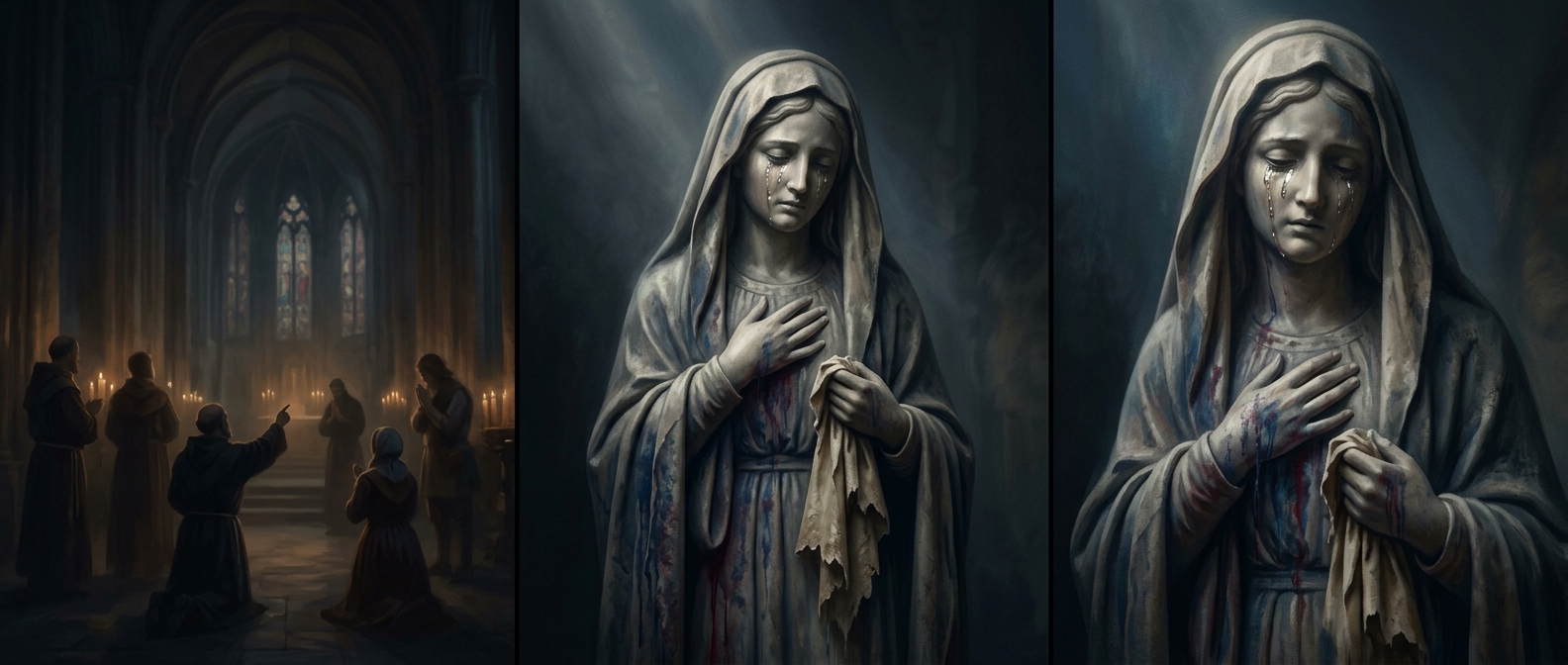
A statue does not need a hidden reservoir to become wet. If its surface is cooler than the surrounding air, moisture can condense on it—the same process that beads water on a cold glass. In a humid room, droplets may gather around the face and slowly run down, making the wetness look like tears. The effect can be especially striking when people encounter it in dim light or notice it only after it has begun.
A different route is deliberate: a small sponge or other absorbent material can hold liquid and release it through a concealed opening. That setup could create drops in a particular place, though not every report of a weeping statue need have had the same explanation. A visible drop alone could not reveal whether it came from the air, an internal source, or human intervention.
From droplets to a public event
The physical event was only one part of the story. A statue was already an object of religious meaning, so moisture on its face could be understood as grief, compassion, or a sign of divine attention. Once people gathered to see it, each new observation could reinforce the sense that something extraordinary was happening. The same crowd might also spread the report beyond the place where the statue stood, bringing visitors and making the event harder to dismiss as an isolated sighting.
That interpretation did not require everyone to agree about the cause. For believers, the meaning of the tears could matter more than the mechanism; for skeptics, finding an ordinary source could explain the drops without erasing what the episode meant to those who witnessed it. The crucial distinction is between what people saw—a wet face—and what they concluded it meant. A few droplets could therefore become both a physical puzzle and a powerful communal act of devotion.