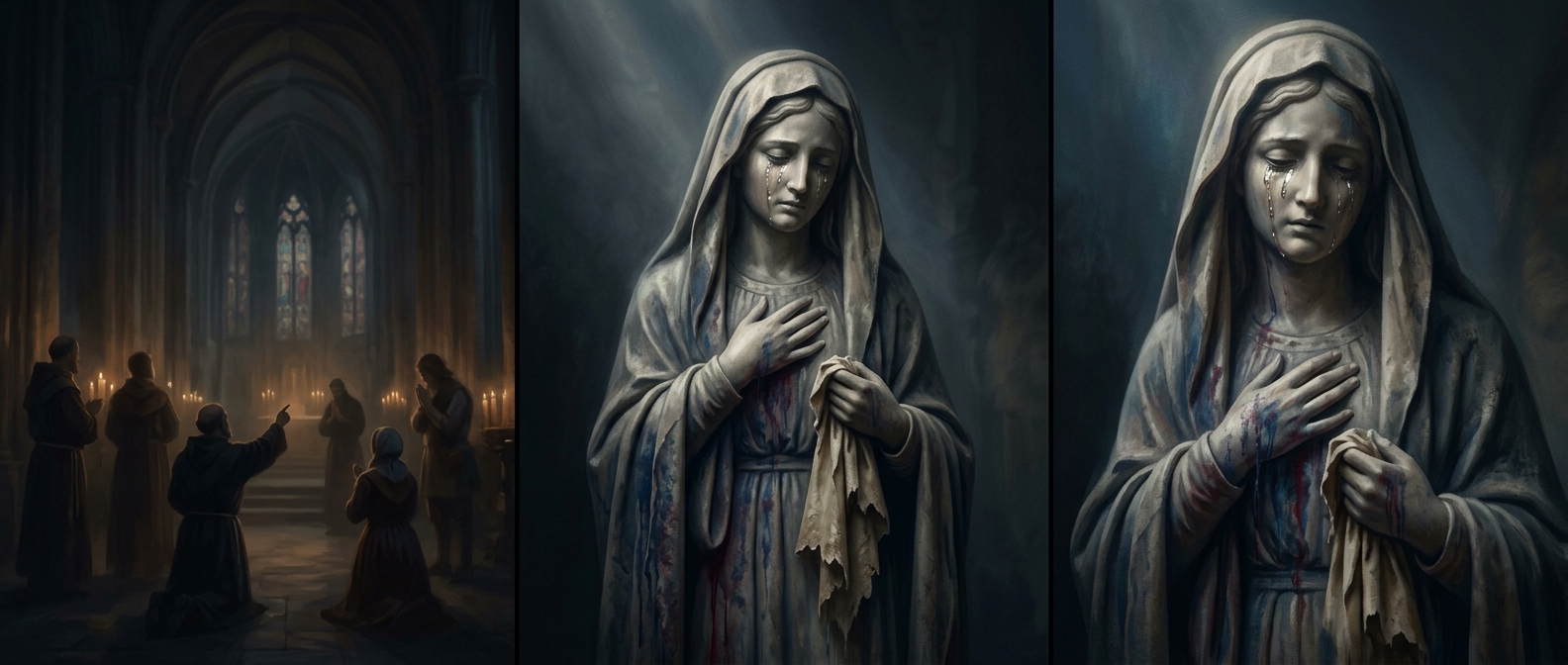
Possession Made Strange Behavior Legible
Before modern medicine offered ways to describe many changes in mood, speech, movement, or awareness, people often understood them through religious ideas about the unseen world. In a Christian setting, behavior that seemed beyond a person’s control could be interpreted as evidence that a spirit had entered or influenced them. “Possession” was not simply a label for odd conduct: it gave families and clergy a cause, and a framework for deciding what to do next.
That interpretation depended on the beliefs of the community. It did not mean that every unusual act was blamed on a demon, or that every religious authority agreed about a case. But when possession seemed plausible, an exorcism made the diagnosis visible as a public religious response.
Why the Ritual Used Latin
Latin prayers connected the ceremony to the Church’s formal worship and authority. Their force, in the ritual’s religious understanding, came not from being a language the person necessarily understood, but from invoking sacred words and the power attributed to them. The prayers might be spoken firmly or repeated loudly as clergy addressed the supposed spirit rather than treating the person’s behavior as an ordinary conversation.
That distinction shaped the scene: the person was understood as the site of a spiritual struggle, while the exorcist acted on behalf of the religious community. The ritual therefore did more than attempt to drive out a spirit. It offered a shared explanation for frightening behavior and a prescribed response when everyday explanations seemed inadequate.
The result was a powerful way to turn uncertainty into action: instead of leaving unusual behavior unexplained, a community could name an unseen cause and answer it with a formal rite.