A knock as a request for protection
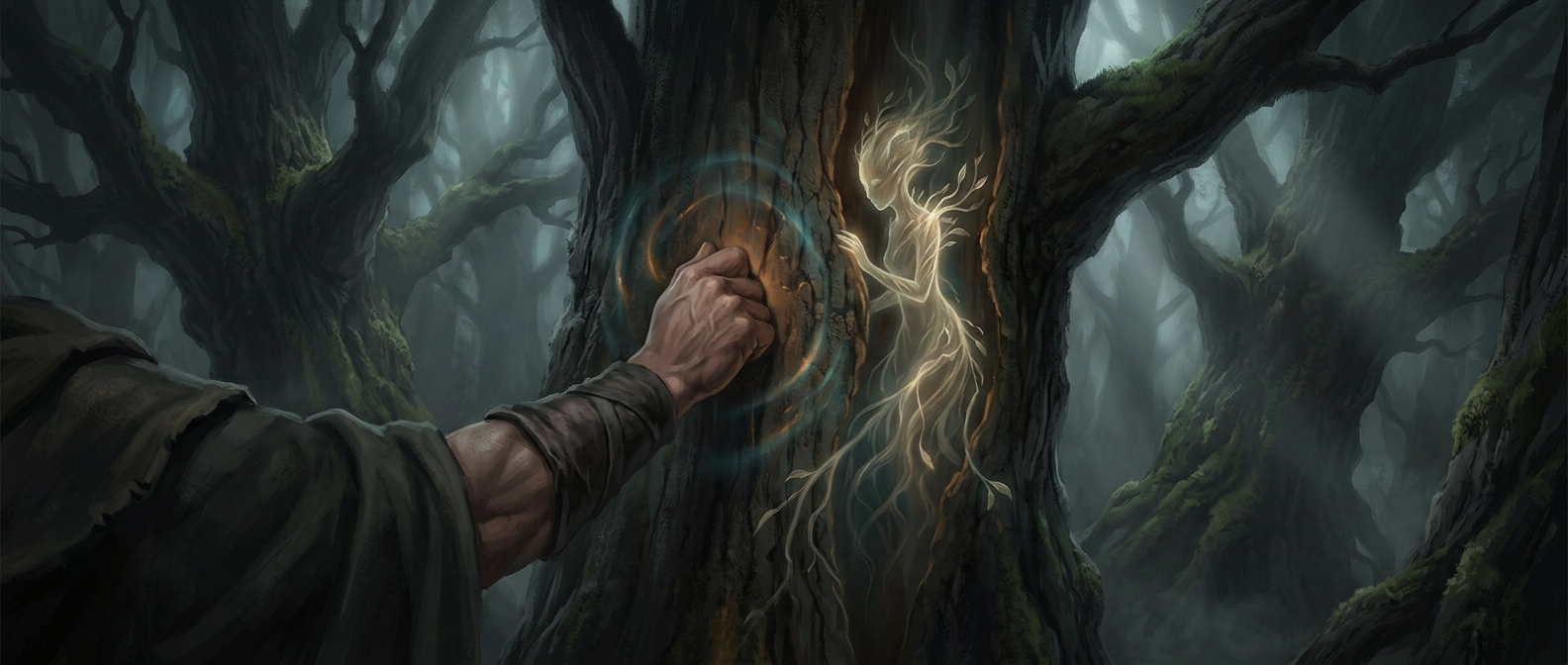
One explanation for knocking on wood begins with the idea that trees were inhabited by spirits or gods. If a tree held a powerful presence, touching or knocking on it could be understood as a way to reach that presence and ask for good fortune—or protection from harm. The gesture made luck feel less abstract: instead of merely hoping, a person performed a small action directed at a possible helper.
This is an interpretation of the custom, not a firmly established origin story. Traditions can acquire new meanings as they travel, and the same gesture may be explained differently in different places. The tree-spirit account helps explain why wood, rather than any convenient surface, matters in this version: wood stands for the living tree and the protective presence imagined within it.
Why the gesture still fits everyday speech
Today, people often knock on wood after saying something hopeful, especially when they want to avoid tempting fate. The action turns a passing worry—“I hope this good thing continues”—into a brief ritual. Even when someone does not believe a spirit is listening, the knock can still provide a satisfying way to mark uncertainty and express a wish for protection.
That is the custom’s lasting appeal: a tiny, physical gesture gives people something to do at the moment when luck feels outside their control.