Why Christmas suited a ghost story
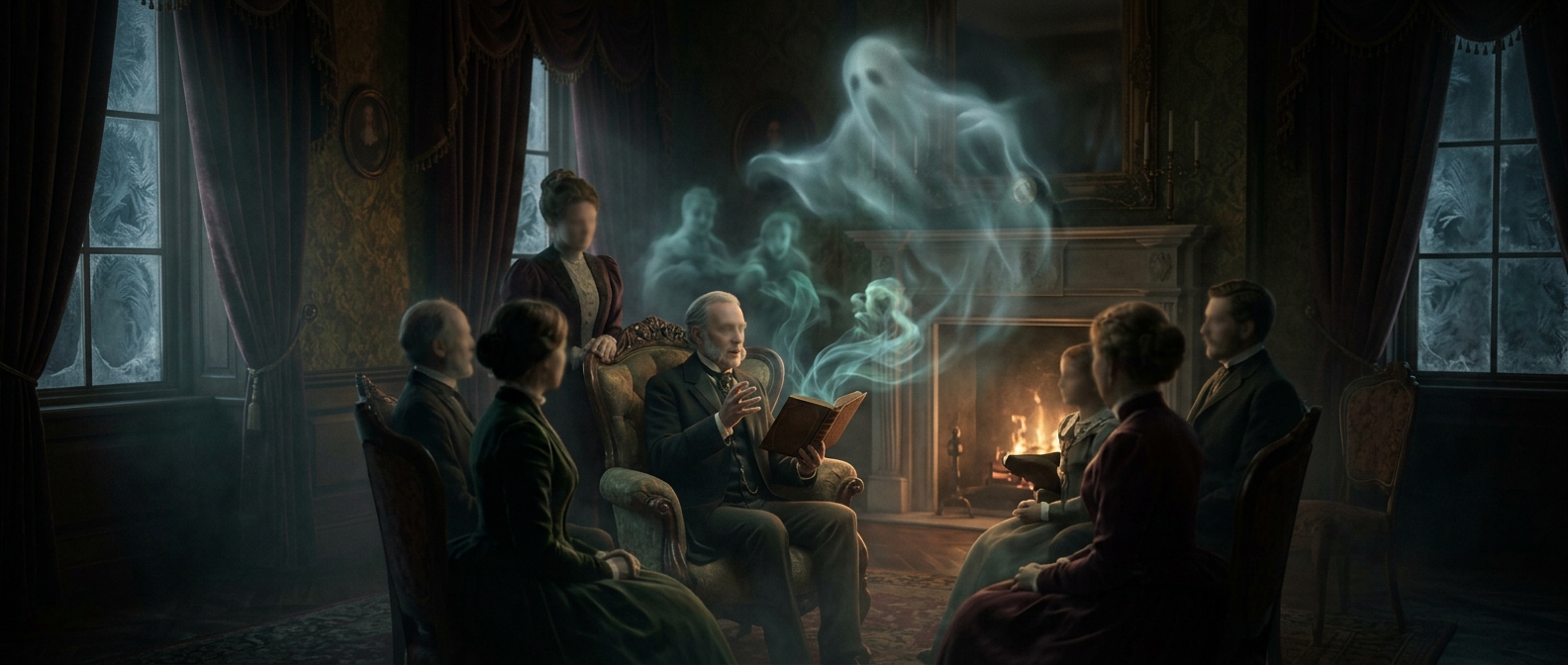
In Victorian Britain, Christmas fell at the darkest stretch of the year, when evenings were long and many people spent them indoors. A firelit room made an inviting setting for stories: listeners could gather close, and the darkness beyond the windows gave supernatural tales an extra edge. Ghost stories also drew on older winter storytelling customs, rather than appearing from nowhere as a distinctly Victorian invention.
A seasonal story became popular entertainment
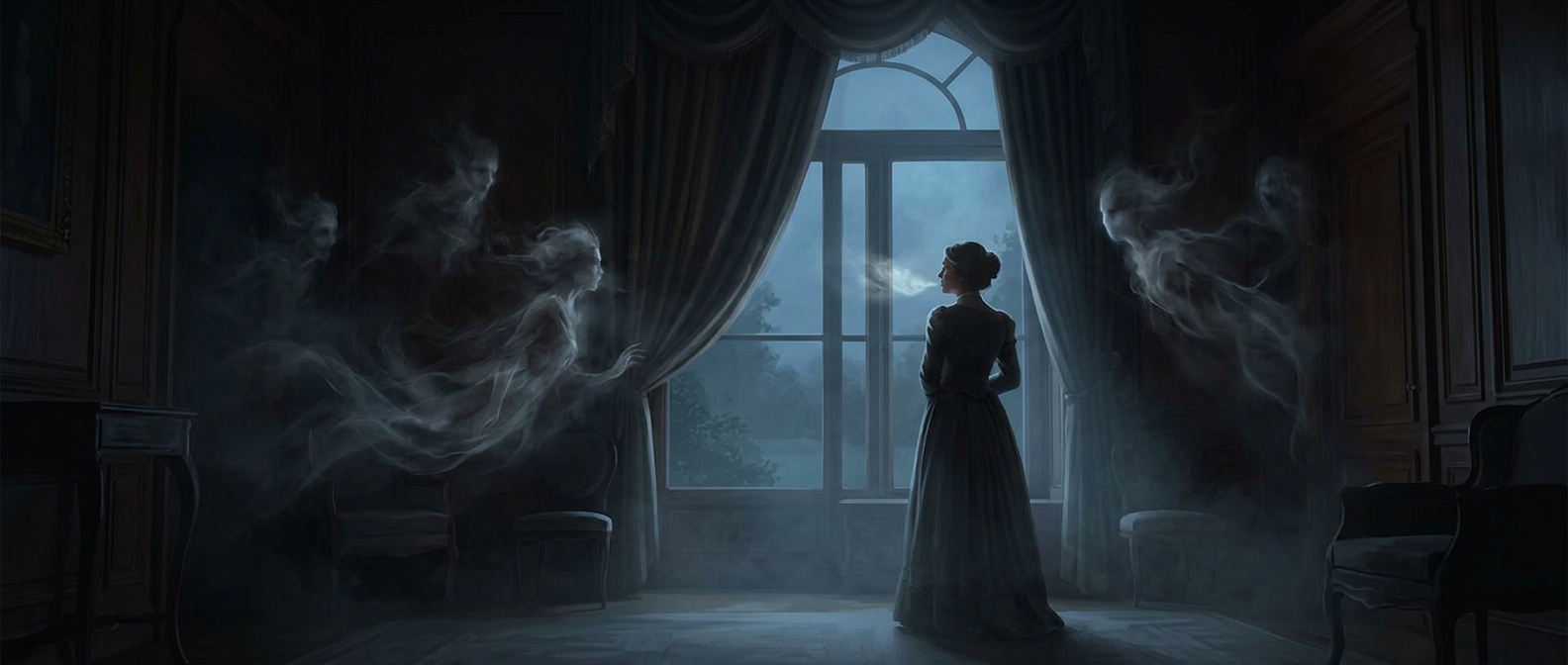
The custom grew alongside a thriving market for Christmas reading. Newspapers and magazines published seasonal fiction, and Charles Dickens’s A Christmas Carol (1843) helped make the Christmas ghost story especially familiar. Its spirits are frightening, but their visits also drive a story about memory, generosity, and changing one’s ways. That mix let a supernatural tale serve as both entertainment and a Christmas moral lesson.
Families did not all celebrate in the same way, and the tradition was not simply a matter of adults setting out to terrify children. But suspense was part of the fun: a story could turn an ordinary gathering into an occasion for shared shivers. The fireplace was more than a backdrop—it made the warm circle of listeners feel safely separated from the unseen world outside.