Krampus Turned a Lesson in Good Behavior Into Theater
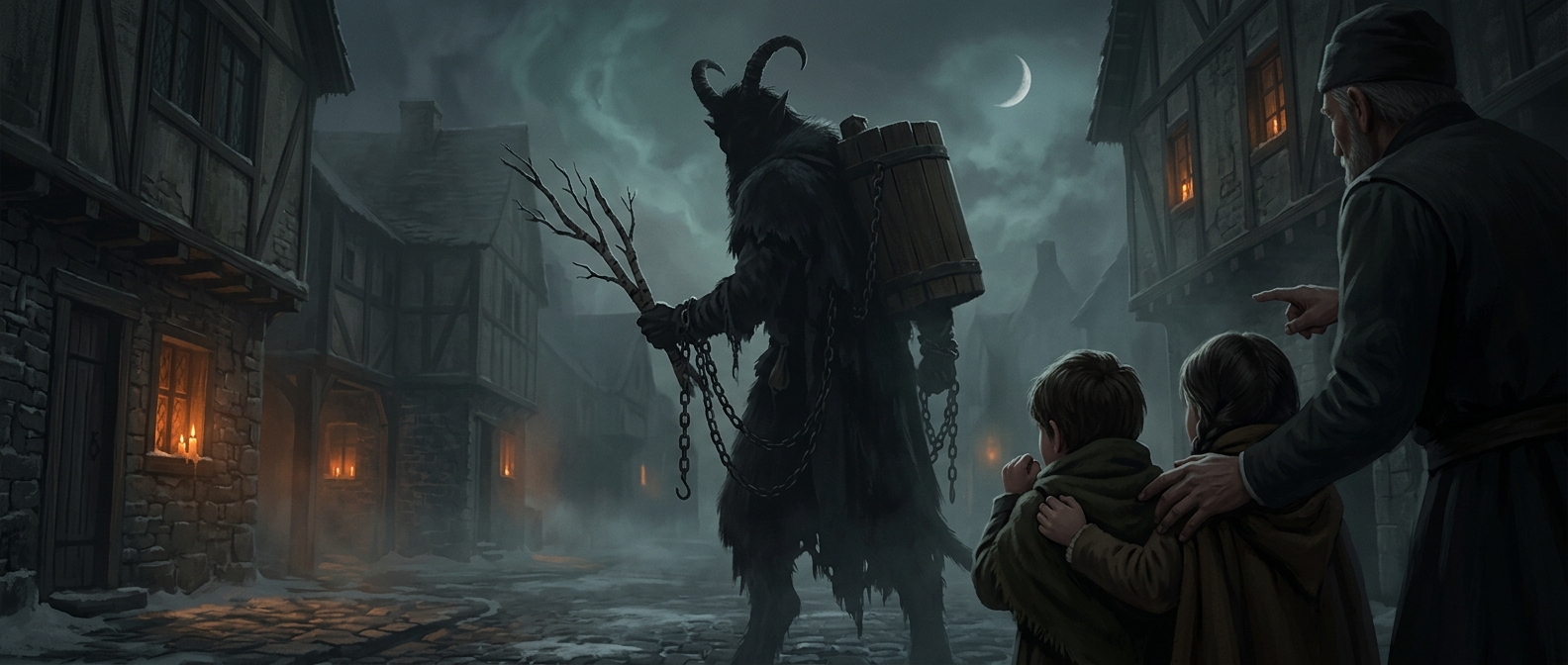
In parts of the Alpine region, the horned figure is known as Krampus. He appears in winter customs alongside St. Nicholas, whose visits traditionally reward well-behaved children. Krampus supplies the darker half of the pairing: a frightening presence meant to make misbehavior feel as if it might have consequences.
The contrast made the lesson vivid. St. Nicholas represented approval and gifts; Krampus embodied punishment and fear. In some versions of the story, he carries a sack or basket, while other traditions emphasize his threatening appearance rather than a single fixed tale. Customs varied from place to place, so there was no one universal script.
From Household Warning to Public Spectacle
The figure was not only part of a story told to children. In some communities, people dressed as Krampus for seasonal processions, wearing carved masks, shaggy costumes and rattling bells. The frightening character could therefore move from a family’s warning into the streets, where adults as well as children encountered him as part of a shared winter ritual.
That public performance helped keep the tradition recognizable across generations: the costume made an abstract threat visible, while the procession turned it into an event. The precise history of Krampus customs is not settled, and local practices differ. What endures is the striking balance at the heart of the celebration: a winter visit could promise a child a treat—or make the possibility of punishment stomp noisily down the street.