A Bow Made Reverence Visible
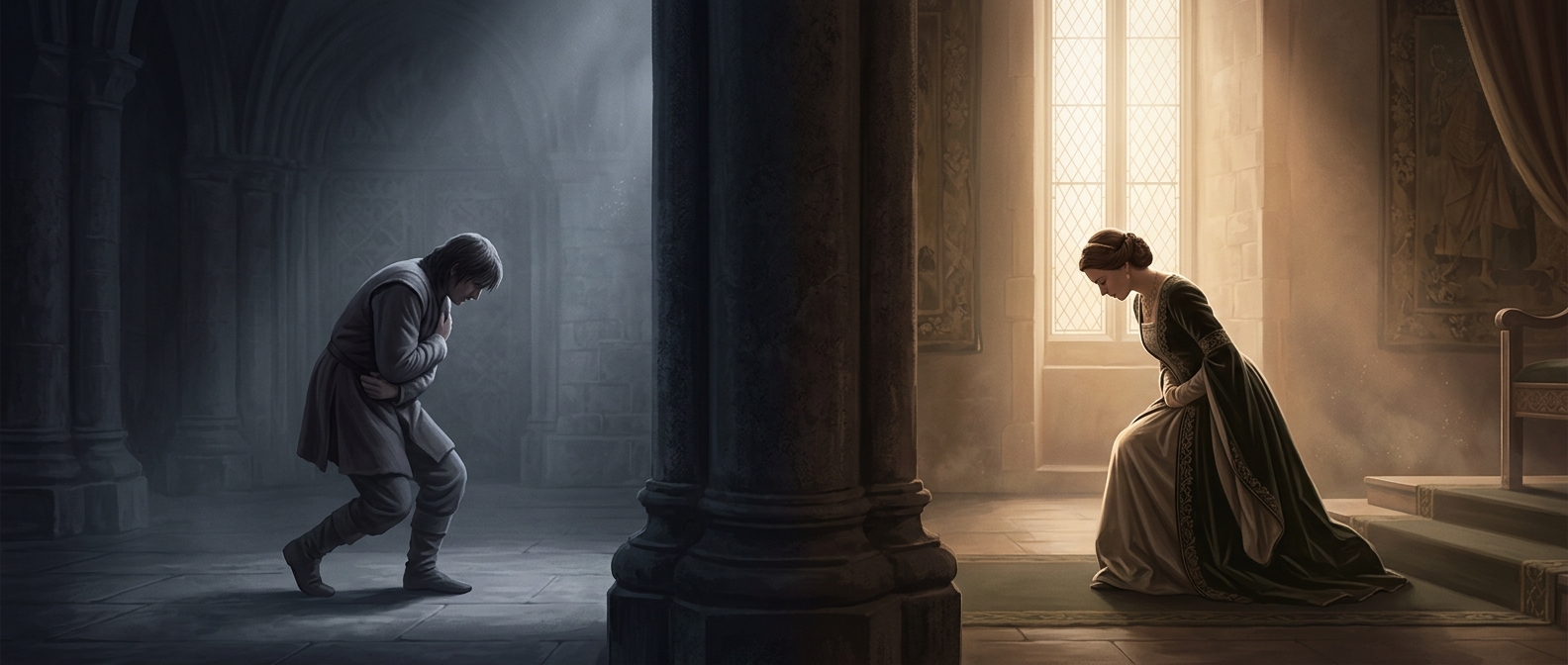
A deep bend at the waist is more than a larger version of a nod. It lowers the upper body and changes a person’s posture in a way that is difficult to miss. When an altar rule required that gesture, respect was not left to an individual’s judgment: worshippers were expected to show it through a particular movement.
Why Specify the Gesture?
A prescribed bow gives a ritual a shared, recognizable form. A quick dip of the head can be brief or casual; bending from the waist takes more effort and visibly marks a pause before the altar. The requirement therefore made reverence legible to others as well as meaningful to the person performing it.
It also narrowed the room for variation. Instead of deciding how much deference was enough, worshippers followed the same bodily cue. The rule turned respect from an inward feeling into a visible act—one whose depth, not merely its intention, mattered.