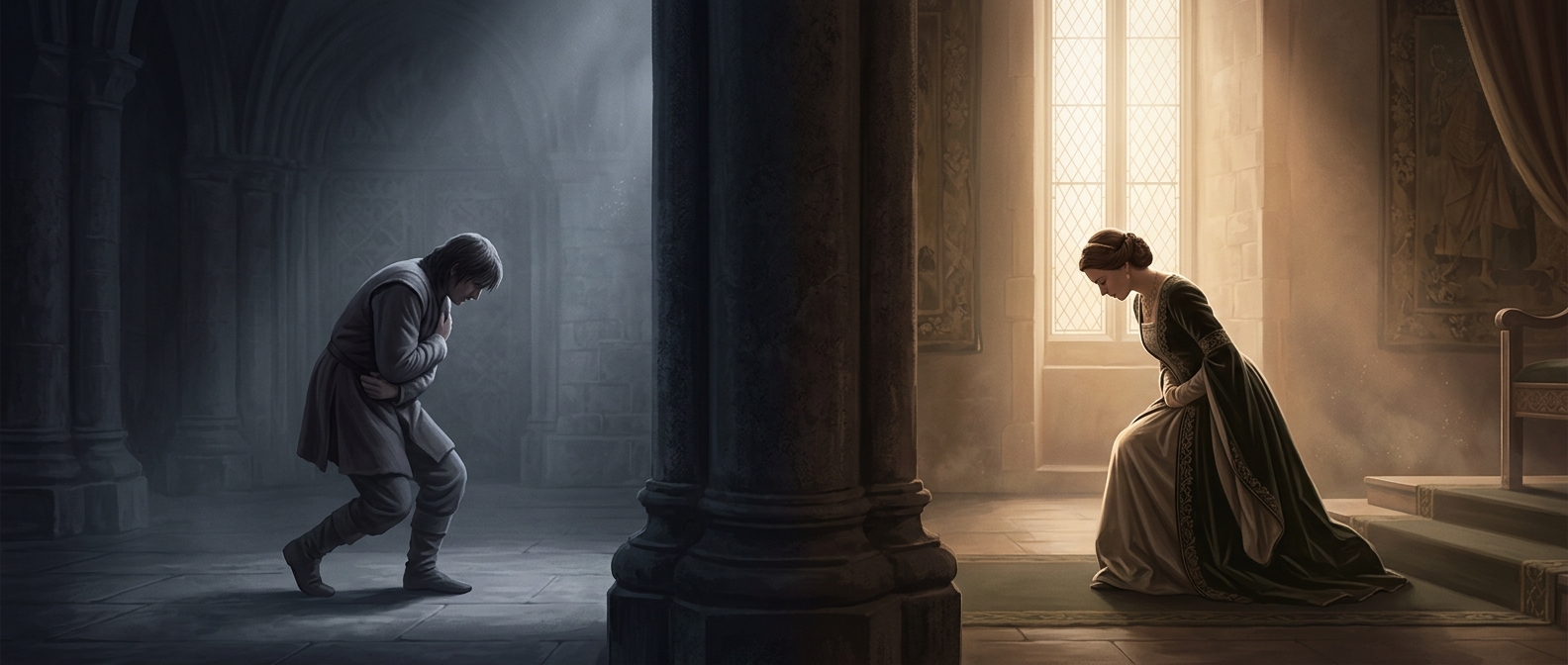
Why a Curtsy Makes the Body Smaller
A curtsy turns deference into a visible change in height. The person bends the knees and lowers the torso, briefly making themselves appear smaller while the person being greeted remains upright. Like a bow, it communicates respect through posture; unlike a simple nod, it asks the whole body to yield space and balance.
That physical lowering is why the gesture can be understood as a submissive flinch: it resembles the instinctive act of drawing down or shrinking away from someone more powerful. In formal settings, however, the movement became controlled and deliberate. A measured dip transformed a bodily signal of vulnerability into a rehearsed sign of respect.
From Submission to Etiquette
In hierarchical societies, gestures helped make rank legible without anyone needing to state it aloud. A curtsy could mark that one person was acknowledging another’s higher status. Its depth, timing, and form could vary with the setting, but the underlying exchange was clear: one person lowered themselves, and the other received the acknowledgment.
Once repeated in courtly and social rituals, the gesture became etiquette rather than an uncontrolled reaction. That shift mattered. A formal curtsy allowed people to display deference while keeping the movement composed and recognizable. The body still performed submission, but practice made it look like manners.