A Boundary Written Into Court Etiquette
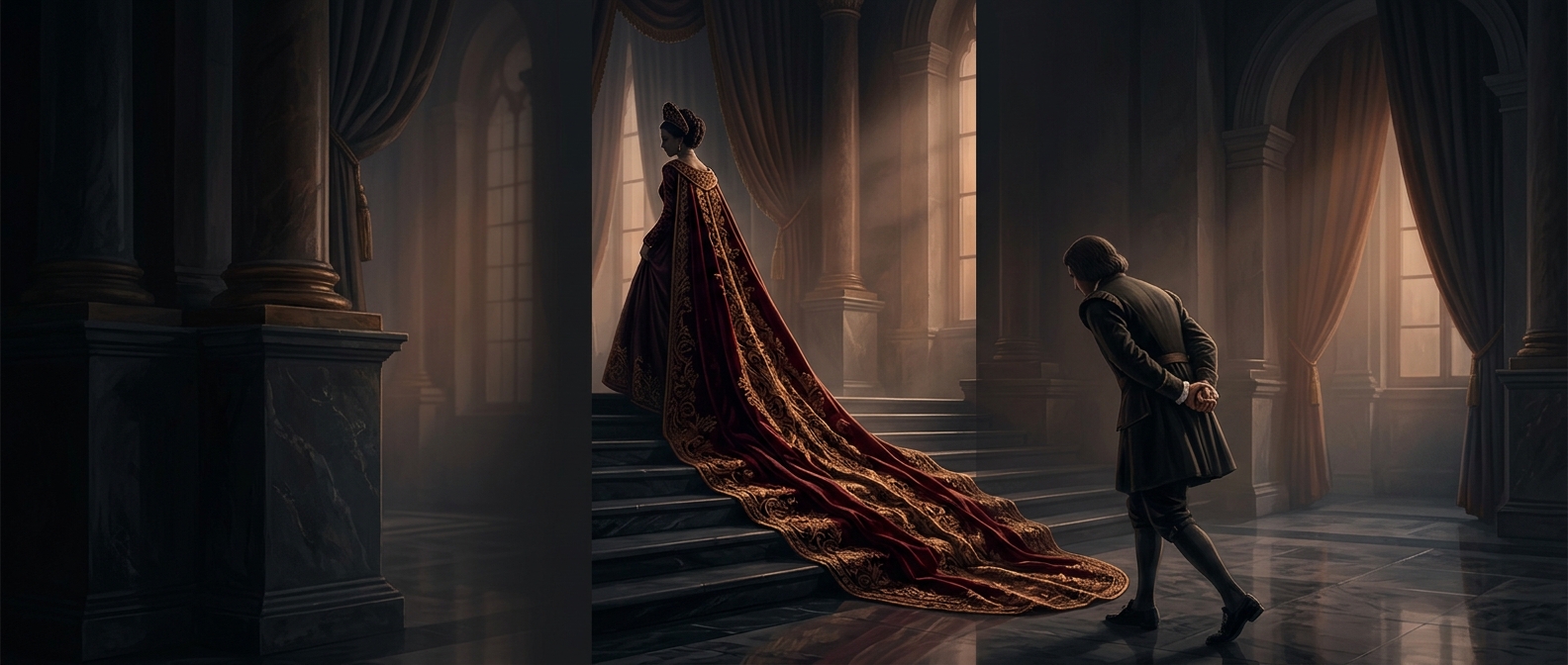
At a royal court, clothing was not simply personal property. It was part of the monarch’s public presence: richly made, carefully arranged, and handled by designated attendants. Rules about who could approach or touch it helped turn an ordinary interaction into a controlled ceremony. A subject who reached toward the monarch’s garments crossed a boundary that court protocol was designed to keep clear.
That boundary also made rank visible. Access to the ruler was limited and managed, so permission to come close—or to assist with dressing—could itself signal special status. The rules were not necessarily identical at every court, and the severity of punishment depended on the place and circumstances. But an unauthorized touch could be treated as an affront to royal dignity or a breach of order, not merely as careless contact with expensive fabric.
Why a Brush Could Matter
The key was interpretation. In a setting where gestures were closely governed, touching the monarch’s clothes might look like an attempt to claim familiarity, interfere, or disregard the hierarchy. Even accidental contact could draw attention because the protocol made the garment a visible marker of the ruler’s protected space.
Such rules made authority tangible: subjects encountered it not only in laws or titles, but in the distance they were expected to keep. A sleeve could become a line that only the permitted few were allowed to cross.