A crossing through the Wash turned into a trap
In October 1216, King John was traveling through eastern England when he crossed the Wash, a broad, shallow inlet on the North Sea coast. The route was not simply a road through water: it ran across tidal flats cut by channels, where the sea could advance over low ground as the tide rose. A crossing that seemed passable could become dangerous before a long train of people, carts, and pack animals had reached the far side.
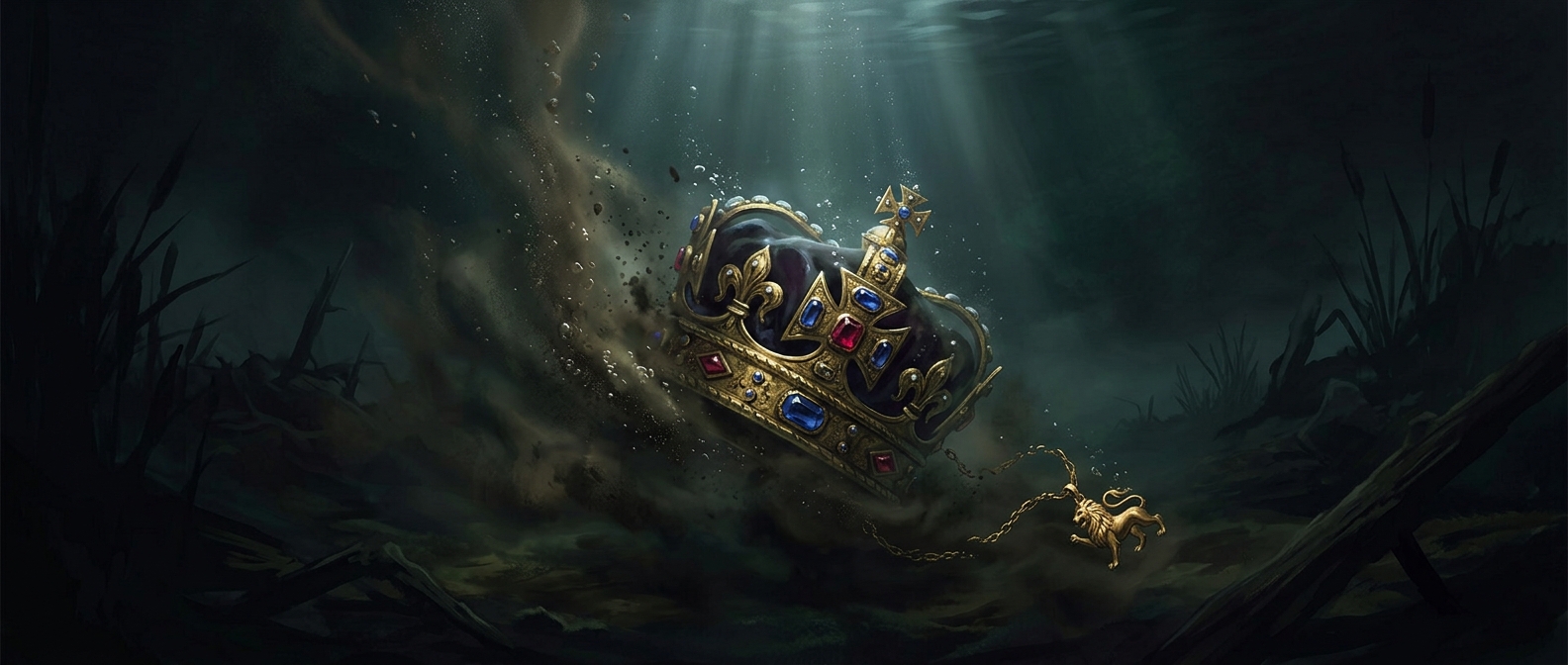
John made it across; his baggage train did not. Medieval accounts describe the incoming tide overtaking the loaded convoy. The loss was remembered as including royal treasure and the crown jewels, though the surviving records do not provide a dependable item-by-item inventory.
Why the loss mattered—and what it did not change
A king’s baggage was more than personal luggage. It carried the movable wealth and equipment needed to sustain travel and government, and royal regalia helped make kingship visible. Losing such a convoy therefore meant a serious material and symbolic blow. The Wash’s shifting channels and fast-rising water also explain why the treasure could be difficult to recover: once carts and valuables were swept into tidal channels or buried in mud, the sea left no clear trail to follow.
The episode came during John’s struggle with a rebellion backed by Prince Louis of France, but the loss itself should not be mistaken for the cause of the king’s downfall. John died later that month, and his son Henry III succeeded him. What made the crossing memorable was its stark reversal: the king escaped, while the traveling wealth meant to accompany him vanished into a landscape where the tide could erase the route within hours.