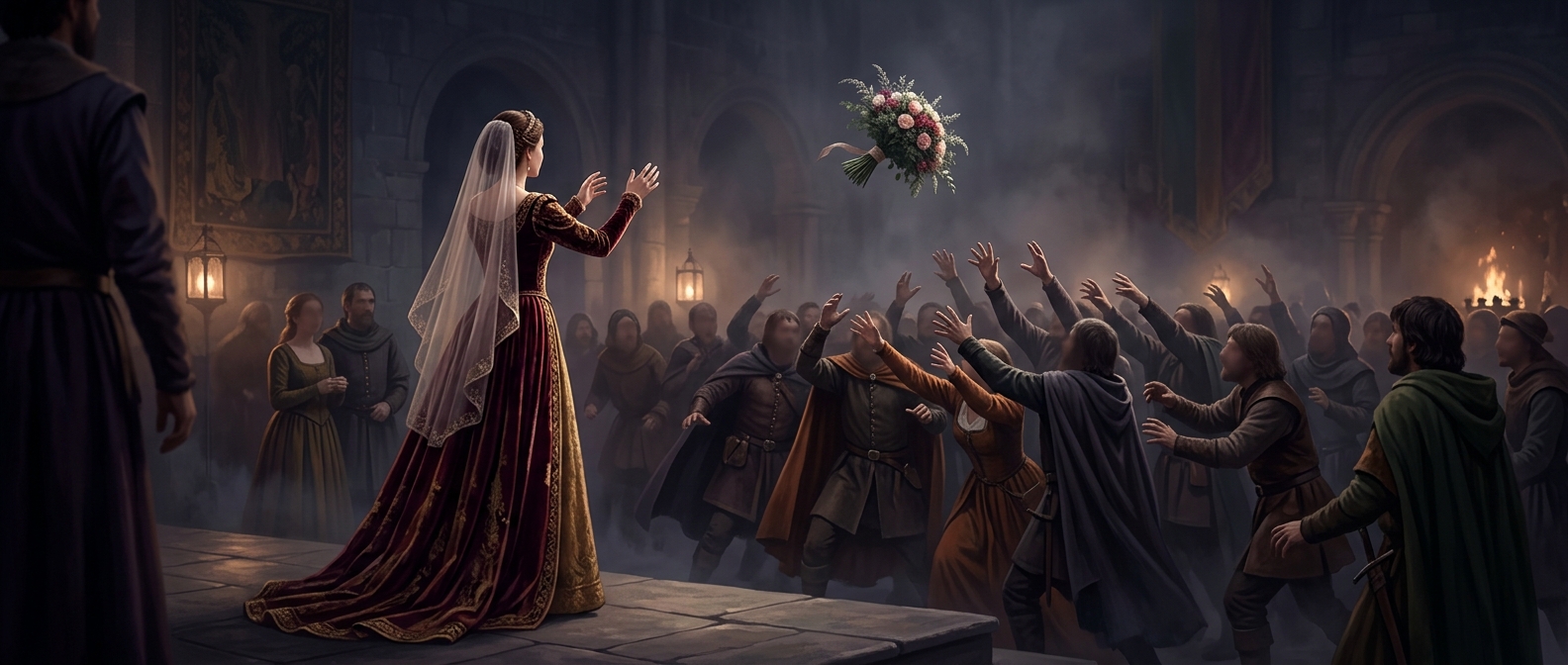
A wedding conducted at a distance
A royal marriage could begin with one spouse nowhere near the ceremony. In a marriage by proxy, an authorized stand-in—often a diplomat or courtier—represented the absent bride or groom and performed the marriage rites on that person’s behalf. The proxy did not become the spouse; the ceremony depended on the royal’s consent and on the authority granted to the representative.
That made a dynastic match possible without requiring both royals to travel to the same place at the same time. It also meant a marriage could be formally concluded before the couple had met. In an era when travel was slow and dangerous, this mattered: a monarch’s journey could consume weeks and expose the ruler to weather, illness, and political risk.
The agreement came before the ceremony
The proxy wedding was the visible end of a much longer process. Courts and diplomats negotiated the match’s political terms in advance, including matters such as territory, money, religion, and the status of any children. The representative’s authority was therefore crucial: the proxy could carry out the agreed ceremony, but was not there to improvise a new alliance.
Once the marriage had been performed, the absent royal might still have to travel to meet the spouse. That journey was not a wedding trip in the ordinary sense; it completed the human side of a union already arranged on paper and in ceremony. A proxy marriage turned diplomacy into a binding family tie—and could commit two people to a shared life before they had ever stood in the same room.