A royal morning became a public ceremony
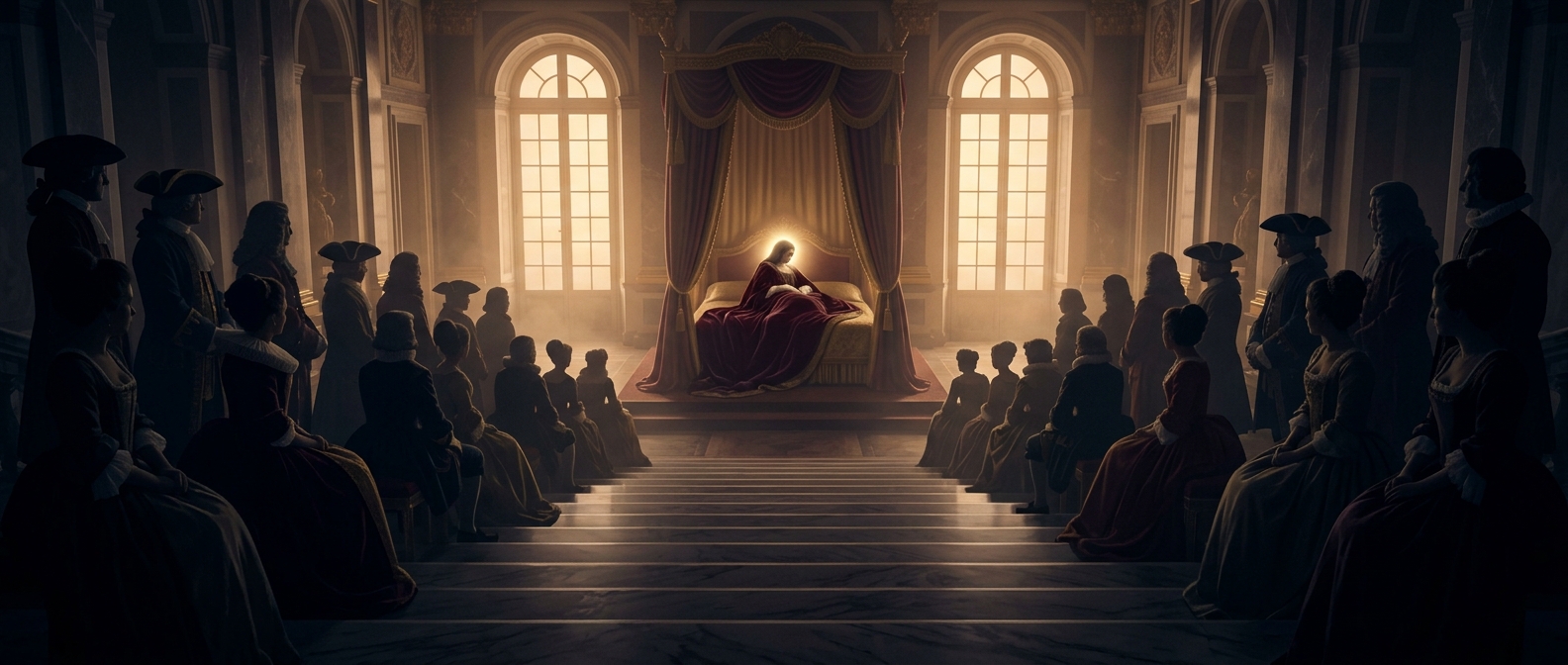
At some European courts, the king’s morning routine was not entirely private. Selected courtiers and household officials could attend as he rose and dressed, in a ceremony often called the royal lever—from the French word for “rising.” The ritual turned an ordinary sequence of washing, dressing, and preparing for the day into a structured occasion for access.
Attendance was limited and ranked. The closer a person was allowed to stand, or the more directly they could assist, the more visible their standing at court. Even small tasks could carry weight because they placed someone near the monarch at a moment when most people could not approach him at all.
Access was a form of influence
Being present did not guarantee a private conversation or a royal favor. But proximity created opportunities: a courtier might be noticed, offer a brief request, or demonstrate loyalty while the king’s attention was available. The ceremony also made hierarchy tangible. Rank was not merely announced; it was enacted through who entered the room, who helped, and who waited outside.
That made the king’s dressing room a political space as well as a domestic one. The morning routine gave courtiers a coveted place near power—and gave the court a daily, highly visible way to show who belonged closest to it.