Incognito, but Not Unnoticed
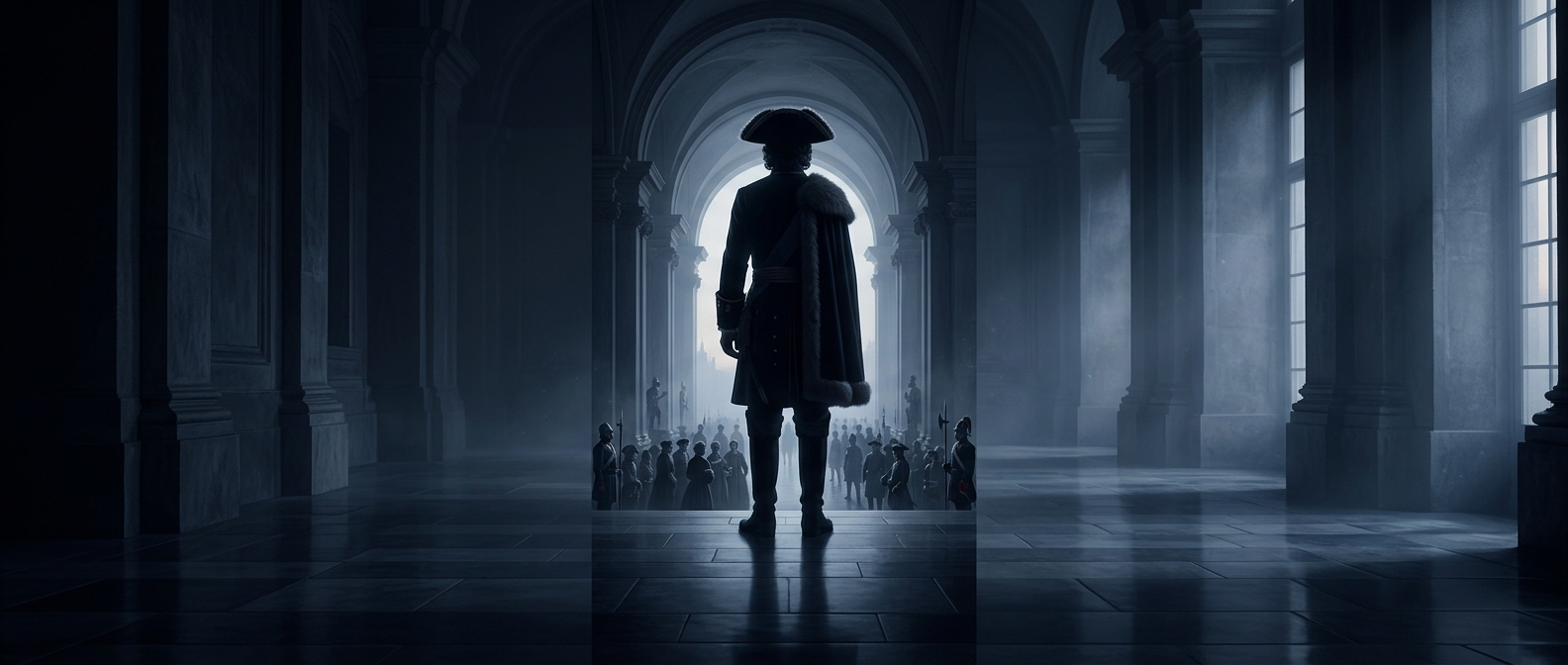
Peter’s European journey in 1697–98 was part of a diplomatic mission, not a lone traveler’s disguise. He used the name Peter Mikhailov and took part in practical work, including learning about shipbuilding, while moving among foreign courts and workshops. The assumed identity could soften the formality of his encounters, but it could not make him physically inconspicuous: his extraordinary height made him recognizable at a glance.
What the Disguise Could—and Couldn’t—Do
“Incognito” did not mean that everyone around Peter was fooled. It was a way to limit ceremony and meet people on less formal terms, not a guarantee of anonymity. A ruler might conceal his title, but his presence still drew attention, especially when his stature set him apart from the people around him.
His unusually small hands and feet added a striking contrast, but they offered no practical camouflage. The result was a mismatch between the purpose of the disguise and the body wearing it: Peter could present himself as a working traveler, yet remain difficult to overlook. His journey’s secrecy was therefore selective—useful for easing some encounters, but never enough to make the tsar simply disappear into a crowd.