A Japanese souvenir, made to last
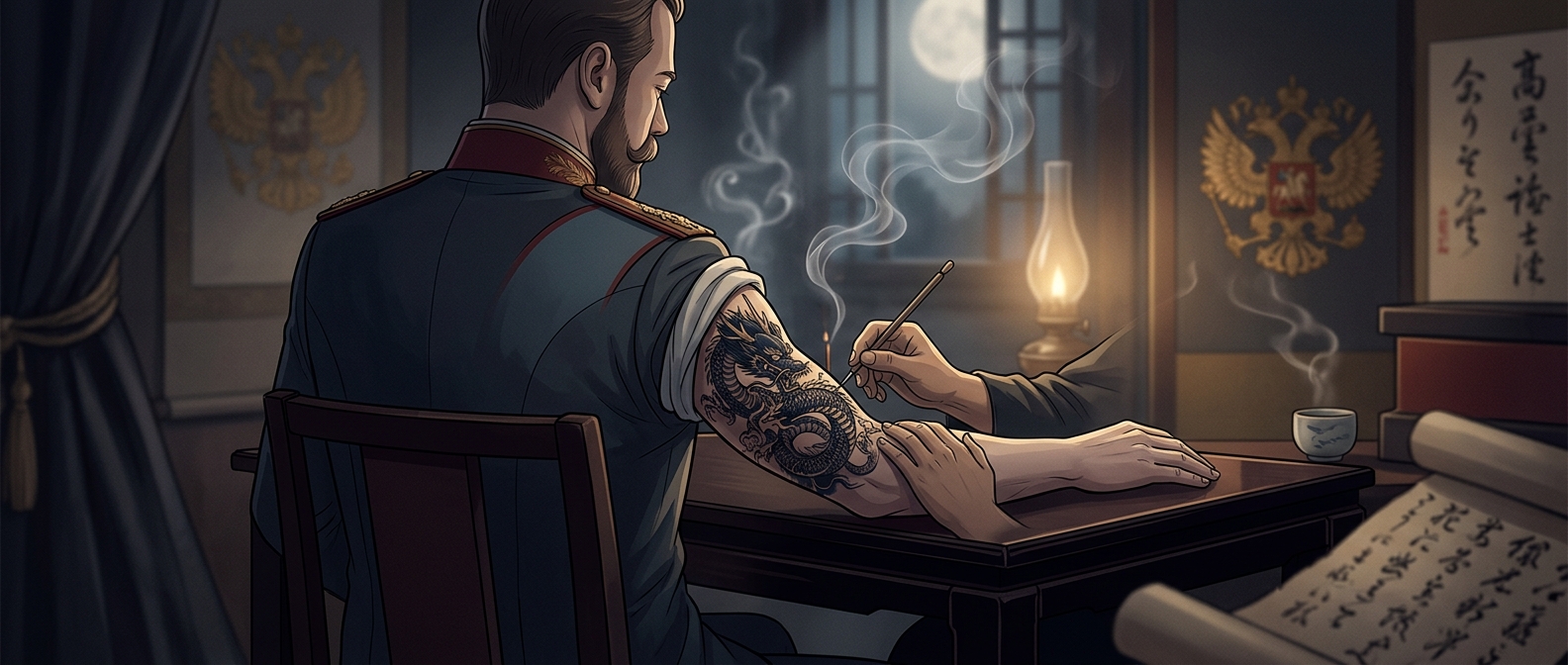
Nicholas was traveling through Japan in 1891 as the Russian heir to the throne, not yet as its ruler. In Nagasaki, he received a dragon tattoo on his forearm. Japanese tattooing was a skilled, painful process: pigment was worked into the skin with needles, leaving a design that could not be taken off like a travel keepsake.
The dragon carried a different kind of meaning from a medal or court portrait. Tattooing was visible in Japanese popular culture, including among some people whose lives were tied to travel and the sea. But the design alone cannot tell us exactly what Nicholas intended by choosing it; the surviving fact is the unusual choice itself.
Hidden beneath imperial dress
Once Nicholas became tsar, his public image was carefully shaped by uniforms, ceremonies, and formal portraits. A tattoo did not fit naturally into that presentation, so it remained a private mark rather than an emblem of office. The contrast is striking: the man at the center of a vast monarchy carried a permanent reminder of a journey abroad, usually covered by his sleeve.
That small detail makes the episode more than a curiosity about royal fashion. It shows how travel could leave a physical trace that official images concealed—and how an heir’s personal souvenir could outlast the moment that inspired it.