When the Palace Was Made to Smell of Roses
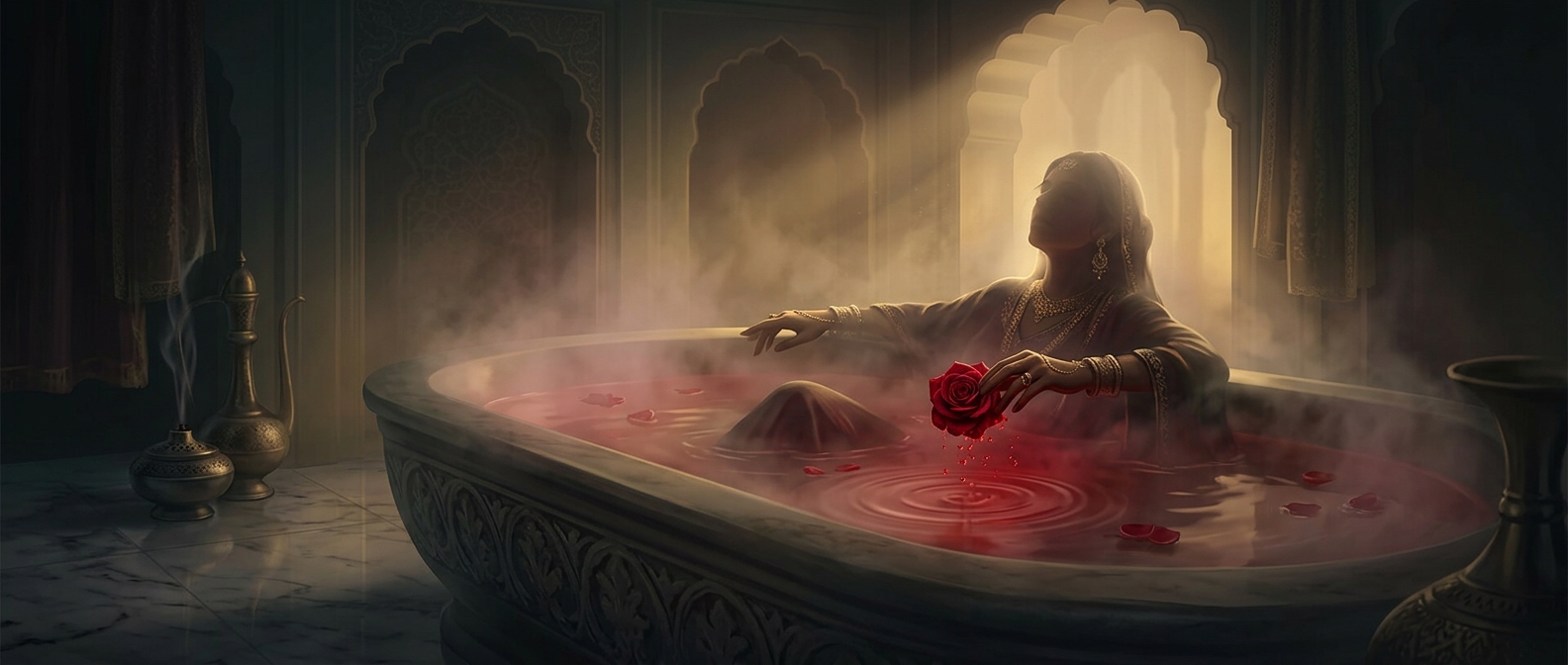
At the Mughal court, fragrance could be more than something worn on the skin. Rose attar—the concentrated, oil-based perfume made from roses—was a costly luxury, while rose water was a lighter scented liquid that could be poured or sprayed. The account of Empress Nur Jahan bathing in rose attar conveys the extraordinary expense and reach of courtly fragrance; it should not be confused with an ordinary bath scented with rose water.
From Petals to Ruh Gulab
Ruh Gulab means “essence of the rose.” It was produced by distilling rose petals: heat and water released aromatic compounds, and the vapor was cooled so the rose-scented liquid could be collected. In traditional production, a small amount of fragrant oil could separate from the water. That concentrated essence was precious precisely because it took many petals and careful work to obtain.
Nur Jahan’s association with rose fragrance reflects how influential courtly taste could be. When an empress embraced a costly scent, it could help make that fragrance desirable beyond her own private use. Rose water, which was easier to use in larger quantities, offered a way to carry the same scent into shared spaces.
Fragrance as Part of the Building
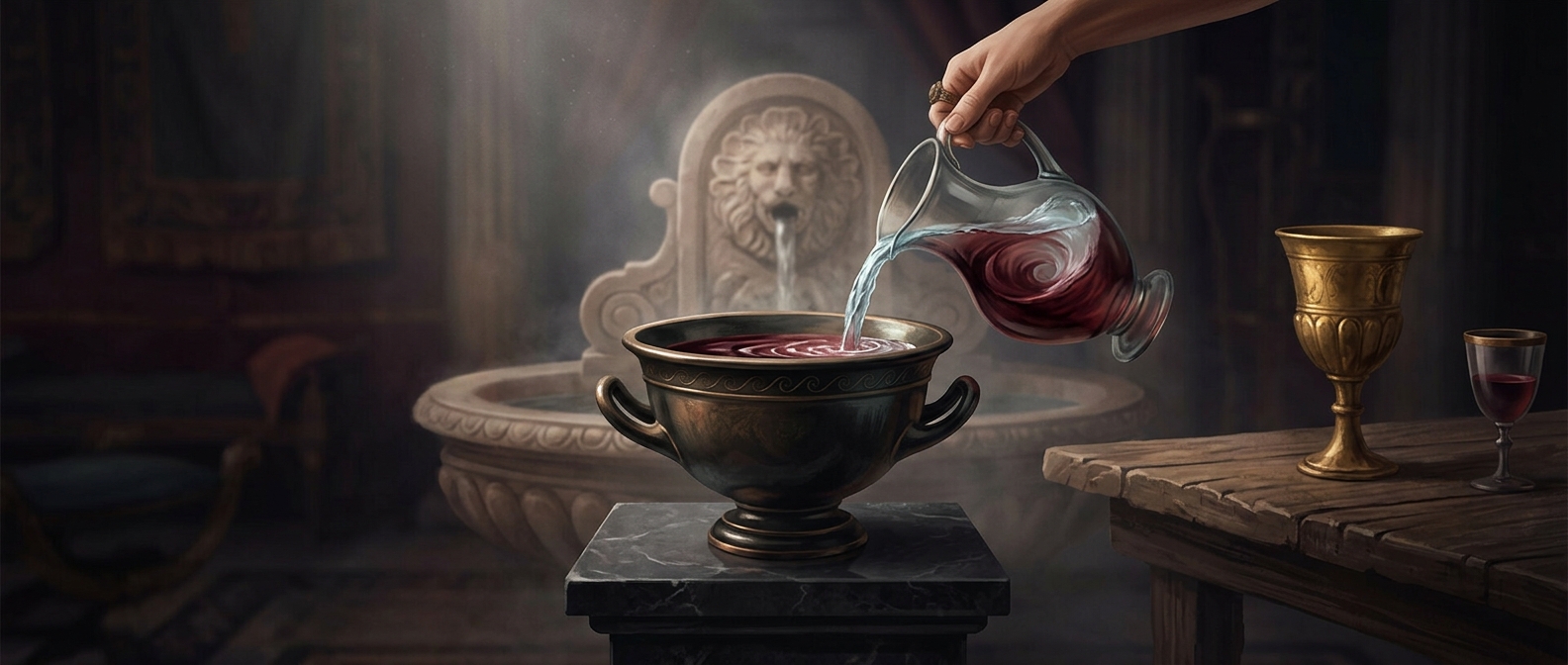
Palace fountains could circulate or display rose water, turning scent into an environmental feature. Water already shaped the experience of Mughal gardens and courtyards: it cooled the air, caught the light, and marked places for gathering. Scent added another layer. A visitor did not merely see a fountain; the rose water could make its presence felt across the space.
That is the striking shift: fragrance moved from a personal luxury to part of the court’s surroundings. A precious perfume could signal rank on a person, while scented water let the palace itself participate in the same display.