Why a royal body could have several graves
When a ruler died far from the place chosen for burial, moving the whole body could be difficult. In an age before modern preservation, attendants might remove the organs and treat the remaining body separately so it could be transported or kept until burial. The organs, heart, and body could then receive distinct burials rather than being reunited in one grave.
This practice was not a single fixed ceremony: arrangements varied by ruler, place, and period. In some cases, organs were buried in a church or cathedral while the body went to a dynastic tomb elsewhere.
More than a practical solution
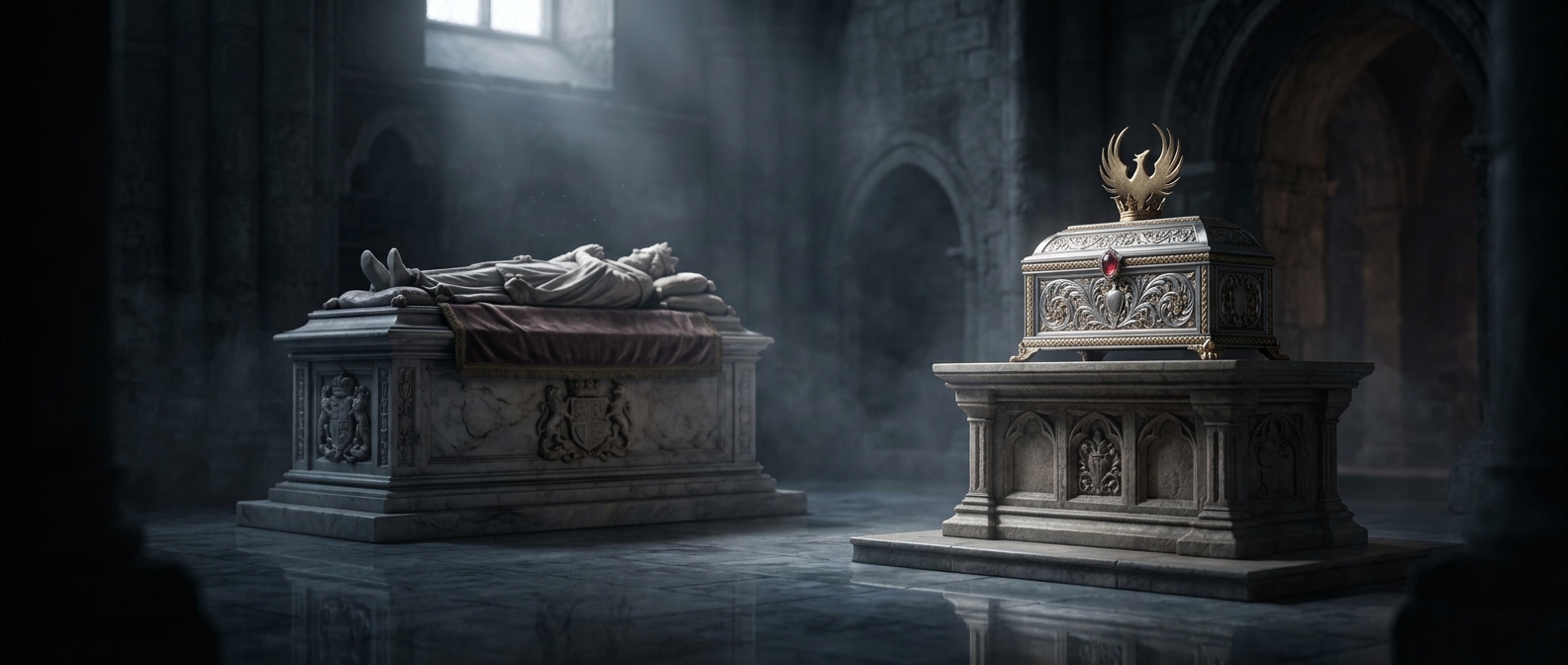
Separation also let a ruler’s burial presence extend across several important places. A cathedral could hold the remains associated with one part of the funeral, while the body rested at a monastery, royal burial site, or another place tied to the ruler or dynasty. Such remains could be commemorated locally, even though the person had one physical body.
The result was a kind of divided memorial: different burial sites could each be connected to the same ruler. A royal grave, then, did not necessarily mark the only place where that ruler’s remains—and memory—were laid to rest.