Why a family might arrange a marriage after death
In some Chinese communities, families arranged ghost marriages—unions in which one or both intended spouses had died. The practice rested on a belief that family relationships and obligations did not simply end at death. An unmarried person might be thought to lack the companionship or settled place in the family that marriage was expected to provide.
The custom was not identical everywhere, and it was not a universal Chinese practice. But its logic was often recognizable: a marriage could extend kinship ties beyond the grave and allow relatives to continue caring for the dead through ritual.
How a posthumous union was made
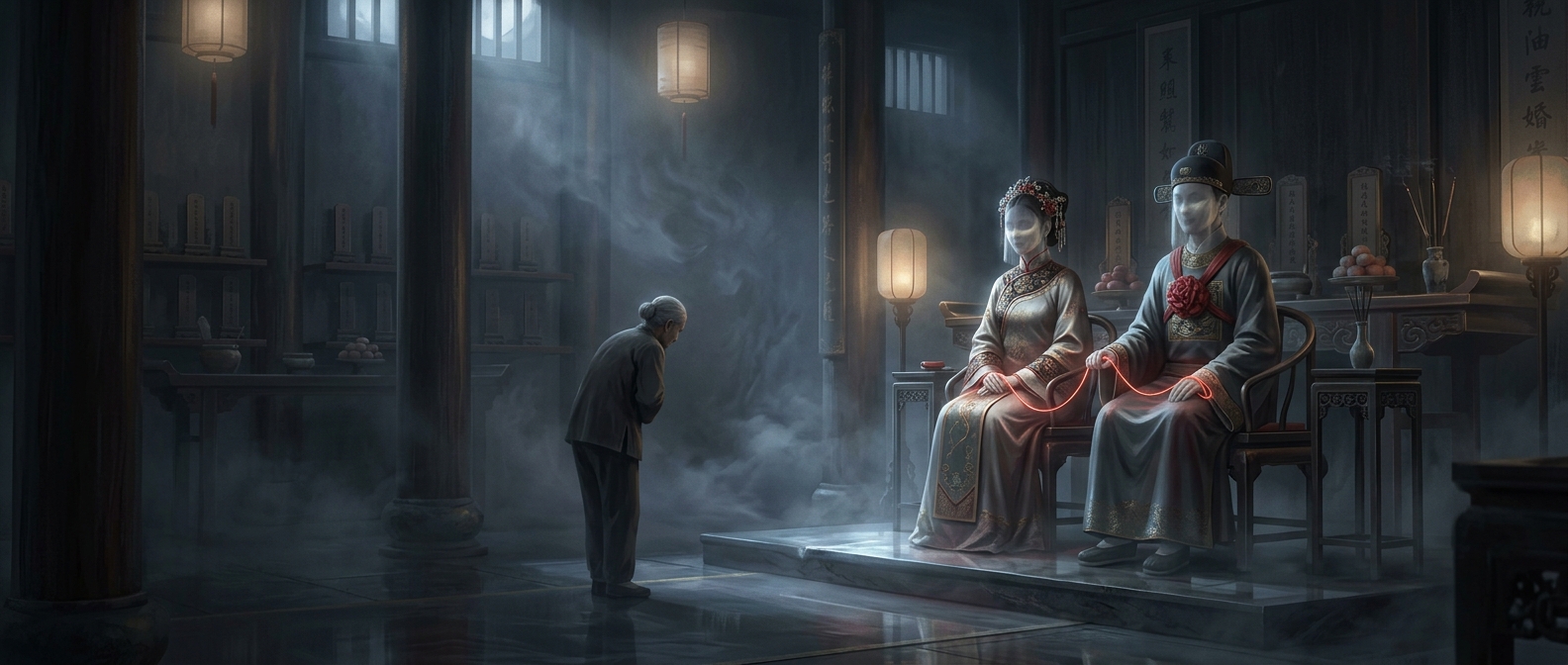
Families could seek a match through relatives or intermediaries, much as they might in a living marriage. In some arrangements, the match joined two deceased people; in others, a deceased person was paired with someone living. Ceremonies and burial arrangements varied, but the union could be marked with wedding rites and treated as a continuing family bond.
That bond mattered in practical as well as spiritual terms. A spouse’s family might take responsibility for memorial observances, while the deceased could be incorporated into a household’s ancestral rites—the ceremonies through which descendants honor and remember family members. The marriage thus gave relatives a way to place someone who had died unmarried within an enduring network of obligations.
What the custom reveals about family duty
A ghost marriage was not simply a symbolic wedding staged to ease grief. It reflected a social world in which marriage connected households and shaped who would be remembered and cared for. For a family, arranging a match could be an act of devotion: an effort to ensure that a loved one’s story did not end with an untimely death.
The striking implication is that, in this view of family, death ended a person’s life but did not necessarily end the relationships relatives believed they owed them.