A garment as a decoy
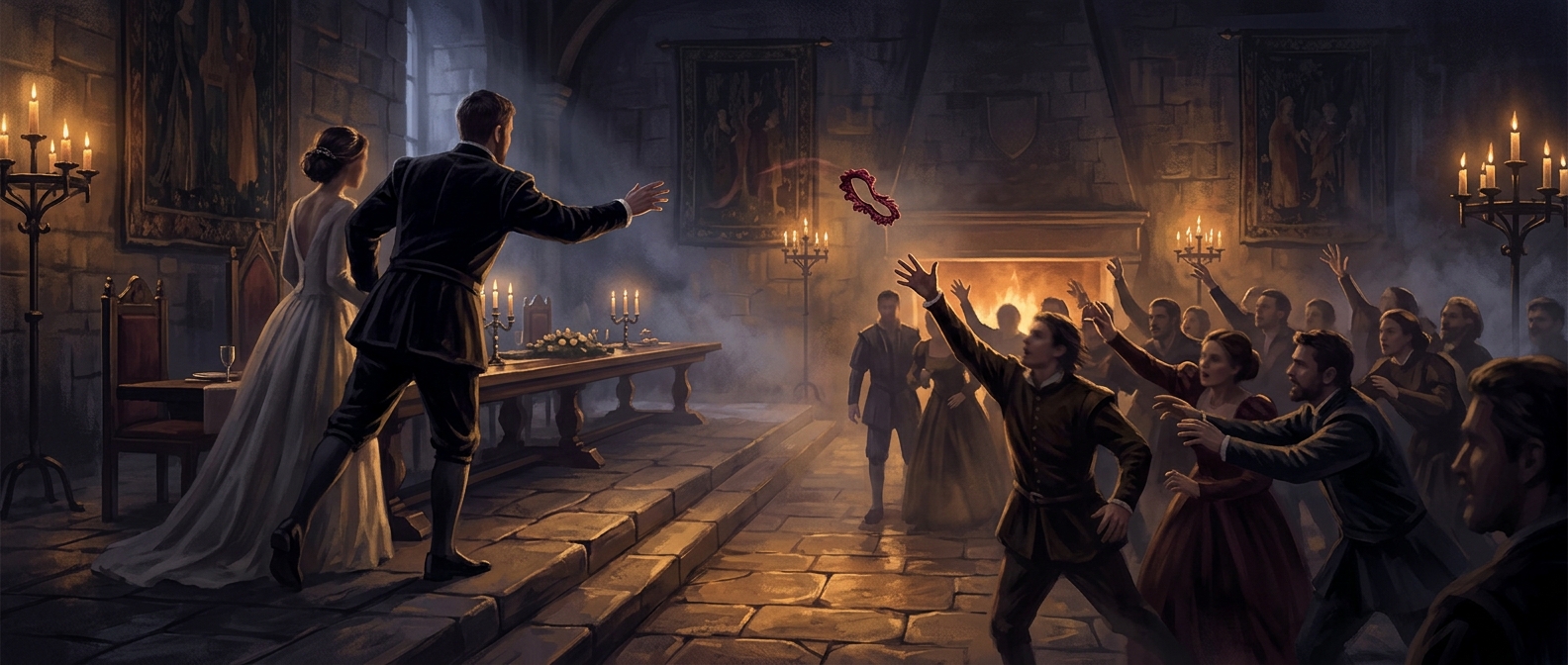
In some older wedding customs, the newlyweds’ move to the marriage bed was not treated as wholly private. Guests might crowd around or try to establish that the marriage had been consummated—the word for the couple’s first sexual intercourse. The groom’s thrown lingerie gave them something else to chase: a visible, tangible prize that could pull attention away from the couple.
The trick worked because the garment carried more than practical value. It stood for the intimate event everyone was trying to witness or confirm. Tossing it outside redirected the crowd while turning the garment itself into a playful substitute for access to the bedroom.
A boundary made by misdirection
The ritual depended on a collision between public celebration and private life. Wedding guests could treat the couple’s first night as a communal spectacle, while the newlyweds had reason to reclaim some privacy. Rather than confront the crowd directly, the groom used its curiosity against it: a thrown object could send people out the door and buy the couple a moment alone.
That makes the gesture more than a bit of wedding mischief. It shows how a joke could manage an awkward social expectation—letting guests feel included in the occasion without giving them the private scene they sought.